7 months ago
Uber, Lucid, Nuro Unveil Robotaxi at CES 2026
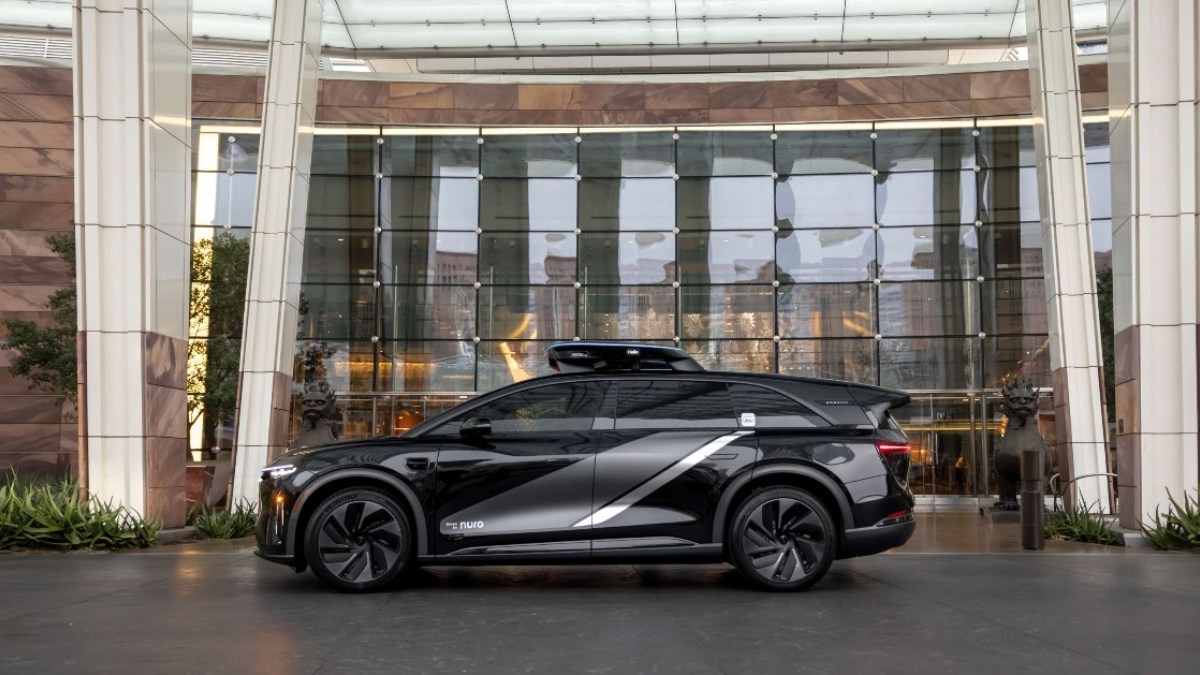
Uber has teamed up with Lucid Group and Nuro to show off their new robotaxi at CES 2026.
This car is special because it can drive itself and has lots of cool sensors to see all around it.
Uber will run the service, Lucid will make the car, and Nuro will handle the self-driving part.
They’ve already started testing it on the roads in the San Francisco Bay Area and plan to launch it to the public later this year.
The car can fit up to six people and has screens inside for controlling things like the temperature and music.
It’s designed to compete with other self-driving taxi services like Waymo and Tesla’s Cybercab.

Uber, Lucid Group, and Nuro unveiled a new robotaxi at CES 2026, featuring 360-degree sensor technology.
The vehicle is based on the Lucid Gravity SUV platform, with Nuro providing the autonomous driving system.
Supervised on-road testing has begun in the San Francisco Bay Area, with a planned public launch later in 2026.
The robotaxi is designed for up to six passengers and includes an Uber-designed in-cabin experience with various controls.
Production is set to begin later this year at Lucid’s facility in Arizona, pending final validations.
- Who
- Uber, Lucid Group, Nuro
- What
- Unveiling of a new robotaxi service
- Where
- Las Vegas, with testing in the San Francisco Bay Area
- When
- CES 2026, with a planned public launch later in 2026
- Why
- To compete in the autonomous taxi service market
Proponents of Robotaxi Technology
Critics of Robotaxi Technology
Market Potential
Proponents of Robotaxi Technology
Robotaxis represent a significant opportunity to revolutionize urban transportation, reduce traffic congestion, and provide a sustainable mobility solution.
Critics of Robotaxi Technology
The market for robotaxis is uncertain, and significant challenges remain in terms of public acceptance, regulatory hurdles, and technological reliability.
Safety and Reliability
Proponents of Robotaxi Technology
Advancements in autonomous driving technology, such as 360-degree sensor arrays and advanced computing platforms, ensure that robotaxis can operate safely and reliably.
Critics of Robotaxi Technology
Despite technological advancements, concerns about the safety and reliability of autonomous vehicles persist, particularly in complex urban environments.
Economic Viability
Proponents of Robotaxi Technology
Robotaxis can offer cost-effective transportation solutions, potentially reducing the need for personal car ownership and lowering overall transportation costs.
Critics of Robotaxi Technology
The economic viability of robotaxis is questionable, given the high initial investment costs, ongoing maintenance expenses, and potential regulatory burdens.
Key facts
- Companies Involved
- Uber, Lucid Group, Nuro
- Event
- CES 2026 in Las Vegas
- Vehicle Platform
- Lucid Gravity SUV
- Autonomous Driving System
- Nuro
- Testing Location
- San Francisco Bay Area
- Planned Launch
- Later in 2026
- Sensor Technology
- 360-degree sensor array with cameras, LIDAR, and radar
- Computing Platform
- NVIDIA’s DRIVE AGX Thor
- Passenger Capacity
- Up to six passengers
- Production Location
- Lucid’s manufacturing facility in Arizona
Quotes
Stuart Ryan
Senior Vice-President and General Manager of the Americas at HERE Technologies
“It’s exciting to work with the Lucid team as they push the boundaries of EV innovation.”
 financialexpress.com
Deon Newman
Senior Vice-President and General Manager for Asia Pacific at HERE Technologies
“Our partnership with Hyundai AutoEver is a testament to what’s possible when innovation meets scale.”
financialexpress.com