3 weeks ago
Nuclear icebreaker ferries students from 22 countries to North Pole
A big, special ship called an icebreaker is taking students on an exciting trip.
This ship is so strong that it can smash through thick frozen ice in the Arctic Ocean, near the top of the Earth.
It is moving towards the North Pole, the exact top point of our planet.
The ship is powered by nuclear reactors that give it enough power to push through ice about three metres thick.
On board are students from 22 different countries.
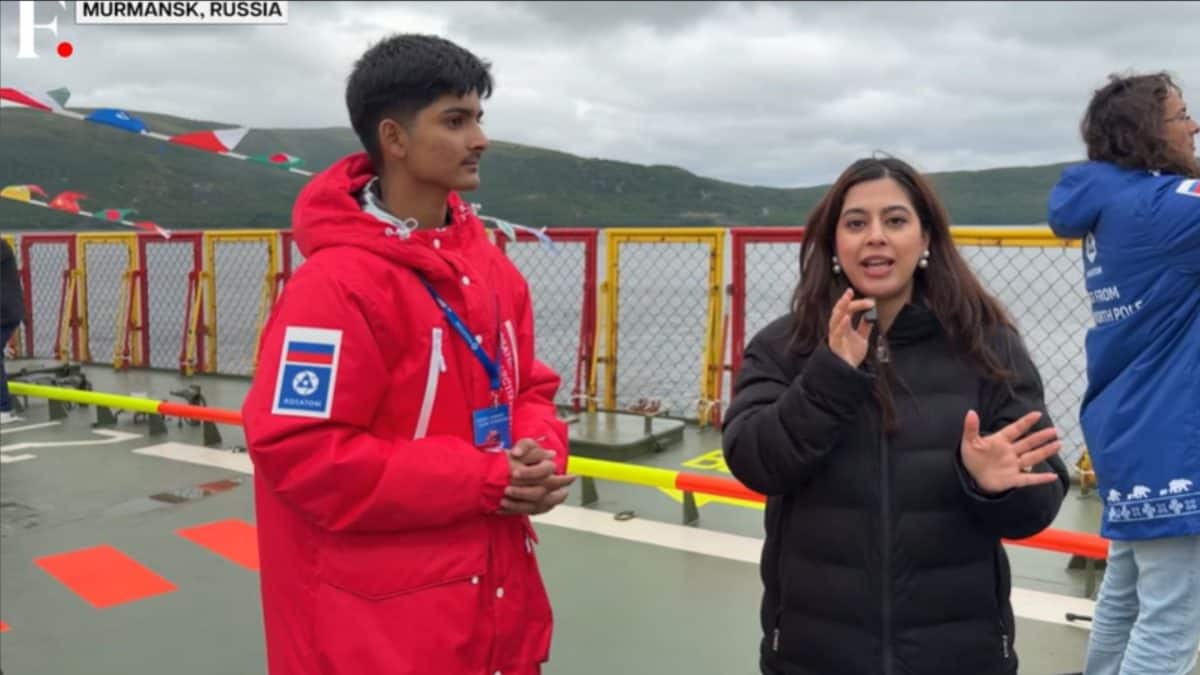
One of them is Lucky, a 15-year-old boy from India who loves learning about science.
The ship is like a floating school, with classrooms and scientists teaching about the Arctic and nuclear technology.
If the ice and weather are good, the students may even step out onto the frozen ocean at the North Pole.
The trip shows how Russia builds ships that can travel where most other ships cannot go.

Russia's nuclear-powered icebreaker 50 Years of Victory is carrying students from 22 countries on a 10-day expedition from Murmansk to the North Pole.
Lucky Rawat, a 15-year-old Class 10 student from Chakrata, Uttarakhand, is the only Indian student aboard the expedition.
The vessel, powered by two nuclear reactors producing nearly 75,000 horsepower, can break through sea ice about three metres thick.
The Icebreaker of Knowledge programme turns the ship into a floating classroom with lectures on Arctic ecosystems, nuclear technology and polar navigation.
Russia is using the voyage to showcase its nuclear icebreaker technology and maintain access through the Northern Sea Route along its Arctic coast.
- Who
- Lucky Rawat, a 15-year-old student from Chakrata, Uttarakhand, is the only Indian participant; the voyage carries students from 22 countries under Russia's Icebreaker of Knowledge programme.
- What
- A 10-day expedition aboard Russia's nuclear-powered icebreaker 50 Years of Victory to the North Pole, combining scientific education with a showcase of Russian nuclear icebreaker technology.
- Where
- From the Russian Arctic port city of Murmansk to 90° North, the geographic North Pole in the Arctic Ocean.
- When
- The expedition was underway at the time of reporting; it is a 10-day voyage and selection results were announced on June 23.
- Why
- To give students hands-on education in Arctic ecosystems, nuclear technology and polar navigation, while Russia demonstrates its nuclear-powered icebreaker capabilities and Arctic ambitions.
Key facts
- Vessel
- 50 Years of Victory, Russian nuclear-powered icebreaker
- Expedition
- 10 days, from Murmansk to 90° North (North Pole)
- Participants
- Students from 22 countries; Lucky Rawat (15, India) is the only Indian student
- Power
- Two nuclear reactors producing nearly 75,000 horsepower
- Ice-breaking capability
- Sea ice up to about three metres thick
- Dimensions
- Nearly 160 metres long; about 140 crew and 128 passengers
- Selection results announced
- June 23
- Service history
- Laid down in 1989, entered service in 2007; carried the Olympic torch to the North Pole in 2013
Quotes
Lucky Rawat
15‑year‑old Indian student aboard the icebreaker
“"I am feeling very great on this nuclear icebreaker. It’s just about a few days and then I will actually be at the place where most people just dream of — North Pole, 90° North."”
 firstpost.com
Sources
Related news
Indian parliamentary panel urges New Delhi to act on Arctic

India Joins IAEA ATLAS Initiative for Nuclear Commercial Shipping

Russia Tests Khabarovsk Submarine Carrying Poseidon Nuclear Torpedoes

Putin Says India Shows Growing Interest in Northern Sea Route

China's Sea Legend launches first regular Arctic shipping route service

China-Bound Cargo Ship Sinks Off Odisha, 24 Missing

Narwhal Tusk’s Opposing Spirals Reveal Secrets of Stability
Norway's Whale-Shaped Arctic Attraction Set to Open in 2027

Mars Once Had an Ocean as Big as Arctic