2 hrs ago
How September 11 Reshaped America’s Journalism and Foreign Policy
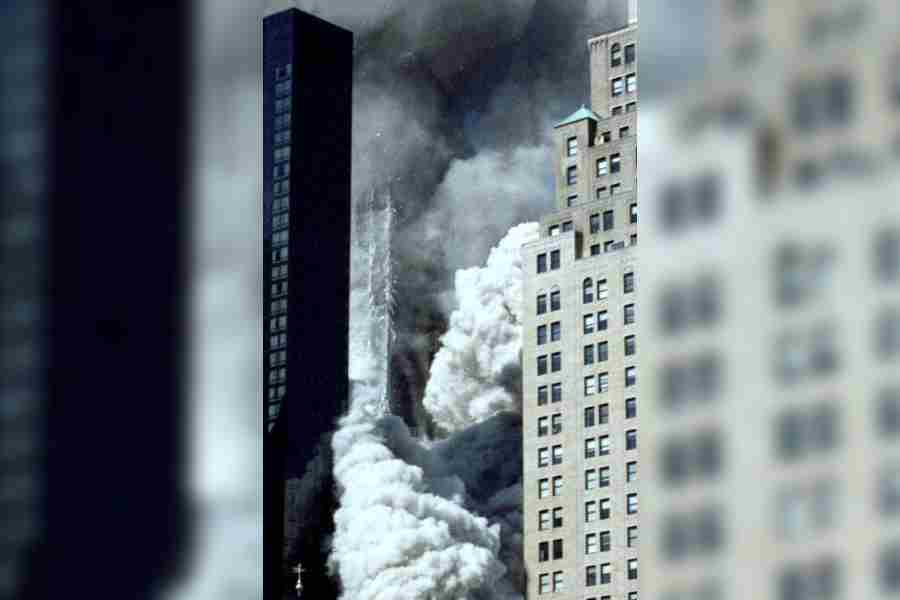
The writer remembers watching the September 11 attacks on television and worrying about a relative in New York.
The relative survived because he was late and was still traveling on the subway.
When the writer later visited Ground Zero, the area was covered by construction barriers.
Daily life in New York had mostly returned to normal, but many people still felt hurt and afraid.
The writer says newspapers became less questioning after the attacks.
He believes this helped leaders make a false case that Iraq had dangerous weapons.
The article also says the government created stronger security agencies after September 11.
In the writer’s view, those agencies later made it easier for the government to use harsh immigration and security policies.
Overall, the writer sees September 11 as the beginning of a long period of American military and political violence.

The author recalls watching the second plane hit the World Trade Center while trying to locate a nephew in New York.
A year later, New York appeared largely normal, although Ground Zero remained obscured by construction coverings and residents still carried trauma.
The author argues that American journalism became less skeptical after 9/11, helping promote unfounded claims about Iraq’s weapons of mass destruction.
The article links the creation of the Department of Homeland Security and Immigration and Customs Enforcement to a broader expansion of post-9/11 state power.
The author describes the subsequent U.S. and allied military campaigns as an era of violence that continues under Donald Trump.
- Who
- The author, the author’s family, U.S. political leaders, American journalists, and people affected by post-9/11 policies.
- What
- A personal reflection arguing that September 11 changed American journalism, government power, and foreign policy.
- Where
- New York, Ground Zero, the United States, Iraq, and other countries mentioned in the article.
- When
- On September 11 and during the years afterward, including the article’s discussion of the twenty-fifth commemoration.
- Why
- The author argues that fear after the attacks encouraged less skeptical journalism, expanded domestic security powers, and supported military intervention abroad.
Critique of Post-9/11 America
Security-Based Justification
Intelligence and Iraq
Critique of Post-9/11 America
The author argues that American journalism accepted weak or false intelligence and helped justify the invasion of Iraq.
Security-Based Justification
Judith Miller’s stated defense was that she accurately reported the intelligence community’s consensus and believed Saddam Hussein was concealing weapons.
Homeland security powers
Critique of Post-9/11 America
The author sees the Department of Homeland Security and Immigration and Customs Enforcement as institutions that expanded state power and later enabled harsh immigration enforcement.
Security-Based Justification
The article says these agencies were established or empowered in response to the September 11 attacks to protect national security and public safety.
Foreign intervention
Critique of Post-9/11 America
The author characterizes the post-9/11 period as an era of American and allied violence across multiple countries.
Security-Based Justification
The article presents the opposing rationale as the effort to combat terrorism and confront perceived threats, although it does not provide a detailed defense of the interventions.
Key facts
- Personal experience
- The author saw the second plane hit the South Tower on television and later learned that a nephew had survived because he was late to work.
- Ground Zero visit
- The author visited Ground Zero the following August, when black netting and sheeting obscured much of the site.
- School message
- The author’s children’s Brooklyn school displayed a banner reading “una familia,” or “a family,” in several languages, including Arabic.
- Iraq intelligence claims
- The article says Judith Miller and Colin Powell promoted claims about Iraqi weapons of mass destruction that were later shown to be unsupported.
- Government response
- The Department of Homeland Security was founded during the author’s stay in the United States, and Immigration and Customs Enforcement was created as one of its agencies.
- Military campaigns cited
- The author lists U.S. and allied attacks or attempted conquests involving Afghanistan, Iraq, Libya, Yemen, Syria, Lebanon, Iran, and Palestine.
Quotes

Judith Miller
Former New York Times journalist who defended her reporting on Iraqi weapons claims.
“I knew Saddam Hussein, he’d thrown me in jail (years earlier). I knew how horrible he was... I made the same intellectual leap that the analysts made — knowing Saddam, knowing what he’d done in the past, (I had) high confidence that he was hiding and keeping (WMDs).”
 telegraphindia.com
“I was accurately conveying wrong information”
telegraphindia.com
Sources
Related news
How 9/11 Reshaped a Presidency and Lower Manhattan

25 Years After 9/11, America Weighs What It Learned

America Still Follows Terrorists’ Post-9/11 Script, Historian Argues

9/11 Fallout Exposes America’s Internal Rupture and Security Risks

Editorial Examines 9/11’s Lasting Legacy of Fear

Kabir Khan Recalls 9/11 and Film New York's Origins

DHS Proposes Ending 60-Day Grace Period for H-1B Workers

DHS Removes ‘Mr Singh’ Post After Hindu Sikh Backlash

Lewandowski Faces Questions Over Influence and Side Deals at DHS
Proposed H-1B Changes Could Tighten Worker and Spouse Protections