1 day ago
Trump H-1B Fee Proposals Could Hit Indian Workers Hard
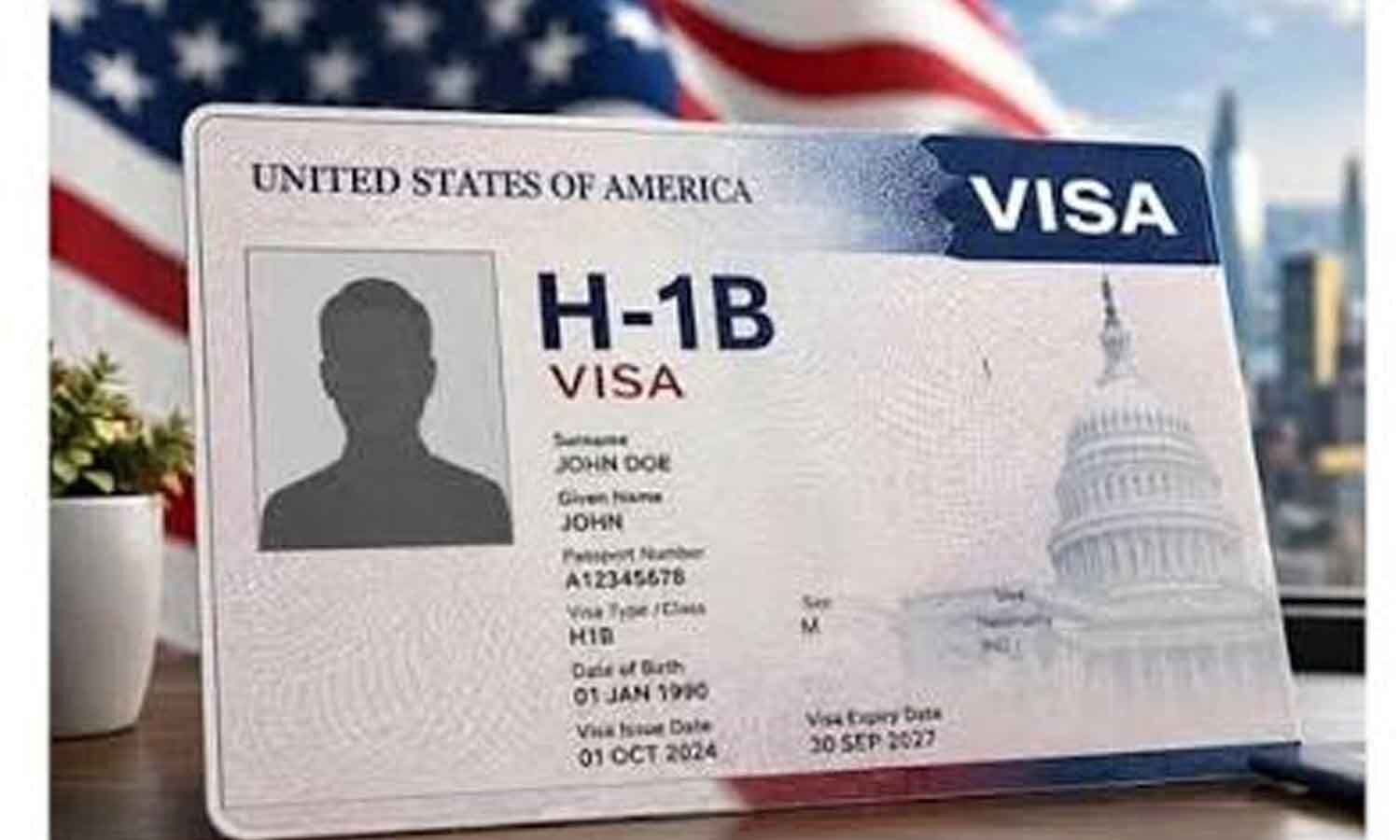
The H-1B program lets US employers hire skilled workers from other countries.
Many technology, engineering and medical workers use this program.
The government has proposed a new fee of $103,265 for some new H-1B applications.
Another $100,000 fee was introduced earlier, but a court blocked it.
The government is appealing that decision.
If both fees are eventually allowed and apply to the same application, the total could exceed $203,000.
The employer, not the worker, would generally pay the proposed fee.
Indians could be affected especially strongly because they make up about 71% of approved H-1B beneficiaries.

A proposed $103,265 fee could apply to new, cap-subject H-1B petitions.
A separate $100,000 charge remains blocked by a federal court and is under appeal.
If both measures ultimately apply, one petition could face more than $203,000 in charges.
Employers would pay the proposed fee, while India-born beneficiaries account for about 71% of H-1B approvals.
Business groups, universities and hospitals warn the fee could restrict hiring and worsen worker and physician shortages.
- Who
- The Trump administration, US employers, H-1B applicants and organizations including universities, hospitals and business groups.
- What
- The Department of Homeland Security has proposed a $103,265 H-1B filing fee, while a separate $100,000 fee remains blocked and under appeal.
- Where
- The measures concern the US H-1B immigration program and are being challenged in US federal courts.
- When
- The $100,000 measure was introduced in September 2025; the new proposal's public-comment period closes September 24, 2026, and it could apply as early as the FY2028 cap cycle.
- Why
- The administration says the fee would discourage employers from replacing qualified US workers and help fund immigration administration, courts and vetting.
Supporters of Higher Fees
Critics of Higher Fees
Effect on American workers
Supporters of Higher Fees
Supporters argue that lower visa costs can make it cheaper for employers to hire foreign workers rather than invest in or retain US workers.
Critics of Higher Fees
Critics argue the fee would sharply restrict legal immigration and prevent employers from accessing skilled workers.
Impact on universities and hospitals
Supporters of Higher Fees
The administration says the fee would help recover costs for immigration administration, adjudication, vetting, courts and related government functions.
Critics of Higher Fees
Universities and hospitals say the charge would raise operating costs, hamper research and threaten patient care, particularly where international medical graduates are needed.
Economic consequences
Supporters of Higher Fees
The administration estimates the proposed fee could raise $8.8 billion over a decade for immigration-related agencies and systems.
Critics of Higher Fees
Business and immigration groups say the fee could cause applications and hiring to fall, potentially resulting in the loss of hundreds of thousands of talented workers.
Key facts
- Proposed fee
- $103,265 for cap-subject H-1B petitions, including the 20,000 advanced-degree slots.
- Earlier fee
- $100,000, introduced in September 2025 and later blocked by a Massachusetts federal court.
- Possible combined cost
- $203,265 if both separate measures ultimately apply to one covered petition.
- Annual H-1B cap
- 85,000 places: 65,000 regular slots and 20,000 for qualifying advanced-degree holders.
- India's share
- India-born beneficiaries represented about 71% of approved H-1B petitions in fiscal year 2024.
- Who pays
- The proposed $103,265 charge would be paid by the sponsoring employer at filing, not by the worker.
- Legal status
- The $100,000 charge remains uncollected while the government's appeal is pending; the $103,265 charge is still only a proposal.
Sources
Related news
US Proposes $103,265 H-1B Fee, Threatening Indian Hiring
Trump Administration Proposes $103,265 H-1B Fee, Indians Face Impact
DHS Proposes $103,265 Additional Fee for Cap-Subject H-1B Visas
Trump Administration Proposes Permanent $103,265 H-1B Visa Fee
Trump Administration Proposes $103,265 H-1B Fee After Setback
DHS Proposes $103,265 Fee for Cap-Subject H-1B Applications
DHS Secretary’s Jet Loses Engine, Makes Safe Emergency Landing

New York Factory Immigration Raid Faces Scrutiny One Year Later

Proposed H-1B Grace-Period End Raises Indian Worker Concerns

H-1B Grace Period Could End After US Layoffs