5 hrs ago
NSE Says Self-Listing Could Be Feasible With Regulator Approval

NSE is India’s biggest stock exchange, and it has just been listed on the BSE.
Its chairperson says NSE might one day also be listed on NSE’s own trading platform.
This would need permission from India’s market regulator, Sebi.
The rules currently do not allow an exchange to list itself on its own platform.
The concern is that an exchange could appear to have a conflict of interest because it also performs regulatory duties.
NSE says there are ways to manage that concern and that it is not rushing to make the change.
Other countries have exchanges whose parent companies are listed on their own exchanges.
NSE has a very large share of India’s equity cash and derivatives markets.

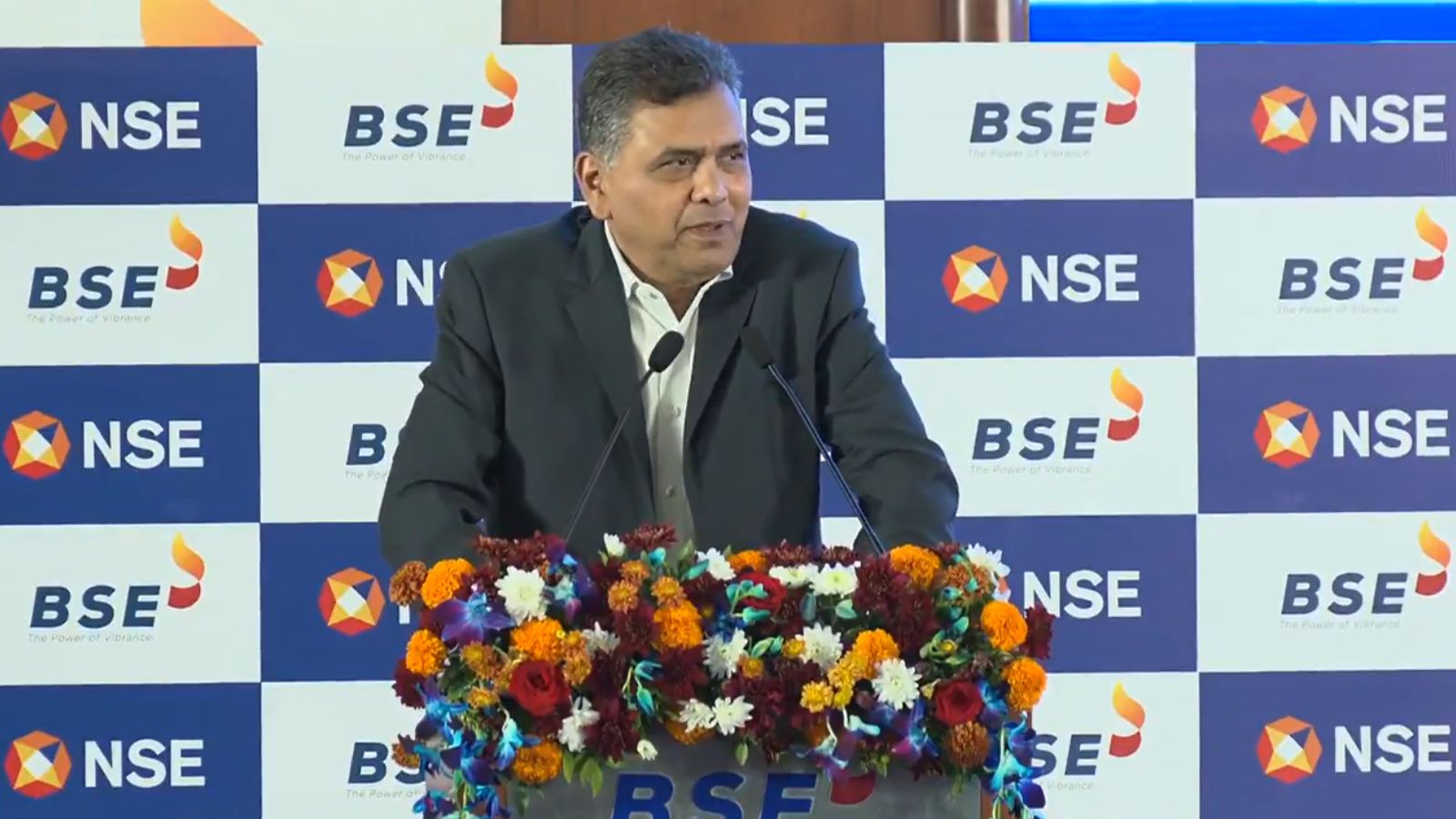
NSE chairperson Srinivas Injeti said listing NSE on its own platform under the permitted-to-trade category is feasible, subject to Securities and Exchange Board of India approval.
Current regulations prohibit BSE or NSE from listing themselves on their own platforms under the permitted-to-trade category.
Injeti said the main concern is the perceived conflict of interest because Indian exchanges perform significant regulatory functions.
NSE listed on BSE on Thursday, while MSEI already offers NSE securities under the permitted-to-trade category.
NSE held a 92.2% share of India’s equity cash market as of 31 August, with equity options contributing 60% of its operating revenue.
- Who
- NSE, its chairperson Srinivas Injeti, chief executive Ashishkumar Chauhan, Sebi, BSE, and MSEI.
- What
- NSE is considering whether it could list its securities on its own platform under the permitted-to-trade category.
- Where
- India’s stock markets, including NSE, BSE, and MSEI.
- When
- The comments were made on Friday, the day after NSE listed on BSE; the article also reports market-share data as of 31 August.
- Why
- The proposed self-listing could improve NSE’s market access and depth, but it requires Sebi to address concerns about perceived conflicts of interest.
Case for feasibility
Regulatory concerns
Self-listing under permitted-to-trade rules
Case for feasibility
NSE chairperson Srinivas Injeti said self-listing is within the realm of feasibility, citing Nasdaq Inc. and Intercontinental Exchange as global precedents.
Regulatory concerns
Current Indian regulations bar BSE and NSE from listing themselves on their own platforms under the permitted-to-trade category.
Conflict of interest
Case for feasibility
Injeti said there is no real issue of manipulation or abuse of exchange power and that the conflict can be managed through appropriate safeguards.
Regulatory concerns
Because Indian exchanges perform more regulatory functions than many overseas counterparts, Sebi must address the perception and reality of a conflict of interest before approving self-listing.
Timing and priority
Case for feasibility
NSE says it is not desperately seeking a self-listing and would pursue the possibility only if the regulator is comfortable.
Regulatory concerns
The regulator’s concerns and approval remain the central condition, and Injeti gave no timeline for discussions with Sebi.
Key facts
- NSE BSE listing
- NSE listed on BSE on Thursday.
- Possible self-listing
- NSE’s chairperson called listing on NSE’s own platform feasible, subject to Sebi approval.
- Current rule
- Stock exchanges cannot currently list themselves on their own platforms under the permitted-to-trade category.
- Equity cash share
- NSE held a 92.2% equity cash market share as of 31 August.
- Operating revenue
- Operating revenue accounts for 90% of NSE’s total revenue.
- Options contribution
- Equity options account for 60% of NSE’s operating revenue.
- IPO milestone
- Ashishkumar Chauhan said the appointment of Sebi chairperson Tuhin Kanta Pandey helped make NSE’s decade-long IPO journey possible.
Quotes

Ashishkumar Chauhan
Managing director and chief executive officer of the National Stock Exchange
“Largely, the turning point for NSE's IPO has been the appointment of Sebi's new chairperson. He looked at our listing plan constructively and ensured that all the issues which Sebi thought were important before giving us approval were raised with us, and we could provide solutions.”
 livemint.com
“We are not desperately wanting to list (under PTT), but that possibility is always there because India, in terms of regulation, is aligned with global best practices and standards. There are ways of managing that conflict of interest.”
livemint.com
Sources
Related news

NSE IPO Nears Historic Listing Amid Self-Trading Debate

NSE Chairman Calls for Exchange Self-Listing in India

Sebi Close to Approving NSE IPO After Decade-Long Wait

SEBI Issues Observation Letter for Rs 30,000-Crore NSE IPO

NSE Lists on BSE, Pledges Public Interest Over Business Goals
NSE Chairman Says Investor Protection Comes Before Business

PL Capital Upgrades Pearl Global as Stock Hits Fresh High
JSW One Files Rs 3,054 Crore IPO Draft Papers