1 week ago
Karnataka’s Five-Percent Park Land Law Sparks Green Space Outrage
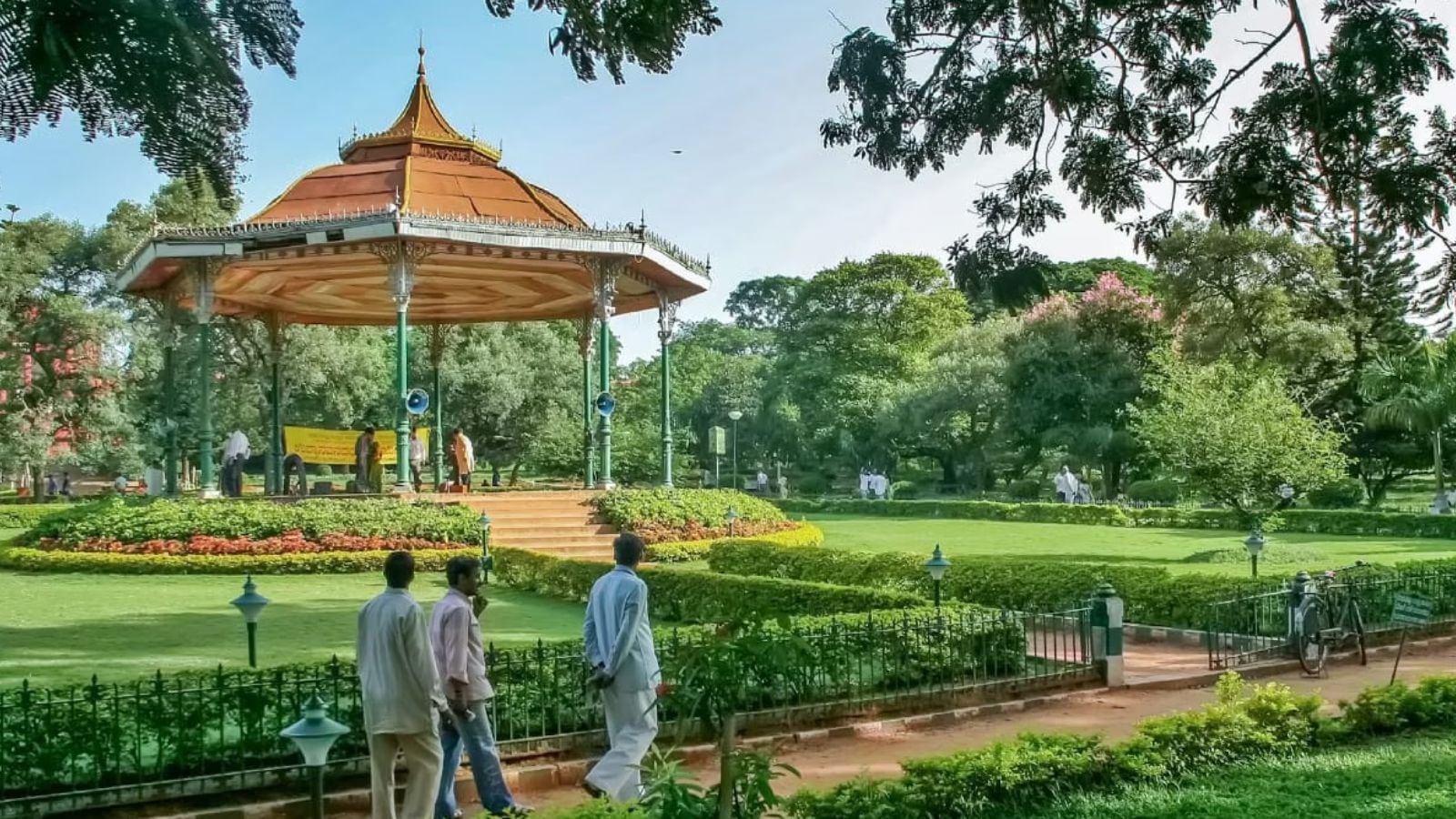
Karnataka has passed a law allowing some park land to be used for public projects.
The limit is up to five percent of a park’s total area.
The government says this will only affect unused government land and will have safeguards.
It says the land could support projects built by public authorities.
The BJP says the law could let developers and infrastructure projects take over public parks.
It especially worries about a proposed tunnel road near Lalbagh Botanical Garden.
Environmentalists say old parks cannot be replaced simply by measuring land in percentages.
The Governor has been asked to stop or reconsider the law.

Karnataka’s legislature passed an amendment allowing up to 5% of park land to be diverted for public infrastructure.
The law permits sale, lease, gift, exchange, mortgage, or other transfers following High-Level Committee recommendations.
The Congress government says the measure applies only to unused government park land and includes safeguards.
The BJP and environmentalists warn the amendment could enable commercial development and damage Bengaluru’s green spaces.
Opposition leaders have asked Governor Thawarchand Gehlot to withhold assent and return the legislation for reconsideration.
- Who
- The Karnataka government, the ruling Congress, the Opposition BJP, environmentalists, and Governor Thawarchand Gehlot are central to the dispute.
- What
- The Karnataka Government Parks (Preservation) (Amendment) Act, 2026, permits diversion or transfer of up to 5% of park land for public utility projects.
- Where
- Karnataka, particularly Bengaluru, including Lalbagh Botanical Garden, Cubbon Park, Sankey Tank, and Hebbal Lake.
- When
- The legislation was passed in both houses of Karnataka’s legislature on August 24; the BJP petitioned the Governor on August 26.
- Why
- The government says the amendment supports public infrastructure, while opponents fear it will enable commercial development and harm established green spaces.
Government’s Position
Opposition and Environmentalist Concerns
Purpose of the amendment
Government’s Position
The Congress government says the law is limited to public utility projects carried out by government departments, statutory authorities, government companies, or local authorities.
Opposition and Environmentalist Concerns
The BJP calls the amendment a gateway to full-scale commercialisation of public parks and real estate development.
Safeguards and land eligibility
Government’s Position
A Congress leader says the law contains safeguards against arbitrary transfers and applies only to unused government park land.
Opposition and Environmentalist Concerns
Environmentalists question the scientific basis for the 5% limit and say park ecosystems cannot be protected through numerical limits alone.
Bengaluru tunnel projects
Government’s Position
The government’s stated purpose is public infrastructure, and the amendment provides a legal framework for such projects.
Opposition and Environmentalist Concerns
The BJP alleges the amendment was designed to facilitate the proposed tunnel road through or near Lalbagh and says diversion should require strict environmental assessments and public consultation.
Key facts
- Land diversion limit
- Up to 5% of a park’s total area
- Law
- Karnataka Government Parks (Preservation) (Amendment) Act, 2026
- Approval mechanism
- A state-created High-Level Committee must recommend diversion as expedient in the public interest
- Government position
- The law applies to public utility projects and, according to a Congress leader, exclusively to unused government park land
- Bengaluru parks
- The city has around 1,353 parks
- Iconic parks
- Lalbagh Botanical Garden covers 240 acres, while Cubbon Park covers 197 acres
- Tunnel road concern
- The proposed 17-kilometre tunnel road would reportedly require about 1.92 hectares, or nearly five acres, of Lalbagh
Quotes
A N Yellappa Reddy
Former Karnataka ecology and environment secretary and environmental activist
“The Congress government is preparing to carve up the lungs of our city by legalising the transfer of up to 5 per cent of public park lands. They wrap this betrayal in the rhetoric of ‘public use,’ but make no mistake: this is a gateway to full-scale real estate commercialisation.”
 indianexpress.com
“Once an old tree is gone, a landscape fragmented, or an ecological system disturbed, no accounting exercise can restore what generations took to create… The question is not whether 5 per cent is acceptable. The question is whether we should open this door at all.”
indianexpress.com
Sources
Related news

Karnataka Park Land Bill Draws Backlash Over Lalbagh Impact

Karnataka Parks Bill Draws Governor Reconsideration Plea Over Green Spaces

Bengaluru Lalbagh Walkers Protest Karnataka Parks Amendment Bill
Karnataka Approves 5% Park Land Use Amid Tunnel Road Debate

Bengaluru Residents Protest 5% Park Land Rule at Lalbagh
Karnataka Laws Ignite Controversy Over Bengaluru Tunnel Road
Shivakumar Seeks NITI Aayog Funds, Backs Second Bengaluru Plan

Shivakumar Says Sita’s Sacrifice Inspires Women Entrepreneurs and Leadership

Karnataka to Launch Praja Seva Campaign in Kudligi September 5
Shivakumar Calls BJP Padayatra Cover-Up for Internal Crisis
Congress MLA Threatens Resignation Over Jagalur Drought Recognition