3 days ago
Bengaluru Lalbagh Walkers Protest Karnataka Parks Amendment Bill

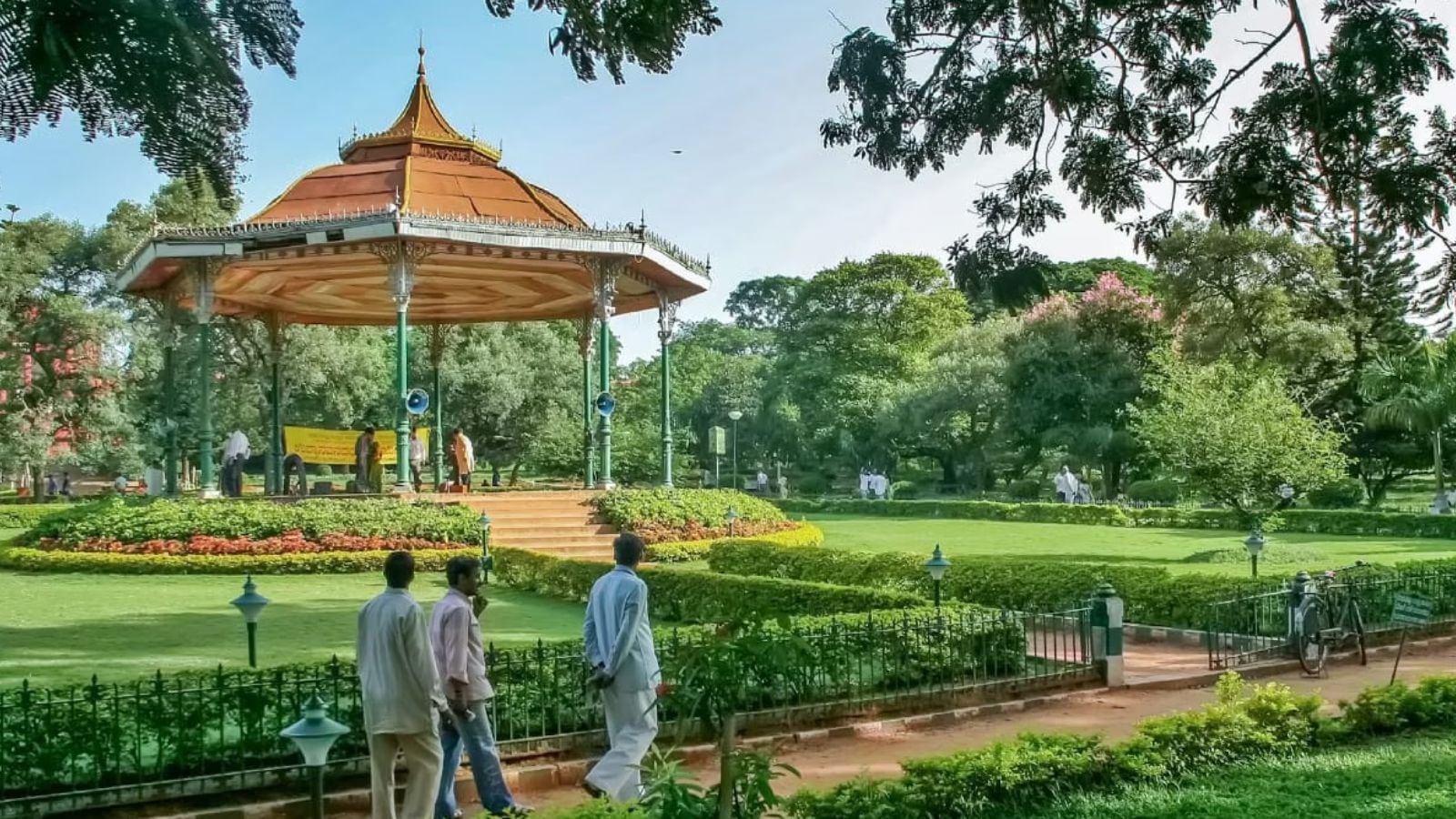
People walked through Lalbagh in Bengaluru to protest a new parks law.
The walk was called “Walk in Lalbagh.
Walk for Lalbagh.”
They are worried that parts of parks could be used for roads and other public projects.
The law allows up to five per cent of park land to be transferred for certain government-backed projects.
A planned tunnel road might use some Lalbagh land temporarily and permanently.
Protesters say Lalbagh is important for nature, history and its very old rock formation.
The law says proposed land use must be evaluated by officials and experts.
Supporters of the law also say it permits some horticulture facilities when there is a recorded public need.

Citizen groups, resident associations, walkers and pro-Kannada organisations joined a protest walk through Lalbagh.
The event opposed the Karnataka Government Parks (Preservation) (Amendment) Bill, 2026, passed by both houses of the state legislature.
The Bill allows up to five per cent of park land to be transferred for specified public utility projects.
A proposed 17-km tunnel road could require about six acres of Lalbagh temporarily and one acre permanently, according to sources.
BJP and JD(S) leaders have petitioned the Governor not to approve the Bill.
- Who
- Citizen groups, Resident Welfare Associations, walkers, pro-Kannada organisations, Yellappa Reddy, Shobha Karandlaje, Tejasvi Surya, C N Manjunath, and opposition BJP and JD(S) leaders.
- What
- A protest walk was held against the Karnataka Government Parks (Preservation) (Amendment) Bill, 2026.
- Where
- Lalbagh botanical garden in Bengaluru, Karnataka.
- When
- Sunday, August 30; the Bill had been passed by both legislative houses the previous week.
- Why
- Participants opposed provisions allowing portions of park and garden land to be used for public infrastructure and utility projects.
Bill opponents
Bill provisions and safeguards
Use of park land
Bill opponents
Protesters and opposition parties said parks such as Lalbagh should be protected from infrastructure-related land use and what they described as real-estate use.
Bill provisions and safeguards
The Bill permits transfers by sale, lease, gift, exchange, mortgage or other means, but restricts them to government bodies and public utility projects within a five-per-cent limit.
Impact on Lalbagh
Bill opponents
Citizens highlighted Lalbagh’s ecological and geological importance and opposed the possible use of its land for the proposed tunnel road.
Bill provisions and safeguards
The Bill counts previously alienated land within the five-per-cent ceiling and provides for evaluation by the Additional Chief Secretary, designated officers and expert professionals.
Horticulture facilities
Bill opponents
Opponents sought broader protection for Bengaluru’s parks and gardens from non-conservation uses.
Bill provisions and safeguards
The Bill excludes standard Horticulture Department developments from the restriction and permits limited horticulture-farm facilities, including cold storage and post-processing units, when public interest and necessity are recorded.
Key facts
- Event
- “Walk in Lalbagh. Walk for Lalbagh”
- Legislation
- Karnataka Government Parks (Preservation) (Amendment) Bill, 2026
- Parent law
- The Bill amends the 1975 Act governing prominent Bengaluru green spaces, including Lalbagh and Cubbon Park.
- Land limit
- Up to five per cent of the total park area may be alienated for specified public utility projects.
- Tunnel project
- The proposed tunnel road would run 17 km between Hebbal and Central Silk Board.
- Potential Lalbagh use
- Sources said the tunnel project may require around six acres temporarily and one acre permanently.
- Heritage feature
- Lalbagh contains the approximately three-billion-year-old Peninsular Gneiss rock.
Quotes
The Karnataka Government Parks (Preservation) (Amendment) Bill, 2026
State legislation describing permitted uses within Horticulture Farms
“This includes post-processing facilities, cold storage units, production of improved varieties, and agro-based industries directly beneficial to the local farming community, backed by recorded reasons demonstrating public interest and absolute necessity.”
 theprint.in
 deccanchronicle.com
Sources
Related news

Bengaluru Residents Protest 5% Park Land Rule at Lalbagh
Karnataka’s Five-Percent Park Land Law Sparks Green Space Outrage

Karnataka Parks Bill Draws Governor Reconsideration Plea Over Green Spaces

Karnataka Park Land Bill Draws Backlash Over Lalbagh Impact
Karnataka Approves 5% Park Land Use Amid Tunnel Road Debate
Karandlaje Urges Governor to Withhold Assent to Karnataka Park Bill

Andhra Pradesh Chambers Plans 2026 Expo, Manufacturing Focus Urged

21 lakh inactive EPF accounts hold ₹8,500 crore; govt acts

EPFO receives 15.24 lakh higher pension applications; 11,595 pending