3 weeks ago
FMGE low pass rate sparks doctor protests; medical body responds

Many people study to become doctors in other countries.
When they come back to India, they must pass a big test called the FMGE.
This test checks if they are ready to take care of patients in India.
In June, the test was very hard — only about 12 out of every 100 people passed it.
Most of the people who took the test did not pass.
Some students thought the test was unfair.
They said there were new video questions nobody told them about.
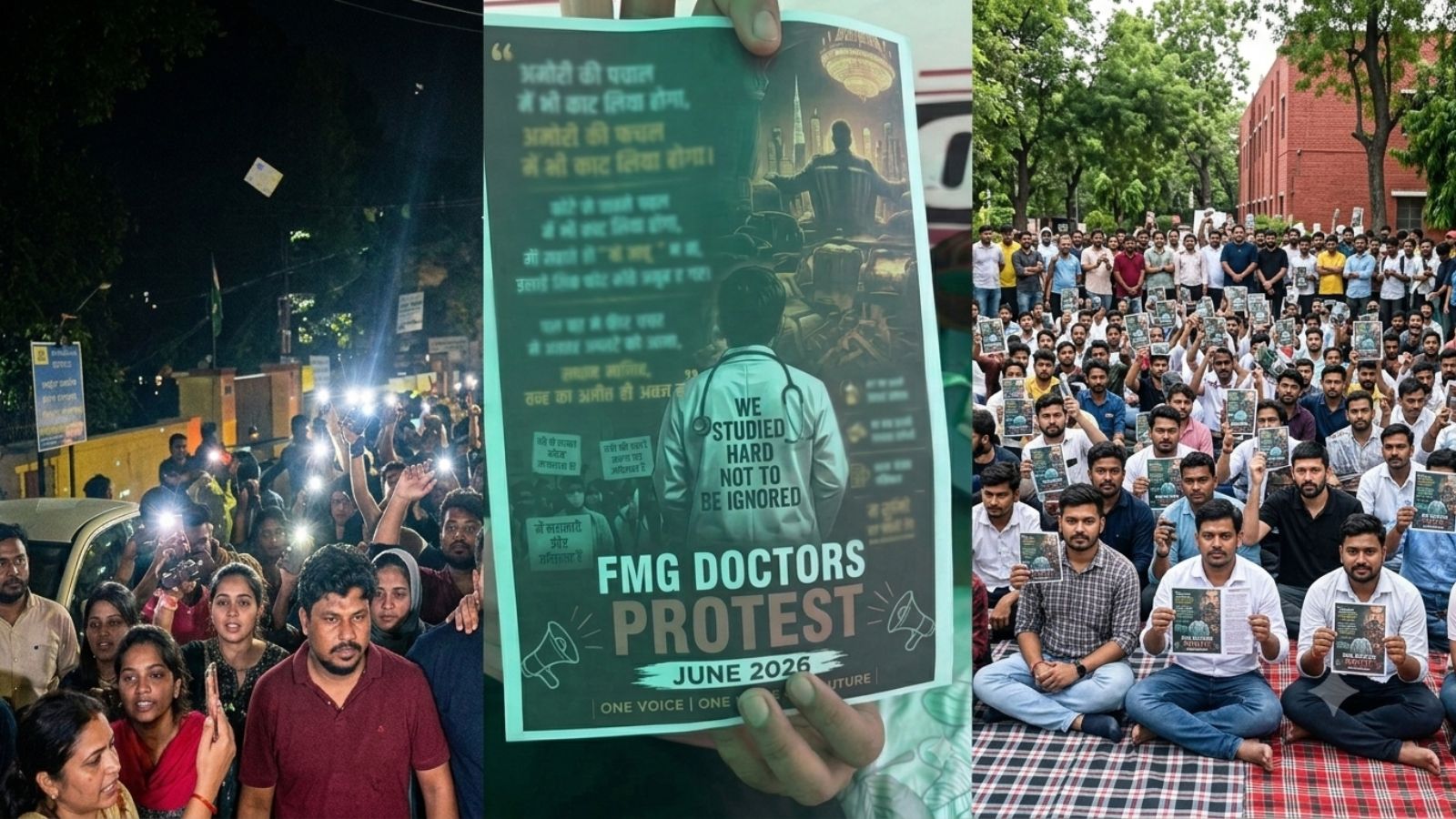
They protested in New Delhi, asking for the answer key to be released.
The officials said the test protects patients, and they will set up a committee to look into the complaints.

Only 12.38% of the 37,448 candidates cleared the June FMGE, with over 31,000 failing to meet the 50% cutoff.
Foreign Medical Graduates have been protesting at New Delhi's Jantar Mantar since early August, demanding the release of the official answer key and a review of video-based questions.
NBEMS said a new three-member committee will look into releasing the answer key and asked student representatives for three weeks.
Students allege a tougher paper and unannounced video-based questions squeezed exam time; NMC says the format was notified in advance and is standard in Western examination systems.
NMC officials attribute the low pass rate to gaps in clinical training at foreign institutions, noting that about 88% of this year's candidates were repeaters.
- Who
- Foreign Medical Graduates (FMGs), including AIMSA-FMSW and the All FMGs Association, protesting against NBEMS and the National Medical Commission (NMC).
- What
- The June FMGE recorded a low 12.38% pass rate, prompting protests demanding transparency, release of the answer key and review of video-based questions.
- Where
- India, with protests at Jantar Mantar, New Delhi.
- When
- June 2026 exam; protests ongoing since early August 2026.
- Why
- Candidates allege a tougher paper, unannounced video-based questions and poor management caused widespread failures; officials say the exam safeguards healthcare standards and point to gaps in foreign clinical training.
Student protesters
Medical authorities (NBEMS/NMC)
Video-based questions
Student protesters
New video-based questions were introduced without advance notice, ate into the one-minute-per-question time limit and made completing all 300 questions harder.
Medical authorities (NBEMS/NMC)
The change was notified in advance with demo tests conducted; video questions are standard in Western exam systems and assess clinical findings that static images cannot capture.
Cause of the low pass rate
Student protesters
The low pass rate reflects a tougher paper and poor exam management rather than candidates' ability.
Medical authorities (NBEMS/NMC)
The dip is close to historical June-session trends, and recurring failures stem largely from inadequate clinical training and theoretical-heavy curricula at many foreign medical institutions.
Transparency and answer key
Student protesters
NBEMS should release the official answer key and response sheets, something it has never done for FMGE unlike other major medical examinations.
Medical authorities (NBEMS/NMC)
A newly constituted committee will examine the grievances and recommend measures NBEMS can implement within the existing legal and statutory framework.
Key facts
- Exam
- Foreign Medical Graduate Examination (FMGE), June 2026
- Pass rate
- 12.38%
- Candidates appeared
- 37,448
- Candidates failed
- Over 31,000 (below 50% cutoff)
- Conducting body
- National Board of Examinations in Medical Sciences (NBEMS)
- Protest location
- Jantar Mantar, New Delhi
- Video-based questions
- About 12 per Supreme Court petition; students claim 12–28, officials say 12–14
- Repeaters
- About 88% of this year's candidates
Quotes
Senior official, National Medical Commission
Representative of the National Medical Commission, overseeing medical exam standards
“"This is not merely a test. It safeguards our own healthcare system."”
 indianexpress.com
Sources
Related news

Centre Defends FMGE June 2026 Exam, Rejects Pattern Change Claims
FMGE Panel Rejects Lower Bar, Proposes Three Exams Yearly
Foreign Medical Graduates Resume Delhi Protest Over FMGE Relief

FMGE 2026 Candidates Seek Fairness as NBEMS Reviews Exam Concerns
NBEMS Announces October FMGE, Three Annual Exams From 2027

FMGE 2026 Students Meet NBEMS Over Exam Concerns
Two Years After RG Kar Doctor's Rape-Murder, Case Remains Unresolved

ED widens Chhattisgarh probes with two arrests and searches

Delhi High Court Orders Madhya Pradesh to Pay Advocate Dues
Haryana sanitation workers’ strike puts BJP government under pressure

Orissa High Court Says Brothel Customers Cannot Face Trafficking Charges