1 week ago
Foreign Medical Graduates Resume Delhi Protest Over FMGE Relief
Foreign medical graduates must pass the FMGE to practise medicine in India.
Only a small share of students passed the June 2026 test.
The students say the exam was unusually hard and included video questions they were not properly warned about.
They also complained about testing conditions and a lack of transparency.
After protests, NBEMS created a committee to study their concerns.
The committee suggested changes for future exams, including better warnings about multimedia questions.
However, it did not recommend extra marks or other compensation for the students who took the June test.
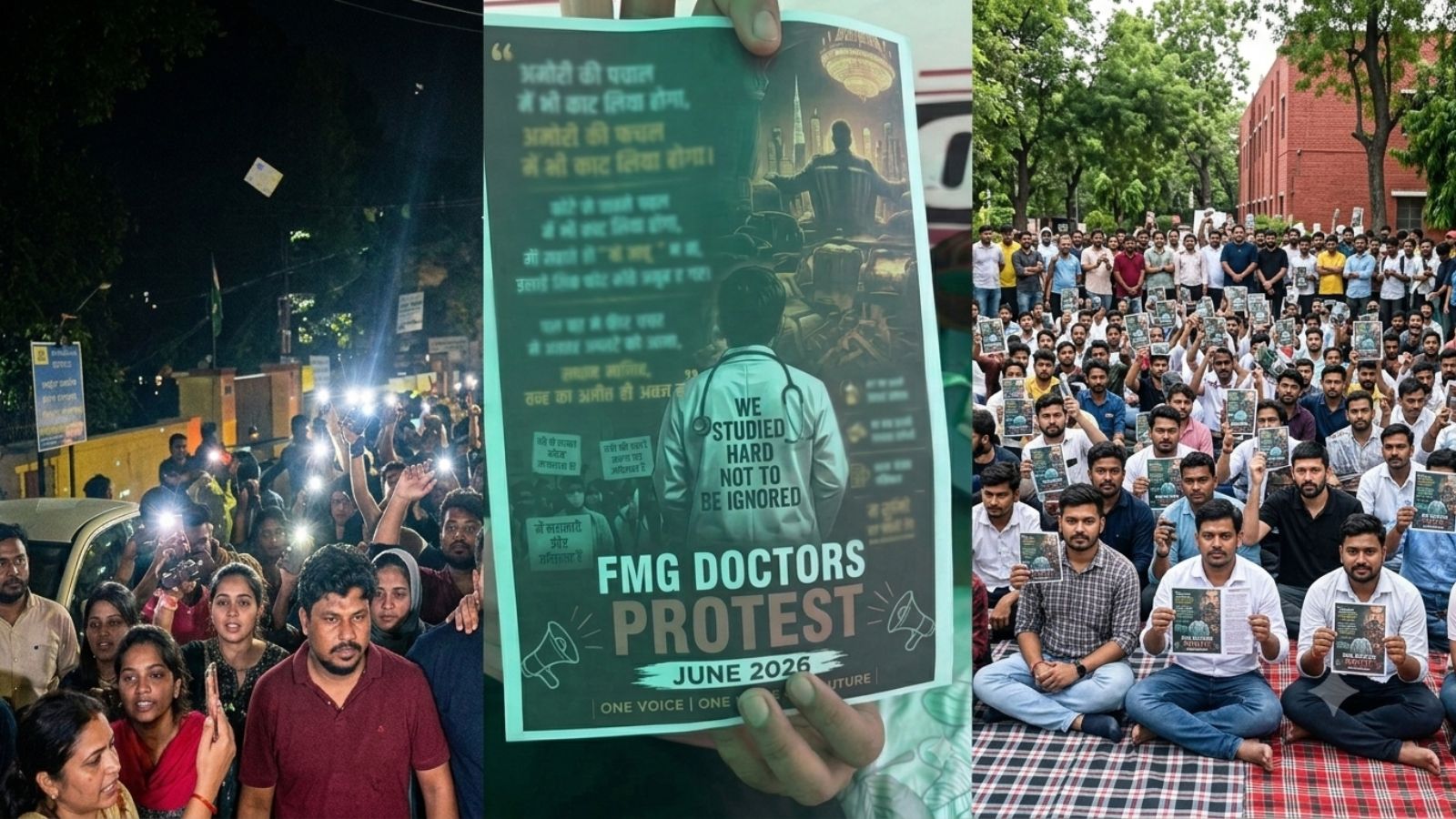
The students say this is unfair, so some have returned to Delhi to protest and go on hunger strike.
Officials say the exam is meant to ensure that doctors meet a minimum level of medical competency.

Only 12.38% of 37,448 candidates passed the June 2026 FMGE.
Protesters allege the exam was unusually difficult and included unannounced video-based questions.
NBEMS formed a three-member committee after an August 3 Jantar Mantar demonstration.
The committee recommended future changes but rejected compensatory or grace marks for the June batch.
Candidates resumed protests and hunger strikes after talks failed to resolve their compensation demand.
- Who
- Indian foreign medical graduates, supported by groups including the All India Medical Students’ Association – Foreign Medical Students’ Wing and the All FMGs Association, are protesting against the National Board of Examinations in Medical Sciences.
- What
- Candidates have resumed demonstrations and hunger strikes, chiefly demanding compensation or relief for those who took the June 2026 Foreign Medical Graduate Examination.
- Where
- The demonstrations are taking place in Delhi, including at Jantar Mantar and near the NBEMS office.
- When
- Protests began after the result was announced on July 10, followed by a Jantar Mantar demonstration on August 3 and renewed action after later talks failed.
- Why
- Candidates say the examination was unusually difficult, included video-based questions without adequate notice, and had other problems; they object to receiving no compensatory relief after the review.
Protesting Candidates
NBEMS and Medical Regulators
Compensation for the June batch
Protesting Candidates
Candidates argue that if the review identified changes needed for future examinations, students affected by the June exam should receive one-time relaxation, compensation, or another form of relief.
NBEMS and Medical Regulators
The expert committee did not recommend compensatory or grace marks, saying available evidence did not establish a material impact on the result and citing the legal framework governing the qualifying standard.
Video-based questions
Protesting Candidates
Protesters say roughly 20 to 22 video-based questions were introduced without adequate advance notice and consumed valuable time in a roughly one-minute-per-question examination.
NBEMS and Medical Regulators
National Medical Commission officials say video questions assess clinical signs and findings that static images may not capture, are consistent with medical training, and help ensure minimum competency.
Reasons for the low pass rate
Protesting Candidates
Candidates dispute the view that differences in foreign medical training mainly explain the low pass rate and propose a common examination such as NExT for domestic and foreign graduates.
NBEMS and Medical Regulators
NMC officials say foreign medical courses can have largely theoretical early phases and that candidates’ clinical exposure may differ from the patient profiles, disease patterns, and healthcare environment in India.
Key facts
- Examination
- Foreign Medical Graduate Examination, conducted by NBEMS
- June 2026 result
- 12.38% of 37,448 candidates who appeared qualified
- Main disputed feature
- Video- or multimedia-based clinical questions
- Review process
- NBEMS appointed an independent three-member committee after the August 3 protest
- Committee recommendations
- More lower-difficulty questions, advance notice of multimedia questions, and possibly three extra minutes for biometric formalities
- Video-question recommendation
- Defer reintroducing video-based questions in FMGE for at least one year
- Unresolved demand
- Compensatory or grace marks, or other relief, for the June 2026 candidates
Quotes
Dr Ashish Kumar
Core committee member and representative of the protesting foreign medical graduates
“We are not asking them to pass us from above”
 indianexpress.com
Sources
Related news
FMGE low pass rate sparks doctor protests; medical body responds
FMGE Panel Rejects Lower Bar, Proposes Three Exams Yearly

FMGE 2026 Candidates Seek Fairness as NBEMS Reviews Exam Concerns

Centre Defends FMGE June 2026 Exam, Rejects Pattern Change Claims
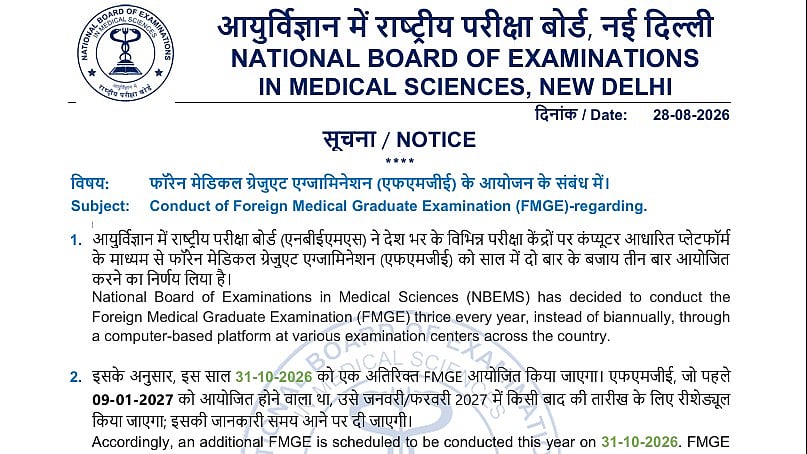
NBEMS Announces October FMGE, Three Annual Exams From 2027
NBEMS Announces Third FMGE Attempt by October 2026

FMGE 2026 Certificate Applications Open September 1; Exam Dates Updated

NMC Reopens FMGE Eligibility Certificate Applications From September 1, 2026