

2 weeks ago
Air India Pilot Faces Action After Altitude Drop Injures 20
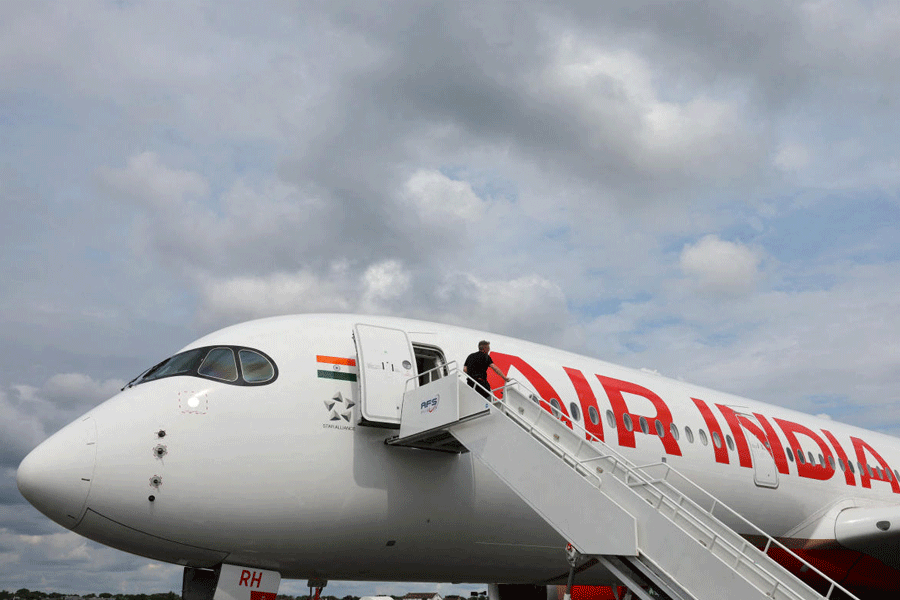
A big airplane called an Air India flight was flying from Phuket to New Delhi when it suddenly dropped very quickly in the sky.
Because of that scary drop, more than 20 people on the plane got hurt.
Some people think the pilot may have taken a drug called marijuana before flying, and that this made him unable to do his job properly.
Other reports say he could not even walk properly while on duty.
Now, the pilot could be punished by the aviation safety office and might even face a court case if the accusations are true.
The Indian government called the head of Air India to ask what the airline is going to do about it.
This problem is not new, because many pilots around the world have been found with drugs in their bodies.
In India, only 10 out of every 100 pilots are tested for drugs each year, which is much fewer than in America.
Everyone agrees that keeping passengers safe is the most important thing.

An Air India flight on the Phuket-New Delhi route suffered a sudden steep drop in altitude, injuring over 20 passengers.
Media reports allege the pilot may have consumed marijuana during duty hours and was reportedly unable to walk.
The pilot is expected to face disciplinary action under Directorate General of Civil Aviation (DGCA) protocols and possible criminal proceedings if the accusations are confirmed.
India's civil aviation ministry summoned Air India's chief executive officer to discuss how the airline will manage the situation.
National Transportation Safety Board data shows an estimated 28.6% of pilots in fatal crashes (2018-2022) tested positive for potentially impairing substances, and India tests only 10% of flight crew annually versus 25% in the United States.
- Who
- An unnamed Air India pilot, Air India, India's civil aviation ministry, and the Directorate General of Civil Aviation (DGCA).
- What
- An Air India flight suffered a steep drop in altitude injuring over 20 passengers, amid allegations the pilot was under the influence of marijuana during duty hours.
- Where
- En route between Phuket and New Delhi, involving India's aviation regulator and civil aviation ministry.
- When
- Recently (exact date not specified in the article).
- Why
- Allegations that the pilot may have been under the influence of drugs during duty, raising serious concerns about passenger safety.
Safety Critics
Current Regulatory Framework
Random drug-testing rate
Safety Critics
India's 10% annual random testing rate leaves most airline personnel unchecked and should be raised to match the US figure of 25%.
Current Regulatory Framework
Current DGCA regulations already require random testing of at least 10% of flight crew and air traffic controllers each year.
Penalty for first-time drug use
Safety Critics
The penalty is too lenient because a first-time positive confirmation does not involve the automatic cancellation of a pilot's licence.
Current Regulatory Framework
Existing penalties for first-time positives are structured without automatic licence cancellation, leaving room for case-by-case assessment.
Detection of psychoactive substances
Safety Critics
The screening process suffers from gaps and fails to detect psychoactive substances that can be legally obtained in other countries.
Current Regulatory Framework
Existing testing protocols follow established DGCA procedures for prohibited substances and are the basis for current disciplinary action.
Key facts
- Airline
- Air India
- Flight route
- Phuket-New Delhi
- Passengers injured
- Over 20
- Alleged substance
- Marijuana
- Regulator
- Directorate General of Civil Aviation (DGCA)
- India's annual random drug-testing rate
- 10% of flight crew and air traffic controllers
- US annual random drug-testing rate
- 25% of airline staff
- NTSB estimate (2018-2022)
- 28.6% of pilots in fatal crashes tested positive for impairing substances
Sources
Related news
India Weighs Annual Drug Testing for All Pilots After Incident

India Considers Year-Round Drug Tests for Commercial Pilots
DGCA Seeks Annual Drug Tests for More Than 25% Crew
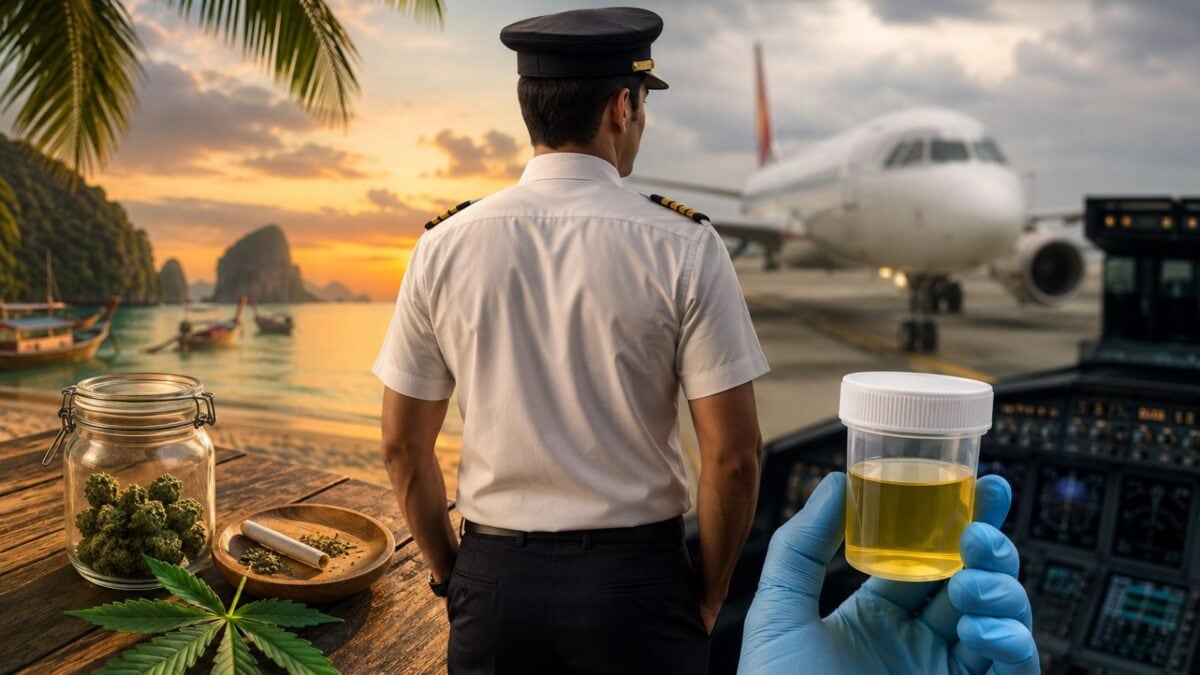
Air India pilot tests positive for marijuana after Phuket-Delhi flight

India Weighs Annual Random Drug Tests for Every Pilot

India Weighs Year-Round Random Drug Tests for Pilots

Pilots Warn Senior Attrition Could Challenge Air India Safety

Air India Express Passenger Arrested After Allegedly Hiding Drugs

New Phuket Resort Offers Luxury Escape From Crowds
