3 weeks ago
China's Offshore Trust Tax Drives Billionaires into Liquidity Trap
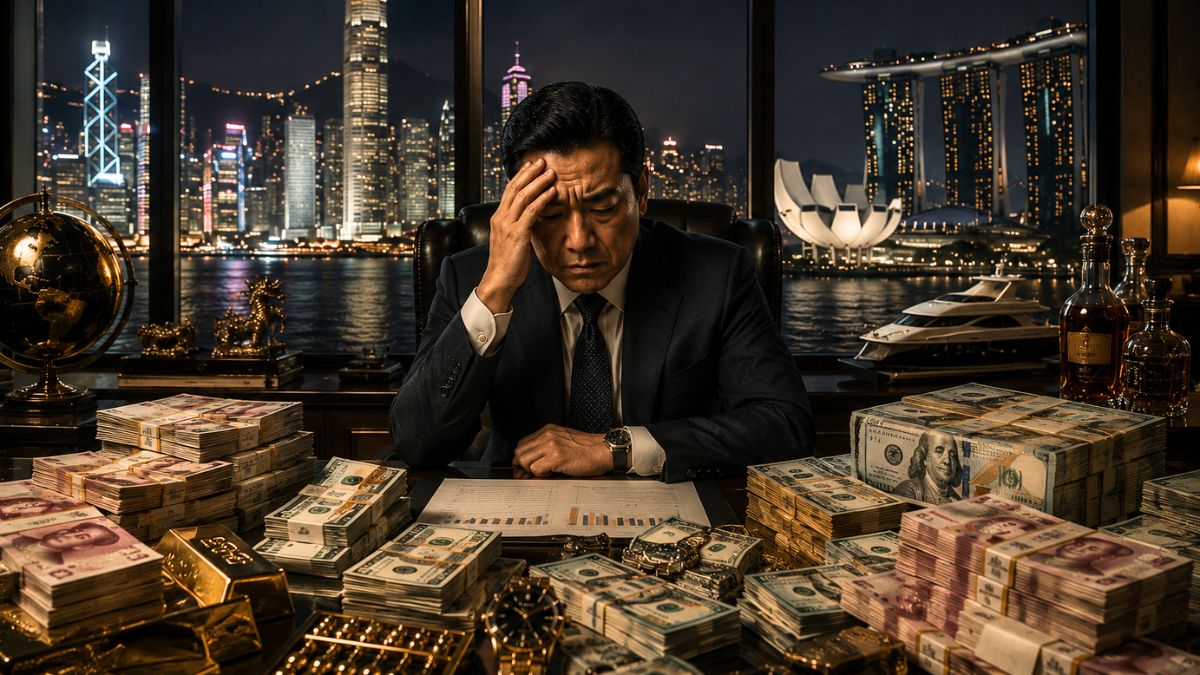
China has made a new rule about a special kind of savings account called an offshore trust, which rich families keep in places like Hong Kong and Singapore.
For the first time, money in these trusts now counts for China's income tax, and the government wants a 20% share of certain profits.
The very rich families have until October 22 to tell the government what they own and pay the tax they owe.
Many rich families are surprised because they thought money kept outside China was hidden from the tax man.
They are also discovering that being rich doesn't always mean having spare cash, because their money is tied up in companies and houses that are hard to sell quickly.
Even getting a passport from another country doesn't automatically get them out of paying, if their lives and businesses are still mainly in China.
The government had already been testing these rules in cities like Shanghai, Jiangsu and Shenzhen before making them national.
Hong Kong and Singapore still want the rich families to stay, so they keep offering welcome mats like tax incentives.
The new rules don't make trusts illegal, but they make rich families think more about honesty and planning than about hiding money.
In the end, the biggest question for these families isn't just how much money they have, but how quickly they can turn it into cash to pay the bill.

China's Ministry of Finance and State Taxation Administration issued rules on July 24 that pull offshore trusts into China's individual income-tax net for the first time.
A 20% tax rate applies to gains on shares, property and other assets transferred into a trust, as well as to income generated by the trust.
Taxpayers have a 90-day window, until October 22, to declare and pay historical liabilities covering assets transferred into trusts from January 1, 2023; the period is not an amnesty but qualifying taxpayers can avoid overdue fines.
Wealth advisers report clients, trustees and advisors are 'in shock,' with the central practical problem being where families will find cash to pay bills tied up in illiquid assets such as private company stakes and property.
Hong Kong trust assets reached about $667 billion in 2023 per KPMG and the Hong Kong Trustees' Association, with 70% held by public and pension funds; the amount of private Chinese wealth affected is not publicly known.
- Who
- China's wealthy families and individuals with offshore trusts, along with tax authorities at China's Ministry of Finance and State Taxation Administration
- What
- New rules pull offshore trusts into China's individual income-tax net for the first time, applying a 20% tax rate on certain gains and trust income and requiring declaration of historical liabilities
- Where
- China, plus Hong Kong and Singapore, the wealth-management centres where offshore trusts are typically held
- When
- Rules were issued July 24, with a 90-day declaration and payment window running until October 22; historical liabilities date from January 1, 2023
- Why
- To bring offshore wealth structures into clearer view and strengthen tax compliance amid pressure on public finances
Beijing's tax enforcement perspective
Wealth-holding families' perspective
Offshore trust taxation
Beijing's tax enforcement perspective
Offshore arrangements have long let wealth sit outside clear official view, and the new 20% rule is needed to bring these structures into China's income-tax net and improve compliance.
Wealth-holding families' perspective
Trusts are a legitimate tool for succession planning and family governance, and the sudden 90-day bill creates serious liquidity problems because wealth is often tied up in assets that cannot be sold quickly.
Regional competition for wealth
Beijing's tax enforcement perspective
China is tightening scrutiny of offshore wealth while seeking more tax revenue amid difficult public finances.
Wealth-holding families' perspective
Hong Kong and Singapore continue to compete aggressively for global wealth business, with Hong Kong counting more than 3,380 single-family offices and Singapore 1,650, both offering tax incentives to attract families.
Key facts
- Tax rate on offshore trust gains
- 20%
- Rules issued
- July 24
- Declaration and payment deadline
- October 22 (90-day window)
- Historical liabilities covered
- Assets transferred into trusts from January 1, 2023
- Hong Kong trust assets (2023)
- About $667 billion
- Trust assets held by public and pension funds
- 70%
- Hong Kong single-family offices (end of 2025)
- More than 3,380
- China land-sale revenue decline (H1 2026)
- 31.5%
Quotes
Clifford Ng
Hong Kong-based partner at Zhong Lun, wealth adviser
“Many clients, trustees, and advisors are still in shock.”
 financialexpress.com
Sources
Related news

China Offshore Tax Crackdown Pressures Wealthy Investors

China Luxury Sales Plunge as Tax Clampdown Hits Wealthy Shoppers

India introduces new foreign asset disclosure rules for taxpayers

Income Tax Department Opens Foreign Asset Disclosure Window August 16
India's FAST-DS 2026 opens one-time foreign asset disclosure window

India Weighs Qualified MFN Rules in Bilateral Investment Treaty Overhaul

1 Finance Elevates Anooj Mehta to Partner Amid Growth

Inherited Agricultural Land May Qualify for Section 54F

KPMG Australia Cuts 387 Jobs Amid Scandal and Consulting Slump

When Agricultural Land Sale Qualifies for Tax Exemption