1 week ago
China Offshore Tax Crackdown Pressures Wealthy Investors

China is making sure wealthy citizens pay taxes on money held outside the country.
New rules apply a 20% tax to some offshore trusts and their income.
Officials in some cities are also collecting taxes on earnings from offshore insurance policies.
Some wealthy people are preparing to report their assets and pay what they owe.
Others are thinking about closing their trusts or selling investments to raise money.
Some may need to borrow because their wealth is tied up in property or other assets that are hard to sell quickly.
Advisers say the government may inspect more kinds of overseas income in the future.
They also say new data systems make it easier for officials to find offshore accounts.
The campaign could affect how much money Chinese investors send to financial centers such as Hong Kong and Singapore.

China introduced a 20% tax on offshore trust asset appreciation and annual trust income.
Authorities in Beijing and Hangzhou have begun enforcing taxes on offshore insurance-policy returns.
Wealth advisers say some investors are preparing to declare assets, pay taxes, or unwind trusts.
Up to $1.2 trillion held by mainland Chinese ultra-wealthy individuals may be affected.
Advisers warn enforcement could expand to other overseas income and intensify scrutiny of capital outflows.
- Who
- Chinese wealthy individuals, tax officials, lawyers, wealth advisers, and offshore asset managers.
- What
- China is enforcing new and expanded taxes on offshore trusts, trust income, and offshore insurance-policy returns.
- Where
- The measures concern offshore wealth held in places including Hong Kong, Singapore, and other low-tax jurisdictions, with enforcement reported in cities including Beijing and Hangzhou.
- When
- The trust-tax rules were overhauled in late July; unpaid taxes on assets placed in trusts since January 2023 and trust income received before 2026 must be reported within 90 days.
- Why
- Authorities are seeking additional revenue, enforcing existing tax rules, and increasing scrutiny of overseas wealth and capital outflows amid fiscal strains.
Investor and Adviser Concerns
Government Enforcement Rationale
Tax burden
Investor and Adviser Concerns
Lawyers and advisers say the rules could create major costs, force asset sales or borrowing, and make offshore trust structures harder to maintain.
Government Enforcement Rationale
Chinese tax officials say residents’ overseas income must be declared and taxed according to law.
Trust decisions
Investor and Adviser Concerns
Some wealthy individuals are considering unwinding trusts, avoiding new trusts, or using smaller offshore asset managers instead.
Government Enforcement Rationale
Authorities are applying a standardized tax regime to structures that previously operated in a regulatory grey area.
Future scrutiny
Investor and Adviser Concerns
Some family offices fear investigations into how money was moved out of China, beyond ordinary tax compliance.
Government Enforcement Rationale
Analysts say stronger enforcement can provide diversified revenue sources and support broader tax reforms, while authorities use expanded data-gathering capabilities.
Key facts
- Trust tax rate
- 20% on appreciation when shares, property, or other assets are transferred into offshore trusts, and on annual income from those trusts and controlled offshore entities.
- Potentially affected wealth
- Up to $1.2 trillion held by mainland Chinese ultra-high-net-worth individuals, according to a Boston Consulting Group report cited by Reuters.
- Trust usage
- More than half of China’s super-rich individuals use offshore family trusts, according to KPMG.
- Reporting deadline
- Unpaid taxes on assets placed in trusts since January 2023 and trust income received before 2026 must be reported within 90 days.
- Affected investments
- Offshore trusts, overseas-listed company holdings, offshore insurance policies, real estate, and mainland A-shares are among the assets discussed.
- Information systems
- The Common Reporting Standard and Golden Tax Phase Four allow authorities to cross-check financial information across jurisdictions.
- Possible expansion
- Bank of America analysts said enforcement could eventually extend to overseas employment income, following taxation of offshore stock-trading gains.
Quotes
Christopher Beddor
Deputy China research director at Gavekal Dragonomics
“Based on my discussions with Chinese lawyers, it looks like if they have a trust and they are Chinese citizens they have to declare. There’s no running away from this, no way to restructure. The only way is to not declare and unwind the trust.”
 theprint.in
“Taxes on offshore trusts will “create massive burdens” to maintain trust structures.”
theprint.in
Sources
Related news
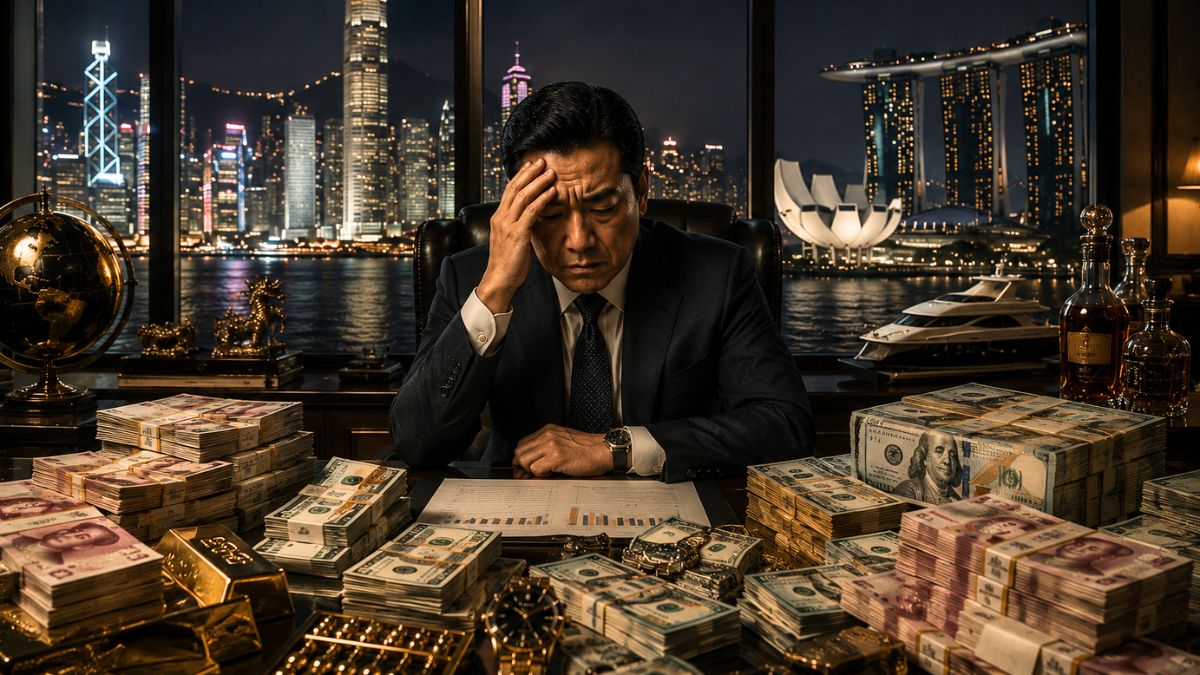
China's Offshore Trust Tax Drives Billionaires into Liquidity Trap

China Luxury Sales Plunge as Tax Clampdown Hits Wealthy Shoppers

I-T Crackdown Should Target Evasion, Not Parents
India's FAST-DS 2026 opens one-time foreign asset disclosure window

Trump Weighs 7.5% Tariff on China Over Excess Capacity

Bank of America Vice President Killed in Times Square Stabbing

Times Square Stabbing Leaves One Dead; Suspect Had Ominous Posts

Social Media Posts Preceded Fatal Times Square Stabbing Rampage

Times Square Stabbing Kills Bank Executive as Police Shoot Suspect

Beyond Nvidia, power and cooling firms benefit from data-centre boom