2 days ago
How Buddha, Ambedkar, and Nehru Shaped India's Constitutional Morality
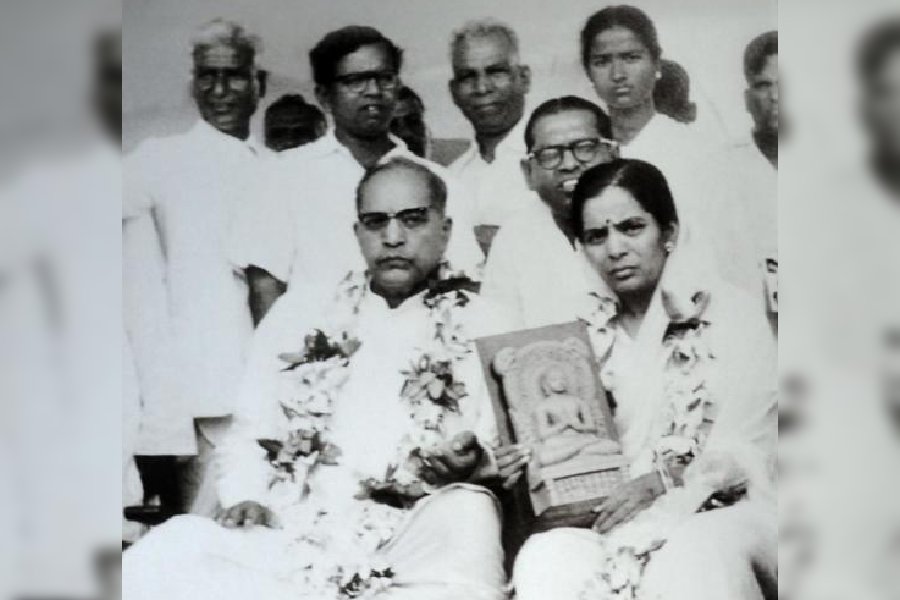
The Constitution is more than a rulebook for running India.
It also expresses ideas about how people should treat one another.
The article says Gautama Buddha influenced these ideas through his support for reason, compassion, and equality.
Jawaharlal Nehru admired the Buddha as a thinker who encouraged people to question ideas and use evidence.
B.R. Ambedkar saw Buddhism as a way to fight caste oppression and inherited inequality.
Nehru focused more on thoughtful and ethical citizenship.
Ambedkar focused more on changing unjust social structures.
Their ideas helped shape constitutional morality, which means using power fairly and respecting everyone's dignity.
The article says democracy needs compassion, critical thinking, and protection for excluded people, not just elections.

India's Constitution reflects not only legal institutions but also a moral philosophy about society, power, and human dignity.
The article argues that Gautama Buddha's emphasis on reason, compassion, equality, and ethical responsibility influenced India's constitutional imagination.
Jawaharlal Nehru viewed the Buddha as an exemplar of rational inquiry, humanism, intellectual humility, and scientific temper.
B.R. Ambedkar interpreted Buddhism as a philosophy of social emancipation that could challenge caste hierarchy and support liberty and equality.
Together, Nehru and Ambedkar presented constitutional democracy as a moral community founded on liberty, equality, fraternity, and human dignity.
- Who
- Gautama Buddha, B.R. Ambedkar, Jawaharlal Nehru, and the framers of India's Constitution.
- What
- An analysis of how Buddhist ideas, as interpreted by Ambedkar and Nehru, contributed to India's constitutional morality.
- Where
- India, particularly within its constitutional and public life.
- When
- During the making of modern India and in the Constitution's continuing democratic life.
- Why
- The article argues that democracy requires moral commitments to reason, compassion, equality, liberty, fraternity, and human dignity.
Key facts
- Central influence
- The article identifies Gautama Buddha's emphasis on reason, compassion, equality, and ethical responsibility as a major influence on India's constitutional imagination.
- Nehru's interpretation
- Jawaharlal Nehru regarded the Buddha as a representative of India's rational and humanistic civilisation.
- Ambedkar's interpretation
- B.R. Ambedkar viewed Buddhism as a philosophy capable of challenging caste hierarchy and enabling social emancipation.
- Constitutional principles
- The article connects Buddhist ethics with human dignity, rejection of inherited hierarchy, reason, compassion, and restraint in exercising power.
- Social equality
- Fundamental rights, the abolition of untouchability, affirmative action, and the Directive Principles are presented as efforts to address historical injustice and privilege.
- Ambedkar's work
- The Buddha and His Dhamma, completed shortly before Ambedkar's death, interpreted Buddhism as a philosophy of democratic society.
- Democratic challenge
- The article warns that constitutional procedures can survive while democratic culture weakens through majoritarianism, polarisation, propaganda, and declining constitutional restraint.
Sources
Related news

Angmo Urges Government to Treat Education Protests as Wake-Up Call

Rajnath Singh Urges Youth to Pursue Constitutional Change
Constitution, Not Bhagwat, Determines Muslims’ Belonging in India
RSS Chief Mohan Bhagwat Presents Dharma as Universal Balance
Why Vedic Sages Might Be Called Intellectual Naxals Today