

1 week ago
India's Industry Urged to Use FTAs and Strengthen Supply Chains

A senior Indian commerce official said businesses should use the trade agreements India has signed with other countries.
These agreements can help Indian companies sell products abroad with lower duties.
He said companies must follow the agreements’ rules and make more of their products in India.
He also encouraged businesses to build stronger supply chains so disruptions do not cause major problems.
The official said India should produce more critical minerals, electronic parts and application programming interfaces.
He recommended selling to more countries instead of relying on only a few markets.
He pointed to agreements with Oman, New Zealand and Mauritius as new opportunities.
He also said India should help create international technology standards rather than only follow them.
The broader goal is for India to become a trusted and competitive manufacturing partner.

Commerce official Yashvir Singh urged industry to make greater use of India’s free trade agreements to expand exports and attract investment and technology.
He called for companies to understand rules of origin and map supply chains to qualify for preferential tariffs.
Singh said India should strengthen domestic production of critical minerals, application programming interfaces and electronic components.
He urged exporters to diversify markets, citing trade pacts with Oman, New Zealand and Mauritius.
Singh said India should help shape technical standards while building resilient manufacturing chains amid China’s dominance in several critical-mineral segments.
- Who
- Yashvir Singh, additional secretary in India’s Department of Commerce, and Indian industry.
- What
- Singh urged industry to use free trade agreements, increase value addition, diversify export markets, strengthen supply chains and help shape technical standards.
- Where
- New Delhi, at a commerce conclave.
- When
- Thursday; the article does not specify the date.
- Why
- To boost manufacturing, expand market access and make India a more resilient and trusted participant in global value chains.
Key facts
- Speaker
- Yashvir Singh, additional secretary in the Department of Commerce
- Capital-goods exports
- The share of capital goods in India’s export basket rose from 13% in 2014 to 19% today, according to Singh.
- Trade agreements cited
- Pacts with Oman, New Zealand and Mauritius were described as opening preferential-access corridors in the Gulf, Oceania and East Africa.
- FTA priorities
- Companies were urged to understand rules of origin, map supply chains and use preferential tariffs.
- Supply-chain priorities
- Singh highlighted critical minerals, application programming interface manufacturing and domestic electronic components.
- Standards examples
- Singh cited UPI, ONDC and BharatNet as early examples of what sovereign standards can achieve.
- Global risk
- China was described as dominating large segments of critical-mineral processing and refining, including rare earths, graphite and magnesium.
Quotes
Yashvir Singh
Additional Secretary, Department of Commerce
“All the trade agreements, which India has signed, is a door, but doors, however magnificently crafted, do not open themselves. It is the industry that must walk through them and should use FTAs to expand market access, attract investment and technology, diversify supply chains, and build manufacturing ecosystems that can withstand global shocks.”
 deccanchronicle.com
“The share of capital goods in India's export basket has already risen from 13 per cent in 2014 to 19 per cent today, but that trajectory must be accelerated.”
deccanchronicle.com
Sources
Related news

India Needs Structural Transformation To Reach $2 Trillion Exports

MSMEs urged to leverage trade pacts to boost exports
Jayant Sinha urges India to lower trade barriers for exports

India Pursues New FTAs Targeting 75% of Global Trade

India targets $1 trillion exports as shipments grow 15 percent
Editorial warns India's FTA gains hinge on boosting export competitiveness

Naidu Orders Speedy Construction of 5,000 Temples in Andhra Pradesh

UPI Accepted in 11 Countries, But Payments Vary
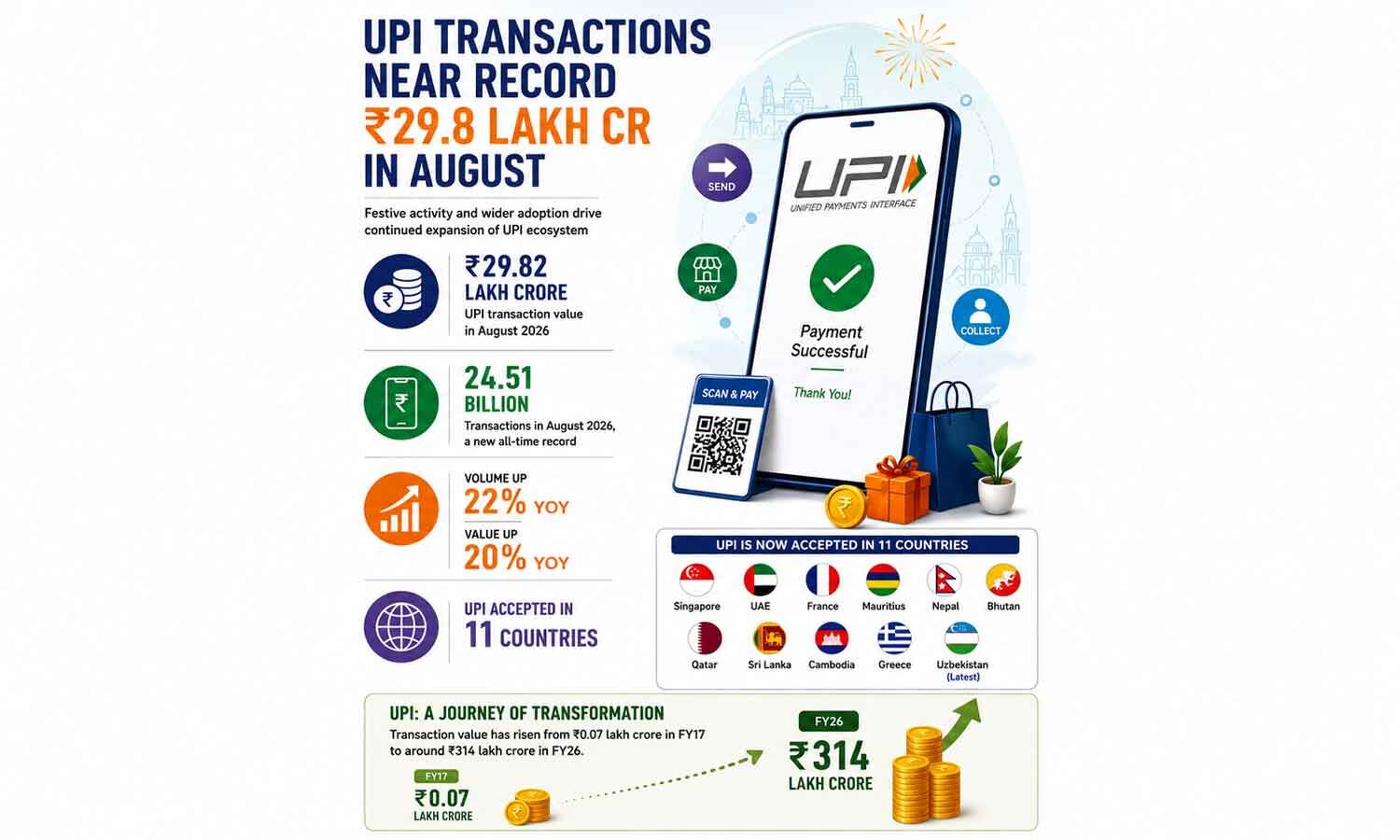
UPI Hits Record August Volume as Festive Demand Fuels Growth

India Probes Suspicious Outward Remittances Exceeding Rs 30,000 Crore
Telangana Promises Support for Telugu Language and Culture in Mauritius
