3 weeks ago
Editorial warns India's FTA gains hinge on boosting export competitiveness
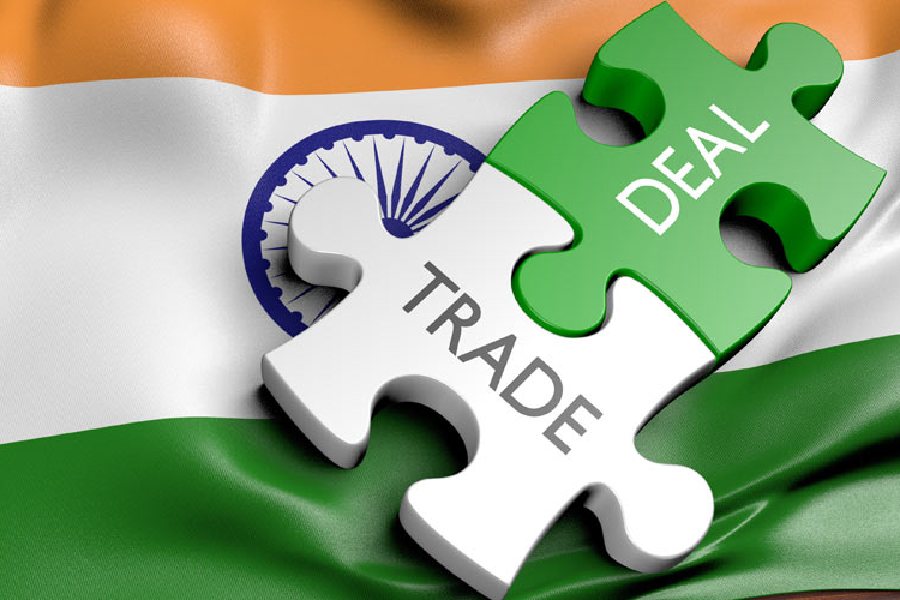
India signed special trading deals, called free trade agreements, with other countries.
India hoped these deals would help Indian businesses sell more products to those countries.
The deals lowered taxes on goods, which should make selling easier.
But in Asia, the deals did not work as hoped.
India ended up buying much more from countries like Japan, South Korea and Singapore than it sold to them.
India's trade gap with ASEAN countries grew from about ten billion dollars in 2012 to more than fifty-one billion dollars in 2025.
India also lost ground, because its share of what these countries buy got smaller.
Newer deals with Western countries, like the United Kingdom, might help more, but Britain expects to gain more than India from the deal.
The article says India should not just sign more deals — it needs to make its factories and products better and more competitive.

India's trade deficit with ASEAN rose from $10.4 billion in 2012 to $51.2 billion in 2025 after FTAs signed in 2010-2011.
India's share of ASEAN's import basket fell from 3.42% to 1.71% between 2012 and 2025, with similar declines in Singapore and South Korea.
The editorial says tariff liberalisation exposed Indian firms to Asian manufacturing without comparable gains in productivity, scale or value addition, though deficits are not always harmful, as with commodity imports from Australia.
The British government estimates the India-United Kingdom agreement will raise British exports to India by nearly 60% versus 25% for Indian exports to Britain.
The editorial urges sectoral competitiveness assessments, strict rules of origin, import-surge safeguards and better export finance and logistics before future agreements.
- Who
- India and its trading partners ASEAN, Japan, South Korea, Singapore and the United Kingdom
- What
- India's FTA strategy has widened trade deficits in Asia and failed to improve export competitiveness, raising doubts about the benefits of future agreements
- Where
- India, Asian markets including ASEAN, Japan, South Korea and Singapore, and Western partners such as the United Kingdom
- When
- From the FTAs signed in 2010-2011 through trade data covering 2012 to 2025
- Why
- Tariff liberalisation exposed Indian firms to efficient Asian manufacturing without comparable gains in productivity, scale or value addition
Skeptics of India's FTA push
Supporters of India's FTA push
Value of free trade agreements for India
Skeptics of India's FTA push
Past Asian FTAs widened India's trade deficits and shrank its export shares, showing tariff concessions were not converted into competitive domestic production.
Supporters of India's FTA push
India's FTA enthusiasm rests on the assumption that tariff concessions will expand exports, improve competitiveness and secure entry into global value chains.
Balance of the India-United Kingdom agreement
Skeptics of India's FTA push
British estimates show the deal raises British exports to India by nearly 60% against just 25% for Indian exports, with tariff savings of £900 million for British exporters versus £220 million for Indian exporters.
Supporters of India's FTA push
India has competitive strengths in services, textiles, pharmaceuticals and engineering goods and runs surpluses with several Western markets, so the newer agreements are more favourable.
Key facts
- India's trade deficit with ASEAN (2012)
- $10.4 billion
- India's trade deficit with ASEAN (2025)
- $51.2 billion
- India's share of ASEAN imports (2012-2025)
- 3.42% to 1.71%
- India's share of Singapore imports (2012-2025)
- 2.27% to 1.71%
- India's share of South Korean imports (2012-2025)
- 1.33% to 1.02%
- Projected British export increase under India-UK deal
- Nearly 60%
- Projected Indian export increase under India-UK deal
- 25%
- Tariff savings after 10 years
- £900 million for British exporters vs £220 million for Indian exporters
Sources
Related news

Free Trade Agreements Drive India's Record Export Growth

India's Industry Urged to Use FTAs and Strengthen Supply Chains

MSMEs urged to leverage trade pacts to boost exports
Jayant Sinha urges India to lower trade barriers for exports
Goyal Pitches India’s Scale to Japanese Businesses and Investors

FTAs can give Indian agriculture a bigger global footprint

India Replaces Sri Lanka as 2027 Women’s Champions Trophy Host

Mitsubishi Revives Pajero With 201PS Fifth-Generation SUV

IIM-Born CEO Says Australia’s Everyday Life Runs on Trust
UN Report Says 1.5°C Overshoot, Return Remains Possible

Uday Kotak Warns Global Bond Markets Face Roller-Coaster Volatility