1 week ago
RBI Governor Defends Early Closure of FCNR(B) Swap Window
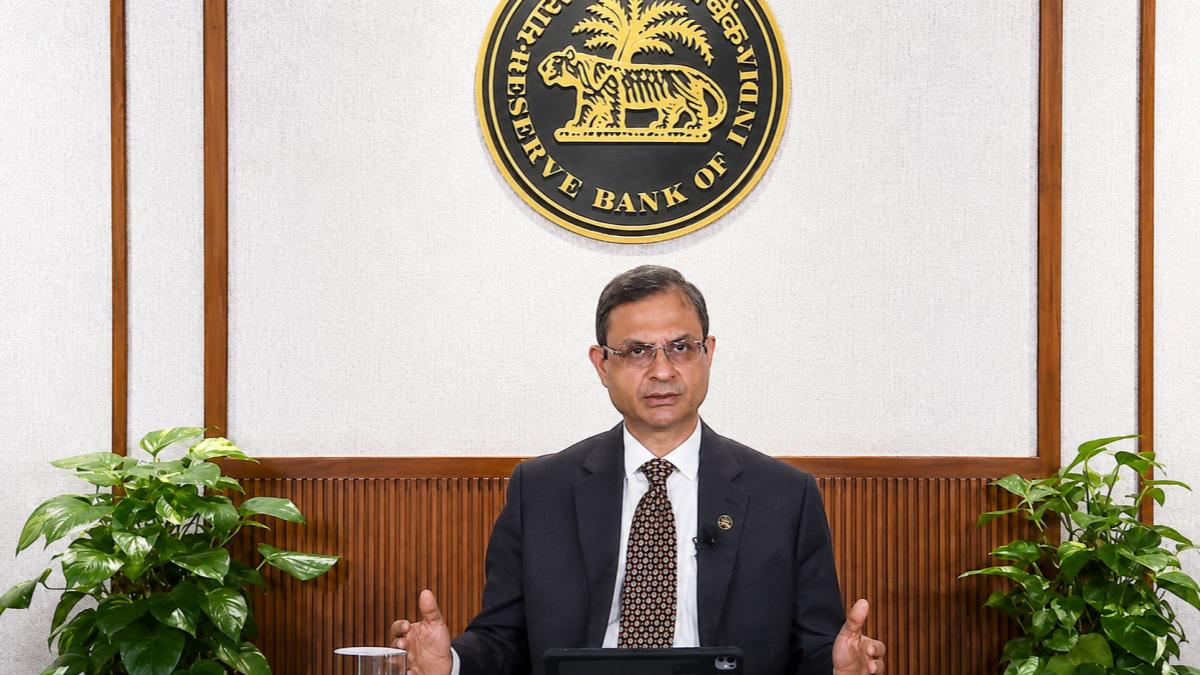
The Reserve Bank of India decided to end a special foreign-currency swap program one month early.
Governor Sanjay Malhotra said this was not a reversal, but an adjustment based on new information.
More money was entering the program than the RBI had expected.
The RBI believed that continuing the swaps would bring smaller benefits while creating greater costs to manage the money.
The program was designed to bring foreign currency into India and support the country’s external finances.
Malhotra said the Indian rupee would continue to be guided by the market.
He also said Indian banks and financial companies were strong enough to handle difficult conditions.
The RBI will continue watching the economy, food supplies and financial risks.

RBI Governor Sanjay Malhotra called the early closure a calibrated, prudent and data-driven decision.
The RBI advanced the FCNR(B) swap window’s closure by one month amid stronger-than-expected inflows.
Malhotra said FCNR(B), ECB and OFCB schemes could attract at least $80 billion.
He said the swaps would strengthen India’s external sector but increase sterilisation costs over time.
The governor said banks remained resilient, with strong capital, liquidity and low non-performing assets.
- Who
- Reserve Bank of India Governor Sanjay Malhotra and the Reserve Bank of India.
- What
- The RBI defended advancing the closure of the temporary FCNR(B) swap window by one month.
- Where
- India and its financial markets.
- When
- The decision and comments were reported on Wednesday; Malhotra also referred to remarks made after the August 5 Monetary Policy Committee meeting.
- Why
- Inflows were stronger than expected, while the marginal benefit of each additional dollar swapped was declining and the cost of sterilising funds was rising.
Critics of the early closure
RBI’s justification
Whether the decision was a reversal
Critics of the early closure
Critics argued that Malhotra’s comments after the August 5 Monetary Policy Committee meeting had ruled out an early closure, making the subsequent move appear sudden or inconsistent.
RBI’s justification
Malhotra rejected the characterization of a U-turn, emphasizing that he had said there was no proposal to advance the date “as of now” and that the situation was still evolving.
Timing and stakeholder notice
Critics of the early closure
The announcement was viewed by some stakeholders as sudden, potentially leaving limited time to adjust arrangements.
RBI’s justification
Malhotra said stakeholders had more than two weeks to prepare and benefit from the facility during its remaining period, which the RBI considered sufficient.
Benefits versus costs of continued swaps
Critics of the early closure
The case for keeping the facility open could be based on continuing to attract foreign currency assets and support the external sector.
RBI’s justification
The RBI said inflows had exceeded expectations, so the additional benefit of every dollar swapped was declining while the cost of sterilising the funds for longer was increasing.
Key facts
- Decision
- The RBI advanced the closure of the FCNR(B) swap window by one month.
- Expected inflows
- The FCNR(B), external commercial borrowings and overseas foreign currency borrowings schemes were expected to attract at least $80 billion.
- Policy rationale
- The RBI cited stronger-than-expected inflows, diminishing marginal utility and increasing sterilisation costs.
- Exchange-rate policy
- The exchange rate remains market determined, with intervention aimed at curbing excessive volatility and undue speculation.
- Bank capital
- Banks had a capital-to-risk-weighted-assets ratio of nearly 18%.
- Bank liquidity
- Banks had a liquidity coverage ratio of about 127%.
- Asset quality
- Gross and net non-performing asset ratios stood at 1.7% and 0.4%, respectively.
Quotes

Sanjay Malhotra
Governor of the Reserve Bank of India
“It will not be correct to call it a U‑turn; it is rather a calibration.”
 financialexpress.com
Sources
Related news
RBI Governor Defends Calibrated Swaps, Regulation and Policy Hold
RBI Rules Out Premature End to FCNR (B) Incentive Scheme

Reserve Bank Closes FCNR(B) Swap Window Early Amid Inflows

RBI Forex Swap Draws $136.37 Billion, Led by FCNR(B)
RBI Advances FCNR(B) Scheme Closure to August 31
RBI Rules Out Early End to Forex Swap Schemes

RBI Governor Meets US Fed Chief Kevin Warsh at G20

Indian Bond Yields Near 7% as Rate Hike Bets Rise

India Hosts BRICS 2026 Amid US-Iran War Tensions

Finance Ministry Flags Global Yield and Inflation Risks for India