2 hrs ago
Iran President Challenges Trump With Minab Photos at UNGA

Iran’s president spoke at the United Nations about the conflict involving Iran, the United States, and Israel.
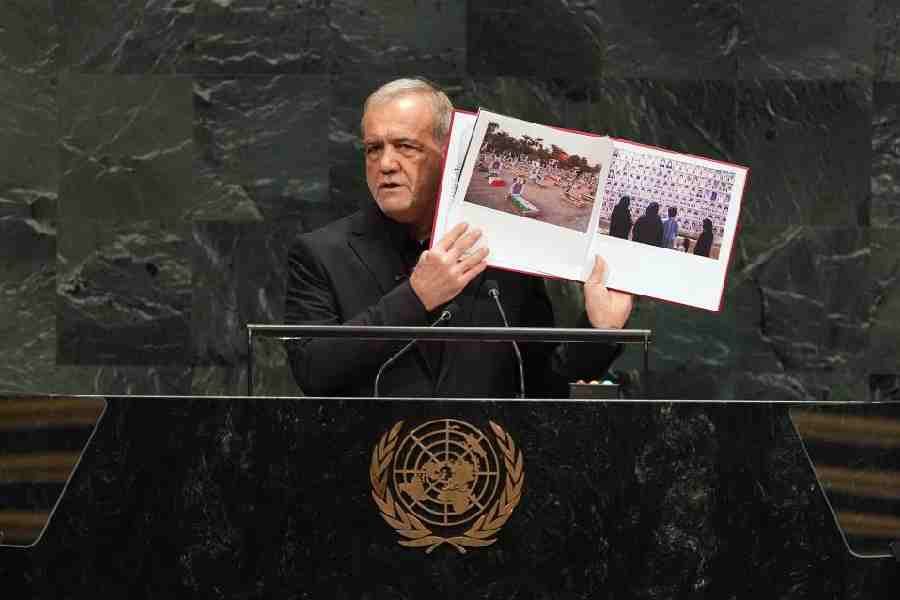
He showed pictures of children who he said were killed in a school strike in Minab.
He called Iran a victim of terrorism and rejected claims that Iran is a terrorist country.
He said attacks had damaged schools, hospitals, universities, and other facilities.
He argued that Iran’s military and nuclear programs are meant for defense and development.
He warned that continued fighting could spread across the region.
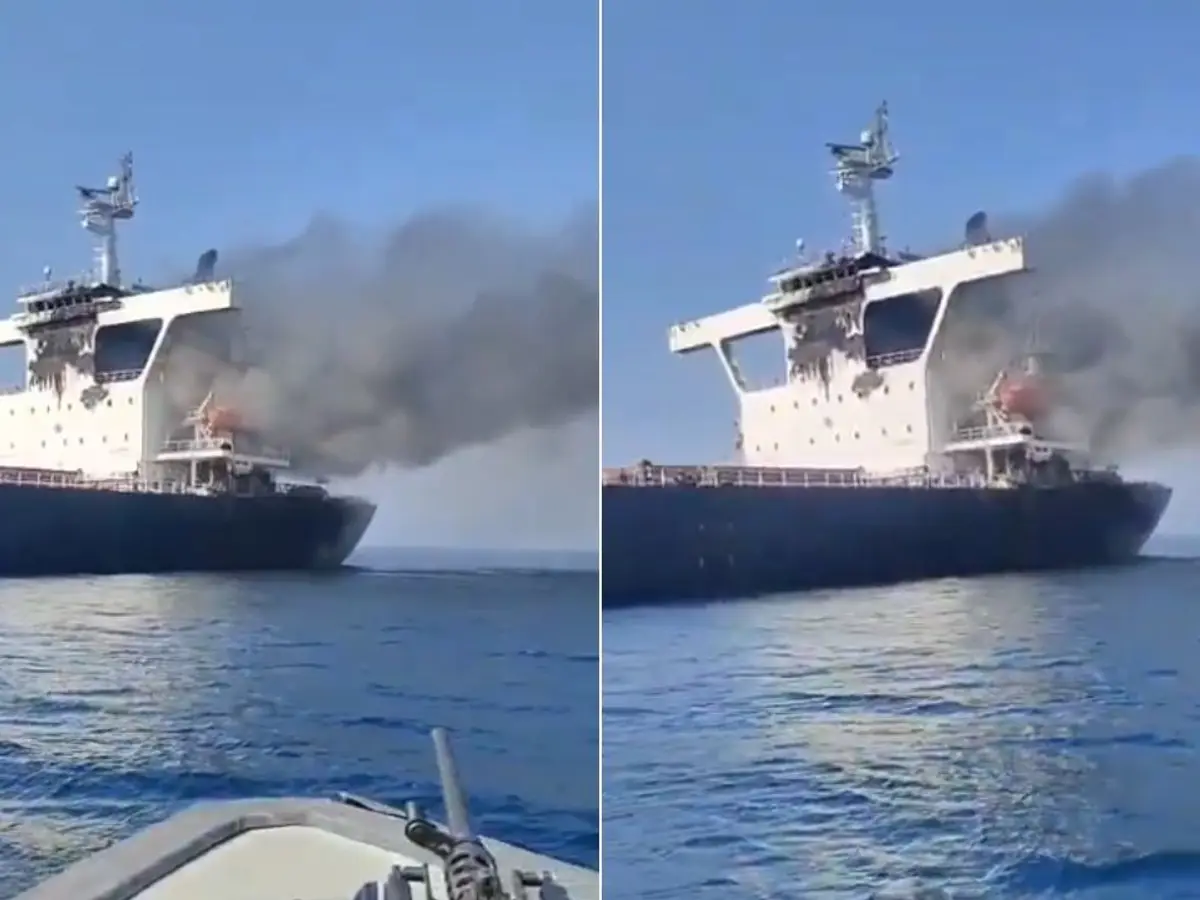
He also criticized restrictions affecting Iran’s access to the Strait of Hormuz.
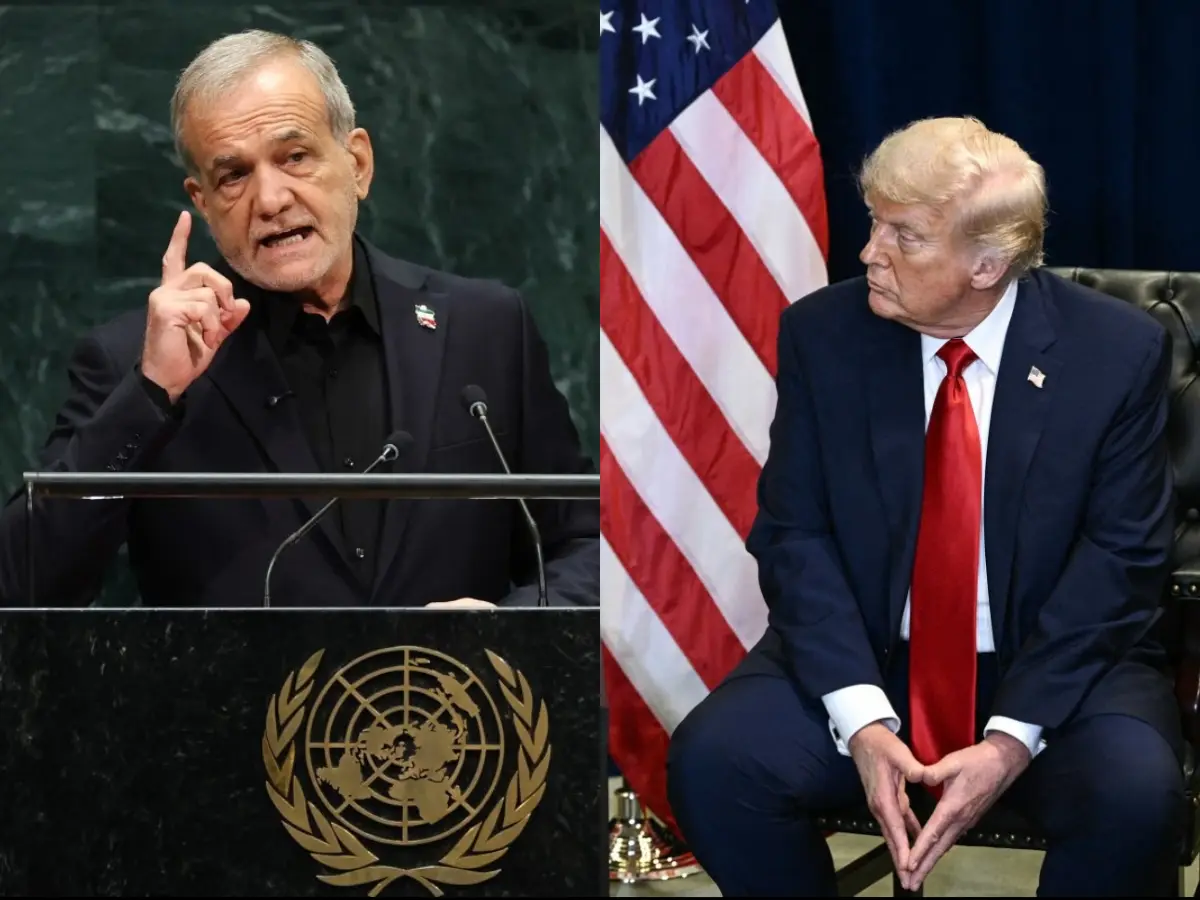
Donald Trump said Iran might face severe consequences unless it reaches a peace deal.

Masoud Pezeshkian accused the United States and Israel of targeting Iranian civilians and public facilities.
Pezeshkian held up photos of students killed in a Minab school strike and a picture of Ali Khamenei.
He said Iran’s military and nuclear ambitions are defensive and that Tehran would defend itself without seeking outside approval.
Pezeshkian warned that attacks on Iran and restrictions around the Strait of Hormuz could expand the regional crisis.
Donald Trump said Iran could face annihilation without a peace deal and suggested negotiations may follow the United States midterm election.
- Who
- Iranian President Masoud Pezeshkian, United States President Donald Trump, and representatives of Iran, the United States, and Israel.
- What
- Pezeshkian delivered a forceful UN General Assembly speech accusing the United States and Israel of aggression and defending Iran’s military posture.
- Where
- The United Nations headquarters in New York City; the speech also referred to Minab and the Strait of Hormuz.
- When
- Pezeshkian spoke on Wednesday, September 23, 2026; Trump addressed the General Assembly the previous day.
- Why
- Pezeshkian sought to reject accusations against Iran, highlight civilian casualties, defend Iran’s right to respond, and warn against further escalation.
Iran’s Position
United States Position
Responsibility for violence
Iran’s Position
Pezeshkian said Iran is the victim of terrorism and accused the United States and Israel of attacking civilians, schools, hospitals, universities, and infrastructure.
United States Position
Trump and the United States have accused Iran of terrorism and aggression, according to Pezeshkian’s account of the US position.
Military capability
Iran’s Position
Pezeshkian said Iran’s military power and nuclear ambitions are defensive, and that Iran does not need permission to defend itself.
United States Position
Trump warned that Iran could be annihilated if it does not reach a peace deal.
Regional security and maritime access
Iran’s Position
Pezeshkian said restrictions on Iran’s access to the Strait of Hormuz and continued attacks could spread the war and would not create security.
United States Position
Trump said the United States Navy was escorting oil out of the Strait of Hormuz and that more oil was flowing than at any point since the war began.
Key facts
- Speaker
- Masoud Pezeshkian, President of Iran
- Forum
- 81st Session of the United Nations General Assembly
- Location
- United Nations headquarters, New York City
- Symbolic images
- Photos of students killed in a Minab school strike and slain Supreme Leader Ali Khamenei
- Iran’s position
- Iran says its military and nuclear ambitions are defensive and intended to support national development.
- Trump’s warning
- Trump said he could annihilate Iran if a peace deal is not reached.
- Strait of Hormuz
- Pezeshkian warned that restrictions on Iran’s maritime access could intensify the regional crisis.
Quotes

Masoud Pezeshkian
President of Iran addressing the United Nations General Assembly.
“We do not seek power in order to attack or commit aggression. We seek energy for progress, not to threaten societies with weapons. We say it clearly: in order to defend our country, we do not seek anyone's permission or approval.”
 m.rediff.com
“We can't let some have free access to Hormuz while imposing agression on us. They close access to our own waterway. Expansion of war won't lead to security.”
m.rediff.com
Sources
Related news
Pezeshkian Defies Trump, Offers Diplomacy in UN Wartime Speech
Pezeshkian Defies Trump With Defiant UN Speech on Iran

Pezeshkian Rejects Trump’s Threats, Keeps Door Open To Diplomacy

Iranian President Displays Minab Victims’ Photos at UN Assembly
Pezeshkian Criticizes Trump’s Changing Messages on Iran
Pezeshkian Rejects US and Israeli Pressure During India Visit

Stocks Fall as Oil Surges Despite Trump’s Productive Iran Talks
Iran, US Remain Far Apart as Diplomacy Continues
Indian Sailor Killed in Strait of Hormuz Vessel Attack