4 days ago
Supreme Court Limits Government’s Power to Deny Cleared Appointments
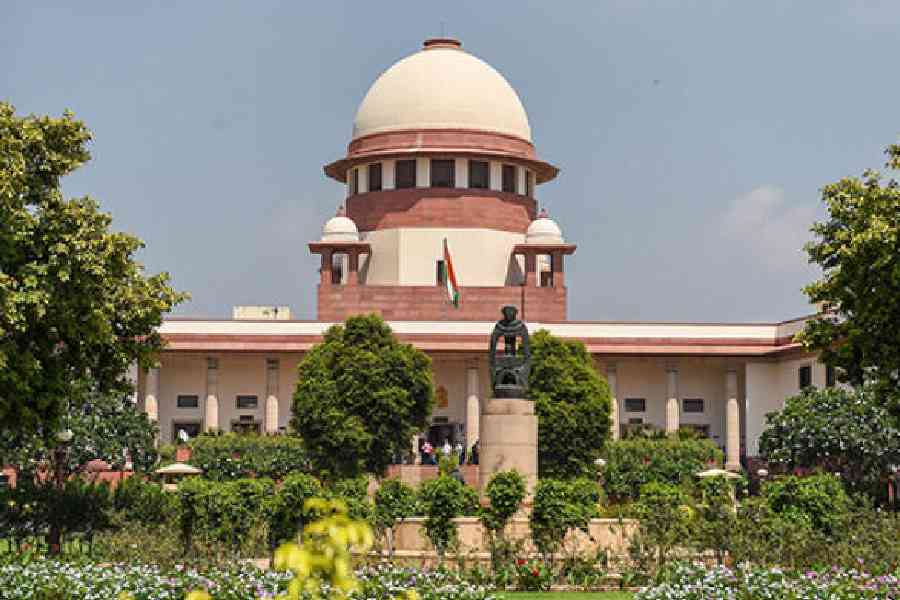
The Supreme Court considered a case about a person chosen for a university registrar job.
A public service commission had checked Shailendra Kumar Patel and recommended him.
The Chhattisgarh government later decided that he did not have enough qualifying experience.
The Supreme Court said the government usually cannot redo the commission’s eligibility decision under the applicable rule.
However, a selected person does not always have an automatic right to receive the job.
An appointment may still be refused if fraud, illegality, or serious problems affected the selection.
The court found that the government’s expert committee had used subjective judgments rather than a clear official standard.
It therefore ordered that the earlier court decisions against Patel be set aside.

The Supreme Court ruled that the government cannot withhold an appointment after a public service commission determines a candidate’s eligibility and suitability.
The ruling came in Shailendra Kumar Patel’s appeal over his non-appointment as a university registrar in Chhattisgarh.
The court said selection does not create an absolute right to appointment if fraud, illegality, or serious irregularities affected the process.
It held that Chhattisgarh’s government could not independently re-examine Patel’s eligibility after the commission’s determination under Rule 10.
The court set aside decisions by both a single judge and a division bench of the Chhattisgarh High Court.
- Who
- The Supreme Court, Shailendra Kumar Patel, the Chhattisgarh Public Service Commission, and the Chhattisgarh government were involved.
- What
- The court ruled that the government could not independently reject Patel’s eligibility after the commission had cleared and recommended him, absent lawful and cogent reasons.
- Where
- The dispute concerned appointment as registrar in a Chhattisgarh state university and was heard by the Supreme Court.
- When
- The challenged government orders were dated October 31, 2022, and August 31, 2023; the Supreme Court ruling was issued afterward, with no decision date stated in the article.
- Why
- The court found that Rule 10 of the Chhattisgarh State Universities Service Rules, 1983, gave finality to the commission’s eligibility determination and that the government’s review lacked an indisputable official basis.
Government’s Position
Candidate’s and Supreme Court’s Position
Eligibility review
Government’s Position
The Chhattisgarh government argued that its expert committee found Patel lacked the required experience under the advertisement and service rules.
Candidate’s and Supreme Court’s Position
Patel argued, and the Supreme Court held, that Rule 10 made the public service commission’s eligibility determination final and prevented a fresh government inquiry.
Appointment after selection
Government’s Position
The government did not appoint Patel and later declared him ineligible, maintaining that selection did not require automatic appointment.
Candidate’s and Supreme Court’s Position
The Supreme Court said appointment is not an indefeasible right, but withholding it requires lawful, clear, rational, and non-arbitrary reasons.
Basis for rejection
Government’s Position
The government relied on an expert committee’s comparison of Patel’s teaching experience and academic grade pays across institutions.
Candidate’s and Supreme Court’s Position
The court found no indisputable official criterion supporting the committee’s conclusion and no showing that the commission’s evaluation was fraudulent, corrupt, illegal, or fundamentally flawed.
Key facts
- Appellant
- Shailendra Kumar Patel, an OBC candidate
- Position
- Registrar in a state university
- Commission
- Chhattisgarh Public Service Commission
- Relevant rule
- Rule 10 of the Chhattisgarh State Universities Service Rules, 1983
- Government’s argument
- An expert committee said Patel did not meet the advertised and rule-based experience requirement
- Supreme Court bench
- Justice Sanjay Karol and Justice N. Kotiswar Singh
- Lower-court decisions
- A single judge and a division bench of the Chhattisgarh High Court had upheld the contrary view
Quotes
Justice N. Kotiswar Singh
Supreme Court judge who authored the judgment
“Therefore, for the appointing authority to reject a recommendation by the commission, it must provide lawful, clear, and cogent reasons and account for them before the court of law when questioned.”
 telegraphindia.com
Sources
Related news

Karnataka High Court Quashes KPSC Chief’s Suspension, Orders Reinstatement

Delhi High Court Upholds DU Hiring Freeze Amid Exam Concerns

Court Quashes Haryana Panel's Late Interview Cutoff for Professors
Supreme Court Considers Special Bench for OBC Creamy-Layer Plea
Jharkhand Exam Cancellation Raises Questions About Collective Punishment
Jharkhand High Court Stays JPSC Exam Appointment Cancellations

PUCL Urges CJI Action Over Rajasthan High Court Allegations

Supreme Court Questions IPS Deputation for CAPF Leadership Positions

Supreme Court Quashes 20-Year Conviction, Reaffirms Juvenile Legal Protections

Two Years After RG Kar Doctor's Rape-Murder, Case Remains Unresolved

ED widens Chhattisgarh probes with two arrests and searches