3 weeks ago
High-Level Panel Recommends More Camps, Drones for NSTR
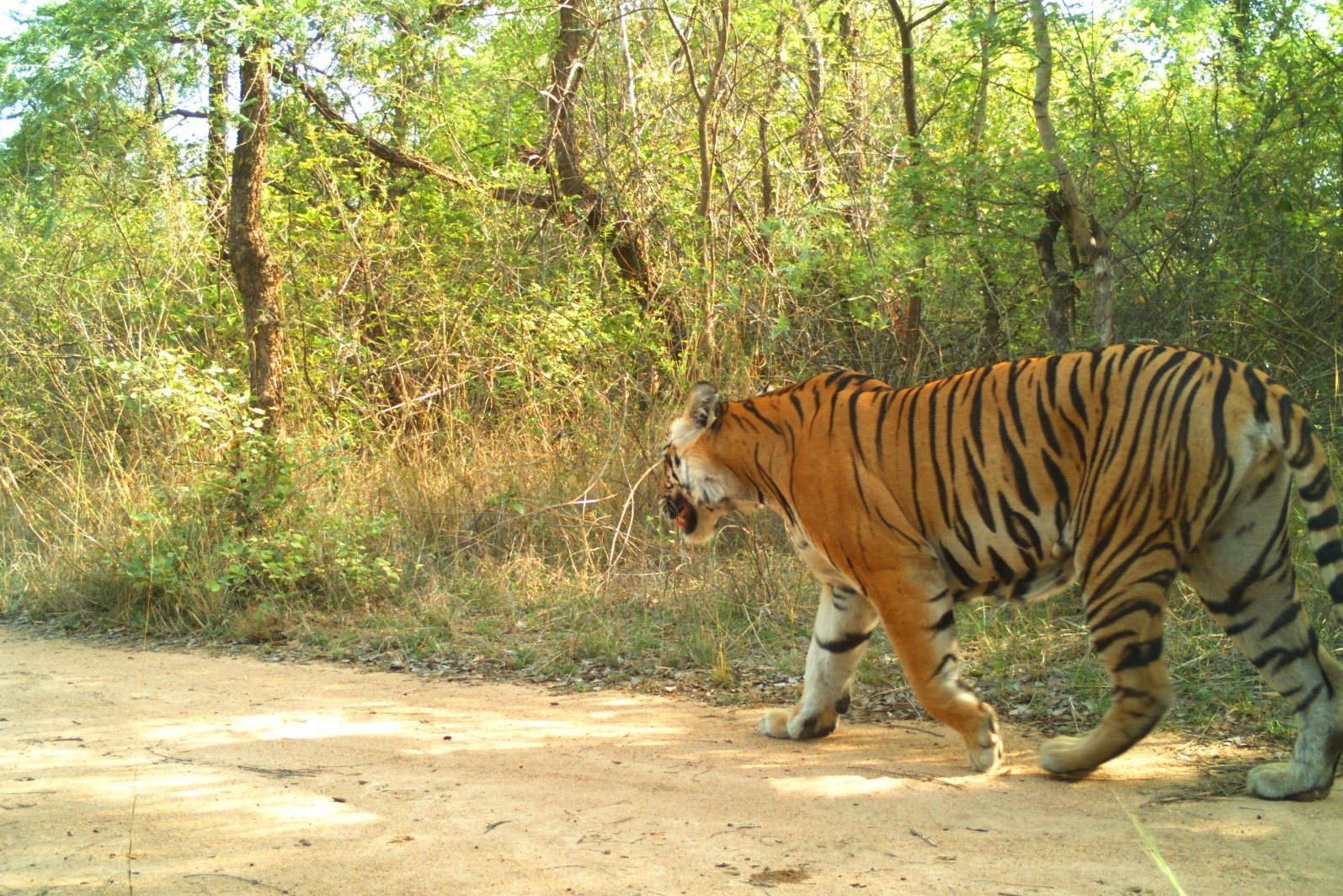
A group of experts studied a big forest in India where tigers live and made a plan to keep them safe.
The forest is called the Nagarjunasagar-Srisailam Tiger Reserve.
Right now the forest has 100 camps where forest watchers stay.
The experts said 25 more camps are needed, so there will be 125 camps in total.
Each camp will have four watchers who look out for the animals and check for danger.
They also want more drones, which are like flying cameras that can watch the forest from the sky.
Drones help catch people who try to hunt animals or enter the forest illegally.
More hidden cameras will be placed along paths that tigers use so we can learn where they go.
The forest will also get better phone and radio connections so watchers can talk to each other.
All of these changes should be done within the next six to eight months.

A five-member high-level committee has recommended measures to strengthen tiger protection in the Nagarjunasagar-Srisailam Tiger Reserve (NSTR).
The number of base camps will be increased from 100 to 125, with four watchers at each camp.
The panel recommended more drones for aerial surveys and surveillance of suspected poachers and smugglers.
Additional camera traps are planned for tiger corridors spanning nearly 5,000 sq km; the reserve already has around 1,500-1,600 traps.
The committee advised funding the new camps from the Tiger Conservation Foundation and will visit NSTR at the end of August.
- Who
- A five-member high-level committee, including member-convenor Rahul Pandey, along with NSTR field director R. Yasoda Bai, who was asked to implement the recommendations.
- What
- Recommended a series of immediate measures to strengthen tiger protection, including increasing base camps from 100 to 125, deploying more drones and camera traps, improving wireless connectivity and conducting a security audit.
- Where
- Nagarjunasagar-Srisailam Tiger Reserve (NSTR); the report was filed from Vijayawada.
- When
- Measures are to be taken up within six to eight months; the committee is expected to visit NSTR at the end of August.
- Why
- To improve surveillance, protect wildlife corridors, prevent illegal activities such as poaching, and strengthen the skills of field personnel.
Key facts
- Reserve
- Nagarjunasagar-Srisailam Tiger Reserve (NSTR)
- Base Camps
- Increased from 100 to 125
- Watchers Per Camp
- 4
- Tiger Corridor Area
- Nearly 5,000 sq km
- Existing Camera Traps
- Around 1,500-1,600
- Implementation Timeline
- Six to eight months
- Funding Source
- Tiger Conservation Foundation (under Wildlife (Protection) Act, 1972)
Quotes
Rahul Pandey
Additional principal chief conservator of forests and committee member‑convenor
“We have recommended that NSTR initiate certain short‑term measures, including reorganising and enhancing the number of base camps, to improve safety for wildlife.”
 deccanchronicle.com
Sources
Related news

Forest Department Intensifies Hunt for Nilgiris Man-Eater Tiger
Tigress Death in Snare Raises Nallamala Wildlife Safety Concerns
Gujarat Deploys Lion Trackers at Girnar, Shetrunjay Hills

Pawan Kalyan orders drone surveillance for wild elephants near Tirupati

Pawan Kalyan Birthday Celebrations Feature Bike Rallies Across Andhra Pradesh

Collector Rajakumari Receives Red Cross Gold Medal for Services

IB Detains Shivtek Safety Officer Amid 2016 Blast Concerns

Krishna Collector Balaji Receives Red Cross Seva Swarna Award Again

AP Governor Presents Red Cross Awards to Seven District Collectors