1 week ago
Mystery Illness Kills At Least 20 Elephants in Kenya
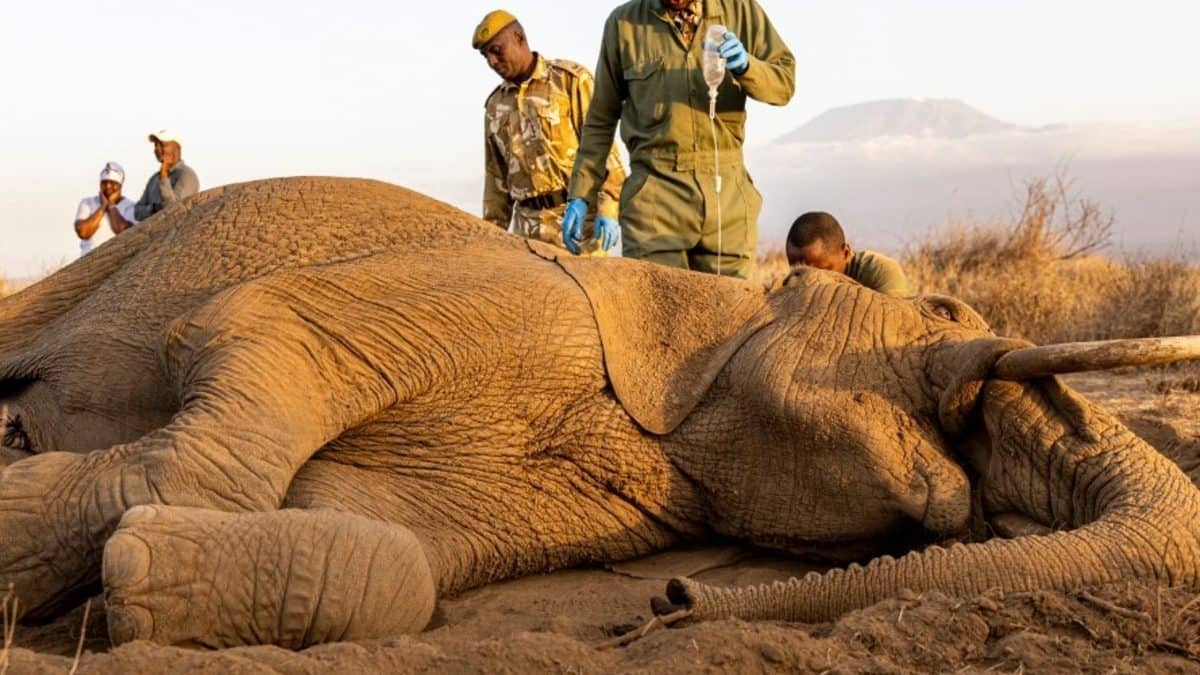
At least 20 elephants in Kenya have died since June.
Many were female elephants or young males.
Before dying, the elephants became partly paralyzed and could not stand properly.
Kenya’s wildlife agency found a lot of cyanide in some carcasses.
This made officials think that pesticides might have poisoned the elephants.
However, local wildlife managers and conservationists said poisoning does not explain why other animals survived.
They think the elephants might have a disease, although officials said there is no evidence of an infectious disease so far.
The deaths happened around the Amboseli area, which is important for tourism.
Experts are investigating because they do not yet know what is killing the elephants.

At least 20 elephants have died in southern Kenya since June, mostly females and young males.
The elephants showed identical symptoms, including partial paralysis and difficulty standing.
Kenya Wildlife Service reported high cyanide concentrations in carcasses, suggesting possible pesticide poisoning.
Local wildlife officials, farmers and conservationists questioned poisoning because scavengers and other animals reportedly survived.
The cause remains unresolved, with experts calling for a full investigation and warning Tanzania could also be affected.
- Who
- At least 20 elephants, along with Kenya Wildlife Service officials, local wildlife managers and conservationists investigating their deaths.
- What
- A mysterious ailment has caused elephant deaths accompanied by partial paralysis and difficulty standing.
- Where
- Southern Kenya, particularly the Amboseli ecosystem, including Kimana Sanctuary and Kitenden B Community Conservancy.
- When
- The deaths have occurred since June; the latest reported victim died on Tuesday, and findings were issued in late July and August.
- Why
- The cause is unknown; Kenya Wildlife Service suspects possible cyanide or pesticide poisoning, while several experts and local observers suspect disease.
Possible Poisoning
Possible Disease
Interpretation of the deaths
Possible Poisoning
Kenya Wildlife Service said toxicology reports found high cyanide concentrations, suggesting possible pesticide poisoning from nearby farm crops or toxic foliage.
Possible Disease
Local wildlife officials, farmers and conservationist Paula Kahumbu questioned poisoning, noting that livestock, scavengers, flies and other animals reportedly did not die after contact with the carcasses.
Evidence about transmission
Possible Poisoning
The poisoning theory points to cyanide detected in carcasses as evidence of a chemical cause.
Possible Disease
The Kenya Wildlife Service said on August 7 that findings did not indicate an infectious or transmissible disease, while local officials said the identical symptoms could indicate a disease affecting elephants specifically.
What should happen next
Possible Poisoning
The cyanide findings support investigating pesticide use and possible exposure from nearby crops or vegetation.
Possible Disease
Observers including Patrick Papatiti and Paula Kahumbu called for a broader investigation focused on identifying the cause rather than assigning blame.
Key facts
- Reported deaths
- At least 20 elephants
- Time period
- Since June
- Main symptoms
- Partial paralysis, breathing difficulties and inability to stand
- Kenya Wildlife Service finding
- High concentrations of cyanide were found in carcasses
- Affected area
- The Amboseli ecosystem in southern Kenya
- Latest reported victim
- An 11-year-old male elephant known as Genghis Khan
- Investigation status
- The cause remains unknown and a full investigation has been requested
Quotes
Patrick Papatiti
Head of operations for Olgulului communal lands in Kenya
“You would find one struggling for a day, struggling for two or even three days. Until they completely die”
 firstpost.com
“If another animal feeds on that carcass and it is not dying, then definitely it is not a chemical”
firstpost.com
Sources
Related news
Elephant Calf Found Dead In Alipurduar Tea Estate

Female Elephant Dies After Electrocution From Illegal Farm Fence
Wild tusker electrocuted by illegal fence in Alipurduar paddy field

Female Elephant Dies After Electric Fence Electrocution in Odisha

Tiger Carcass Found in Chamarajanagar Farm as Probe Begins
Plantation Worker Killed in Wild Elephant Attack in Idukki

Indian Mother Shivani Mehrotra Scales Mount Elbrus, Eyes Everest

Madhya Pradesh Constable Varsha Patel Scales Mount Elbrus

72-Year-Old Indian Climbs Elbrus With Grandson, Eyes Seven Summits

Mountaineers to Hoist Tricolour Atop 5,974-Metre Mount Kanamo