1 week ago
India Opens Deep-Sea Fishing With New Scientific Safeguards
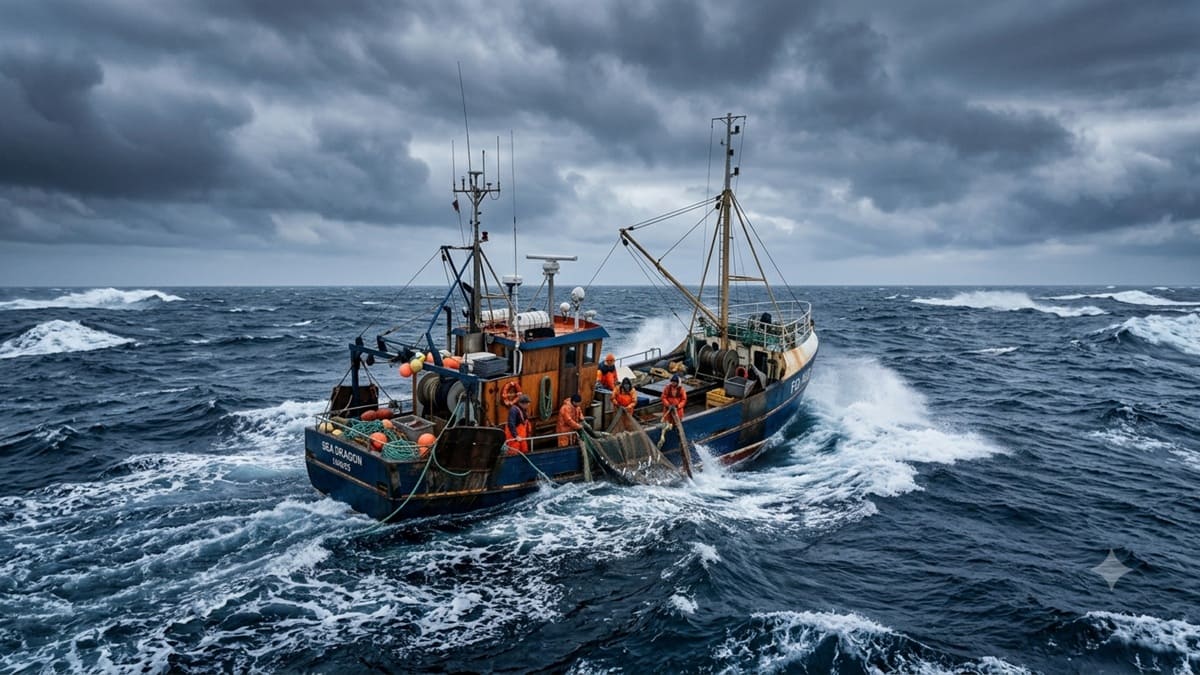
India wants its fishing industry to catch more fish in deep water and on the high seas.
The government says these areas contain valuable species such as tuna, deep-sea shrimp, eels and squid.
Indian fishing vessels can now apply online and for free to access India’s Exclusive Economic Zone.
A new authorisation system also supports fishing beyond the EEZ in international waters.
Fish caught by Indian vessels in the EEZ or on the high seas will not face import duty when brought back to India.
The government says this could create jobs, increase seafood exports and reduce pressure on coastal fishing areas.
Scientists warn that deep-sea ecosystems are important and need protection.
They will use advanced technologies to study the ocean and guide fishing decisions.
The goal is to grow India’s blue economy while trying to keep marine resources sustainable.

India has introduced digital fishing authorisations and duty-free rules to expand deep-sea and high-seas fishing.
A Ministry of Earth Sciences report identifies potentially valuable fish stocks and ecologically important marine habitats.
The Exclusive Economic Zone covers nearly 2,372,298 square kilometres extending 200 nautical miles from India.
The government estimates the EEZ could yield 7.16 million tonnes of conventional and non-conventional resources.
Fisheries research will use acoustics, environmental DNA, satellites, artificial intelligence and ecosystem modelling.
- Who
- The Government of India, Indian fishing vessels, fisheries-sector workers and marine scientists are involved.
- What
- India is expanding access to commercial deep-sea and high-seas fishing while establishing scientific and ecological boundaries.
- Where
- The initiative covers India’s Exclusive Economic Zone, waters beyond the continental shelf and high seas accessed through regional fisheries agreements.
- When
- The high-seas Letter of Authorisation was launched in early July; the national report was released on Thursday, and the cited government data includes FY2025-26 and October 2025 figures.
- Why
- The government aims to increase seafood exports, create employment, reduce pressure on coastal fisheries and develop the blue economy while supporting ecological sustainability.
Key facts
- Exclusive Economic Zone
- Nearly 2,372,298 square kilometres, extending 200 nautical miles beyond India.
- Estimated EEZ potential
- 7.16 million tonnes of conventional and non-conventional resources, according to a NITI Aayog report.
- Fisheries livelihoods
- The sector supports nearly 30 million livelihoods, according to government data cited in the article.
- FY2024 fishery exports
- Fishery products earned Rs 60,523 crore in FY2024.
- Duty reform
- Fish caught by Indian vessels in the EEZ or on the high seas will be made free of duty.
- Deep-sea resources
- Identified species include deep-sea shrimp, perches, scombroids, flatfishes, eels, tunas, billfishes, sharks, oceanic squid and Antarctic krill.
- Assessment technologies
- The report highlights fisheries acoustics, environmental DNA, autonomous platforms, satellite observations, artificial intelligence and ecosystem modelling.
Quotes

Press Information Bureau
Indian government communications agency cited in the article
“This scientific foundation directly reinforces India’s Vision 2047, which prioritises the Blue Economy as a core pillar of national growth. It also strengthens India’s global commitments to UN Sustainable Development Goal 14 (Life Below Water) and the UN Decade of Ocean Science for Sustainable Development”
 financialexpress.com
“Fish caught by an Indian fishing vessel in Exclusive Economic Zone or on the High Seas will be made free of duty. Landing of such fish on foreign ports will be treated as export of goods.”
financialexpress.com
Sources
Related news
New Blue Economy Centre Aims to Advance Sustainable Ocean Growth

PM Modi: 99% 'no-go' coastal waters now open for exploration

Bengal’s Untapped Prawn Potential Could Unlock Rs 10,000-Crore Economy

Tamil Nadu raises fishing ban relief, unveils deep sea support

Scientists Discover New Deep-Sea Skate in Arabian Sea

EU approves 21 more Indian fishery units for seafood exports
Hooda Accuses Haryana Government of Evading Assembly Questions

India's R&D Ecosystem Faces Hurdles On Path To Knowledge Economy

India’s AI Ambition Faces Questions About School Foundations
Hyderabad Reports Police Aid, Prison Death And Scheme Dispute
Why JSW MG Motor May Bring EREV Technology to India