9 months ago
Elphinstone Bridge Stones to be Restored
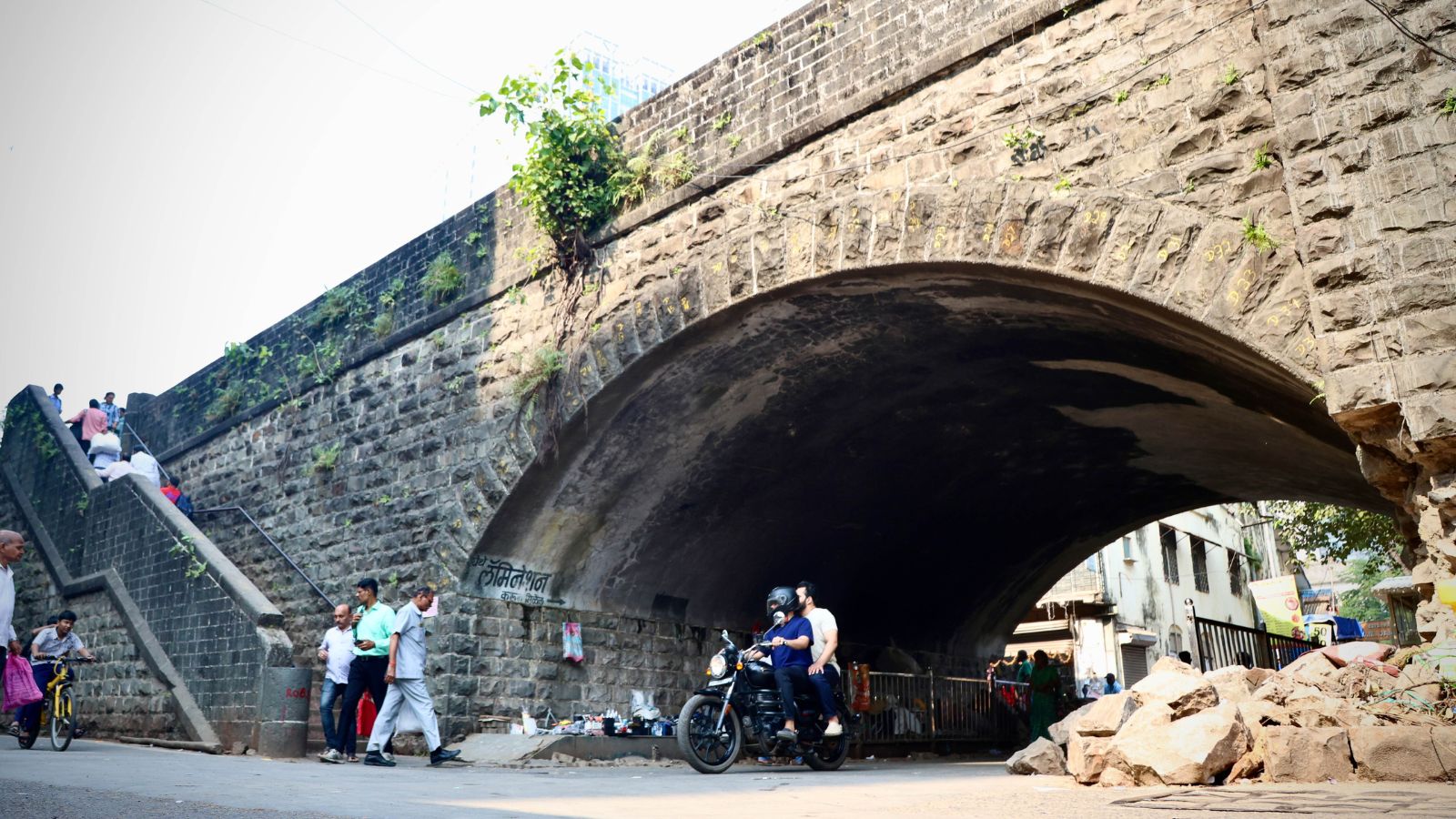
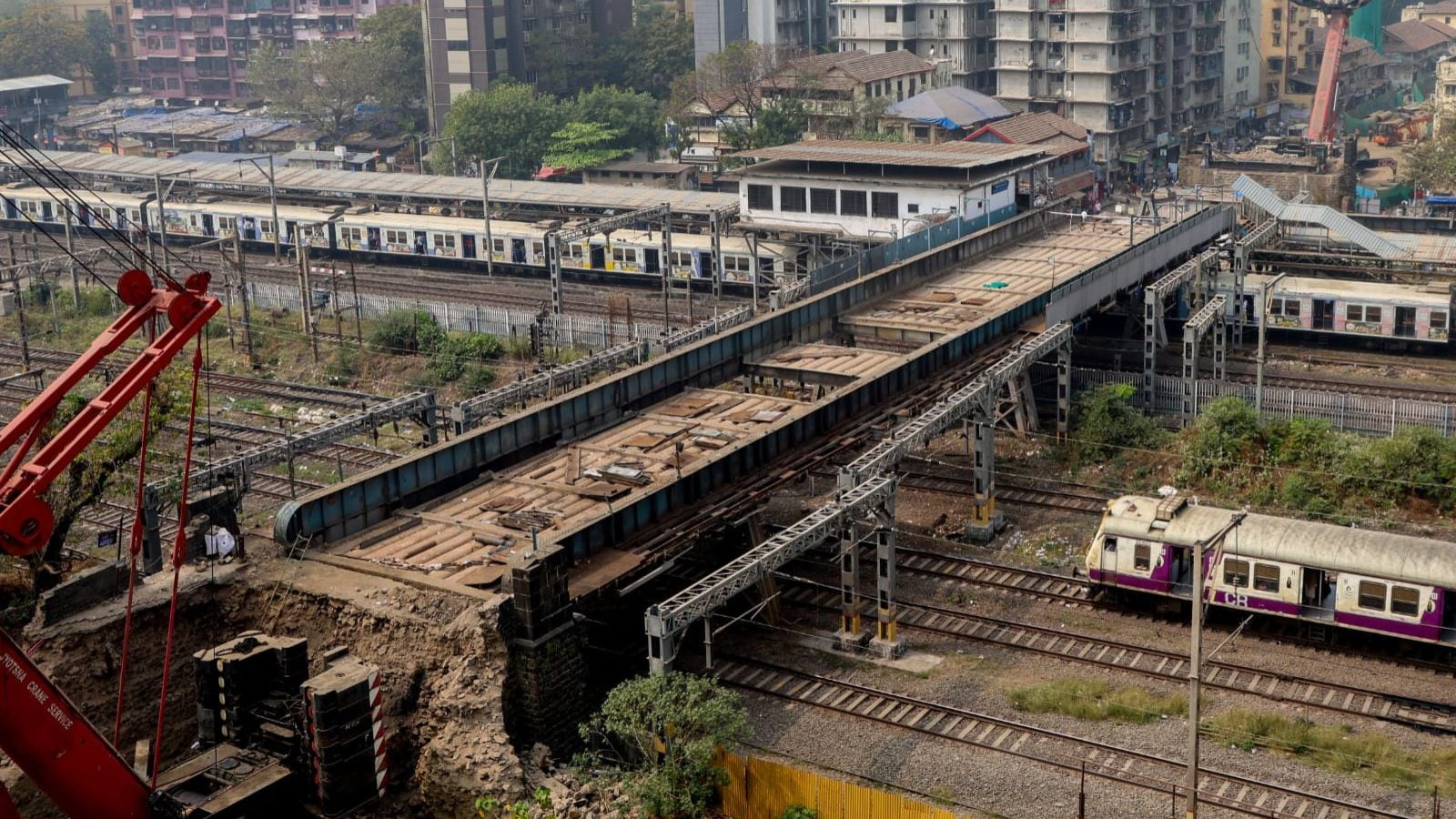
The Elphinstone Bridge in Mumbai, which is 113 years old, is being demolished to make way for a new double-decker flyover.
However, the Basalt stones used in the bridge's construction are being saved by the BMC.
These stones are very strong and have been used in many important buildings in Mumbai.
The BMC plans to use these stones to build a small copy of the bridge in a city park.
This is important because these kinds of stones are no longer used in construction, and preserving them is a way to keep the city's history alive.
The bridge was originally built to help people cross over the railway tracks more easily, and it has been an important part of Mumbai's infrastructure for over a century.

The Elphinstone Bridge, built in 1913, is being demolished to make way for a new double-decker flyover.
The BMC is preserving 74 Basalt stone blocks from the bridge to create a miniature replica in a city park.
Each stone block weighs nearly a tonne and was used in the bridge's construction without cement.
The bridge was originally named Parel Bridge but is now known as Elphinstone Bridge after the former governor of Bombay.
The BMC has previously restored Basalt stones from other heritage structures in Mumbai.
- Who
- Brihanmumbai Municipal Corporation (BMC) and Mumbai Metropolitan Region Development Authority (MMRDA)
- What
- Restoration of Basalt stones from the Elphinstone Bridge for a miniature replica
- Where
- Mumbai, India
- When
- During the demolition of the Elphinstone Bridge
- Why
- To preserve the heritage value of the Basalt stones and create a miniature replica of the bridge
Key facts
- Bridge Age
- 113 years
- Bridge Length
- 130 metres
- Stone Blocks
- 74
- Stone Weight
- Nearly a tonne each
- Construction Year
- 1913
- Original Name
- Parel Bridge
- Current Name
- Elphinstone Bridge
- Architectural Style
- Masonry
Quotes
Sanjay Adhav
Executive engineer heading BMC’s heritage cell
“We will use the stones to create a replica of the Elphistone Bridge at one of the upcoming open spaces in the city. We have seen that in many gardens, mini arch bridges are constructed above a water body or pool. We shall do the same by using these stones and a plaque will be installed, giving out information about the heritage value of the structure.”
 indianexpress.com
“There are two arches in the bridge and each of them were constructed using 37 stones. There are 74 stones in total that we are acquiring for the purpose of restoration.”
indianexpress.com
Kirtida Unawalla
Architect and conservationist
“With time, the style of construction and methodologies of civil engineering changed. Stones were not used for construction works after 1990s as Reinforced Cement Concrete (RCC) came into the picture. The quarries were also closed down. Therefore it is important to conserve them since conservation is also an act of sustainability.”
indianexpress.com
“The Basalt stone is very local to Mumbai. Earlier, there used to be quarries in and around Malad and Kurla from where Basalt stones could be easily extracted. Therefore, these stones were largely preferred for construction of all prominent properties, most of which are labelled as heritage properties in Mumbai today.”
indianexpress.com
Bharat Gothoskar
Founder of Khaki Heritage Foundation
“Different names are found in the records of different institutions. The illumination of the railway coaches was developed by E B Carroll, a British engineer working for the Central Railway. The bridge was named Carroll Bridge in his memory, but locals pronounced it as ‘Karol Bridge’. The inscription on the bridge reads ‘Parel Bridge’, while the name ‘Elphinstone Bridge’ appears on the municipal maps. However, the name of Elphinstone Road station has now been changed to Prabhadevi. So, should it be known as the Prabhadevi bridge”
indianexpress.com
“Initially, Mumbai’s island city had railway crossings when there were fewer trains. As the population increased, the government decided to build bridges over railway lines with the Masjid, French and Kennedy bridges being built in the later half of the nineteenth century. As the city expanded further and industrialisation took place, many bridges like those at Byculla, Parel and Dadar came up.”
indianexpress.com
Another official
BMC official
“If we wouldn’t have acquired these stones, then the contractors would have crushed and disposed of them as part of the standard operating procedure. Therefore it was important to preserve these stones.”
indianexpress.com