1 day ago
Supreme Court Declines PIL Seeking School Bullying Law
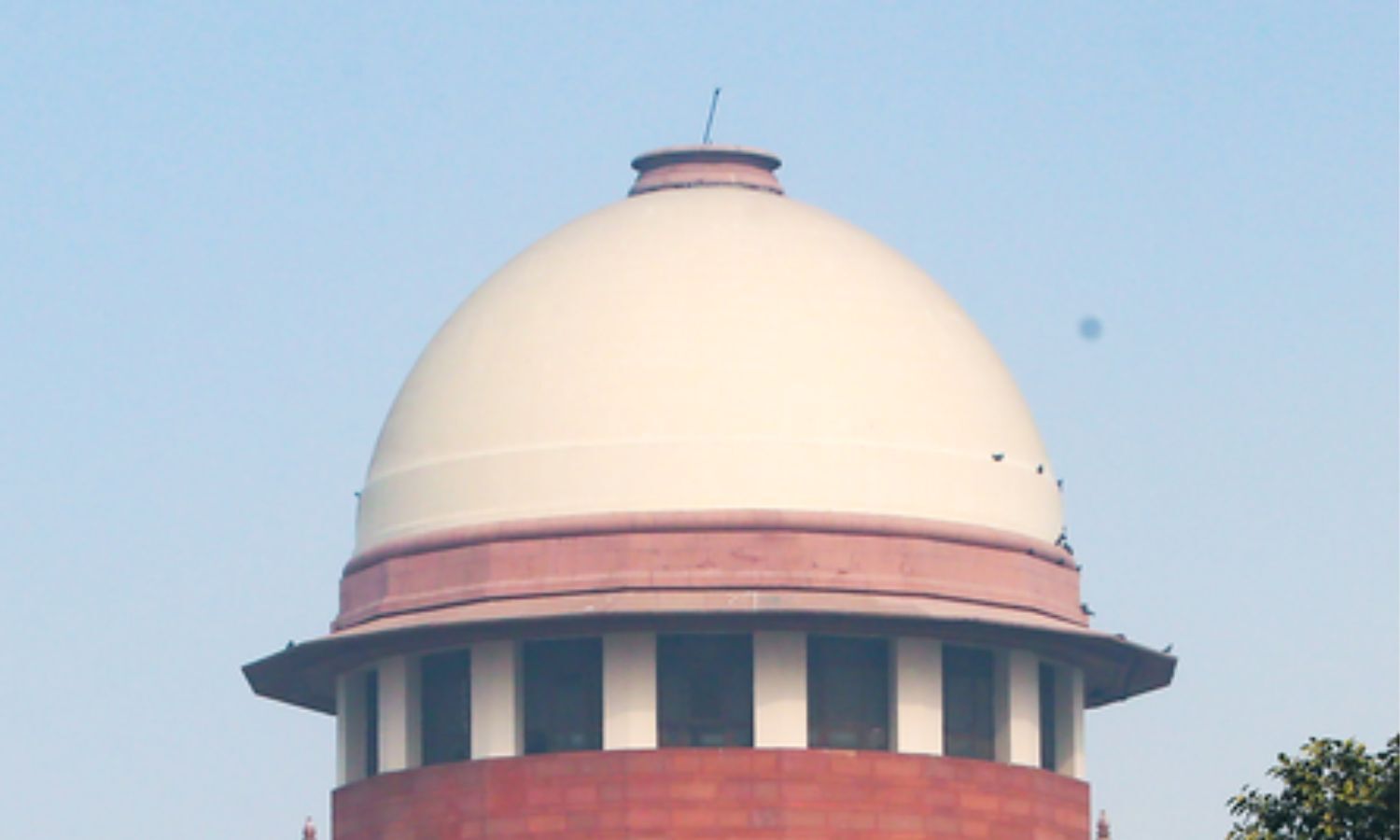
A petitioner asked the Supreme Court to create a nationwide law against bullying and ragging in schools.
The request covered schools and pre-university institutions across India.
The petitioner said schools do not have the same legal anti-ragging system as universities.
The petition also asked for committees and complaint systems to protect children.
The petitioner pointed to guidelines from child-rights and education authorities.
The Supreme Court said it had already dealt with these issues in an earlier judgment.
Because of that, it did not accept a new petition just to enforce the earlier directions.
However, the petitioner may still send a request to the responsible authorities.

The Supreme Court declined to entertain a PIL seeking a central law on bullying and ragging in schools.
The bench said an earlier judgment had already addressed the issues raised in the petition.
It allowed petitioner Yadavi Aditya Rasiwasiya to submit a representation to relevant authorities.
The petition sought uniform guidelines, anti-bullying committees, grievance systems and mandatory reporting requirements.
The petitioner argued existing school-safety measures were advisory and lacked statutory enforceability.
- Who
- The Supreme Court bench led by Chief Justice of India Surya Kant, and petitioner Yadavi Aditya Rasiwasiya.
- What
- The court declined to entertain a PIL seeking comprehensive legislation and uniform guidelines against bullying and ragging in schools.
- Where
- New Delhi, with the proposed measures applying across India.
- When
- Tuesday.
- Why
- The court said an earlier judgment had already addressed the issues and that a fresh petition could not be filed merely to implement its directions.
Petitioner’s Position
Supreme Court’s Position
Need for a new school-safety law
Petitioner’s Position
The petitioner argued that India lacks a comprehensive, specifically enforceable statutory framework for bullying in primary and secondary schools.
Supreme Court’s Position
The court said its earlier judgment had already dealt with the issues raised in the PIL.
Uniform national guidelines
Petitioner’s Position
The petition sought binding school guidelines modeled on the University Grants Commission Regulations on Curbing the Menace of Ragging in Higher Educational Institutions, 2009.
Supreme Court’s Position
The court declined to entertain a fresh petition presented mainly to implement directions from the earlier judgment.
Current measures
Petitioner’s Position
The petitioner said existing measures, including child-protection and school-safety guidelines, were largely advisory and lacked statutory enforceability.
Supreme Court’s Position
The court allowed the petitioner to approach the relevant authorities through a representation instead of admitting the PIL.
Key facts
- Court decision
- The Supreme Court refused to entertain the PIL.
- Petitioner
- Yadavi Aditya Rasiwasiya, represented through advocate Sujata Kurdukar.
- Requested legislation
- A comprehensive central law addressing bullying and ragging in schools.
- Requested safeguards
- Anti-bullying committees, grievance redressal systems, mandatory reporting and institutional protections.
- Referenced guidance
- The National Commission for Protection of Child Rights Guidelines on Preventing Bullying and Cyberbullying, 2024.
- Existing framework cited
- The Right to Education Act, 2009; Protection of Children from Sexual Offences Act, 2012; Juvenile Justice Act, 2015; and Information Technology Act, 2000.
- Alternative permitted
- The petitioner may submit a representation to the authorities concerned.
Quotes

National Commission for Protection of Child Rights
India's statutory child-rights protection commission, whose 2024 anti-bullying guidelines were cited in the petition
“in India, there are no laws that could handle bullying in schools. In other words, bullying is not technically illegal”
 thehansindia.com
Sources
Related news

Supreme Court Declines PIL Against Rajasthan, UP School Curbs
Supreme Court Takes Up Plea for Private Teachers’ Welfare

Supreme Court Issues Notice Over Education Secretary’s Alleged Non-Compliance

High Court Stays FIR Against Journalist Over School Report
Supreme Court Raps Noida Over Notice to Gen Z Protester

France Expands Annual School Bullying Survey to Include Sexual Violence
NEP 2020 Builds Credit Infrastructure, But Student Mobility Lags
Delhi High Court Seeks Student Housing Safety Mechanism
Student Suicides: Why Ceiling Fan Changes Cannot Solve Campus Crisis

LPU Protests Turn Violent as University’s ‘Lovely’ History Emerges