2 weeks ago
5 lessons from insects to help you make better decisions
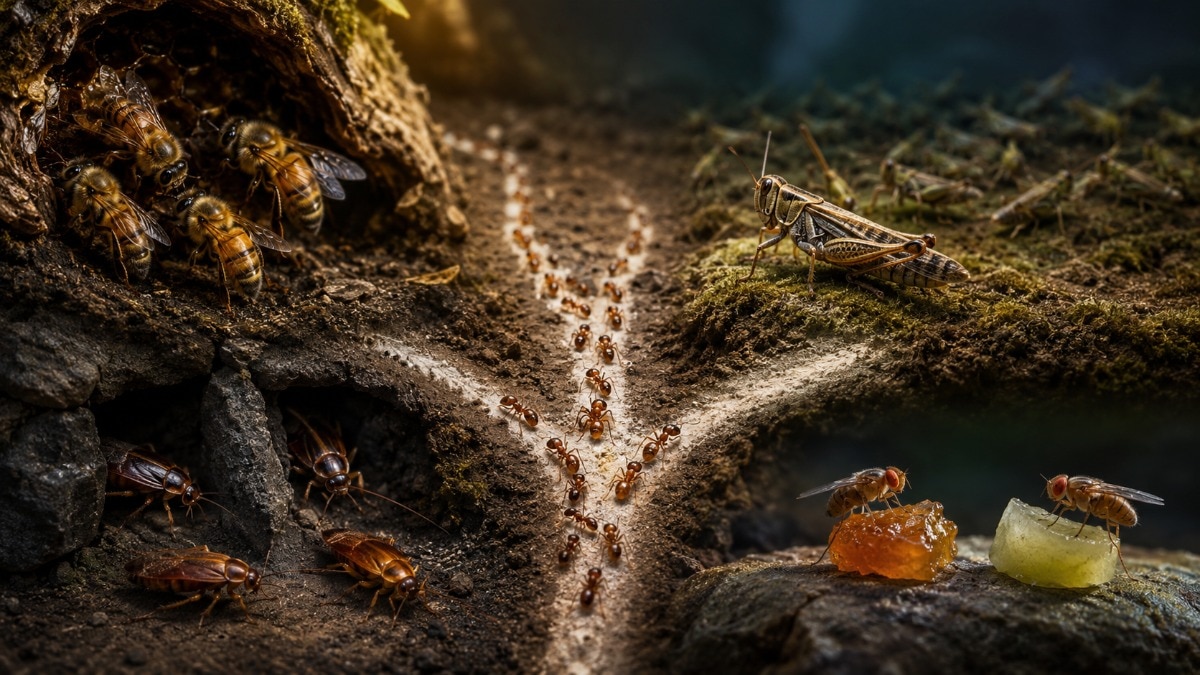
Sometimes it is hard to make a good decision, and animals can teach us how to do it better.
Ants work as a team, and the best path to food becomes clear over time without one leader telling anyone what to do.
Honeybees listen to many different opinions before choosing a new home.
Locusts show that it is okay to pause and think instead of rushing.
Cockroaches teach us that having different personalities in a group can actually help it decide faster.
Fruit flies show that how we feel, like being hungry or stressed, can change the choices we make.
When faced with a hard choice, it helps to gather different opinions.
It also helps to understand our own mood before deciding.
Taking a break can make the right answer clearer.
The animal kingdom shows that careful, patient group thinking often works best.

Ants show that efficient collective decision-making can emerge without centralised control, as shorter routes get reinforced through stronger pheromone trails.
Honeybee scouts use a 'waggle dance' to share information about potential nesting sites, and the colony decides once enough bees support one location.
Kit Yates found that pausing and allowing abstention helped groups of locusts change direction and helped humans reach decisions more 'quickly and cleanly'.
Isaac Planas-Sitjà found that cockroach groups with a mix of bold and timid personalities made collective decisions faster than uniform groups.
Fruit flies weigh risks, rewards and their own condition, taking longer on similar choices and changing decisions when hungry or stressed.
- Who
- Researchers Marco Dorigo, Kit Yates and Isaac Planas-Sitjà, who study insect behaviour and collective decision-making.
- What
- Five lessons from ants, honeybees, locusts, cockroaches and fruit flies about making better decisions.
- Where
- Université Libre de Bruxelles in Belgium and the University of Bath.
- When
- Not specified in the article.
- Why
- To show how collective behaviour, pausing, diversity and self-awareness in insects can improve human decision-making.
Key facts
- Lesson 1
- Ants: give the best option time to emerge through pheromone trails
- Lesson 2
- Honeybees: listen to different opinions before deciding
- Lesson 3
- Locusts: it is okay to pause and abstain
- Lesson 4
- Cockroaches: different personalities help groups decide faster
- Lesson 5
- Fruit flies: know what affects your judgement, such as mood, stress and past experiences
- Key researcher
- Marco Dorigo, co-director of the artificial intelligence lab at Université Libre de Bruxelles
- Key researcher
- Kit Yates, professor of mathematical biology at the University of Bath
- Human study
- Yates tested 19 humans; allowing people to abstain helped groups decide more quickly and cleanly
Quotes

Marco Dorigo
Co-director of the artificial intelligence lab at Université Libre de Bruxelles
“The main lesson… is that efficient collective decision-making can emerge without centralised control”
 businesstoday.in
Christian (Kit) Yates
Professor of mathematical biology at the University of Bath
“With fewer active votes in play, the same small nudge – a brief local cluster moving the other way, a noisy bit of information, a couple of people switching allegiance – produces a larger proportional effect on the group's direction”
businesstoday.in
Sources
Related news
Animal Dances Reveal Surprising Behaviors, From Bees’ Waggle Dance
Traffic Jams Offer Five Lessons for Managing Workplace Chaos

Digraj Singh Rajput Says Clarity Follows Life’s First Step
Decision Fatigue May Drain Mental Energy And Disrupt Concentration

Bumble Ends Women-First Messaging Rule for Heterosexual Matches