2 hrs ago
India-China Hotan Air Corridor Tests Renewed Bilateral Cooperation
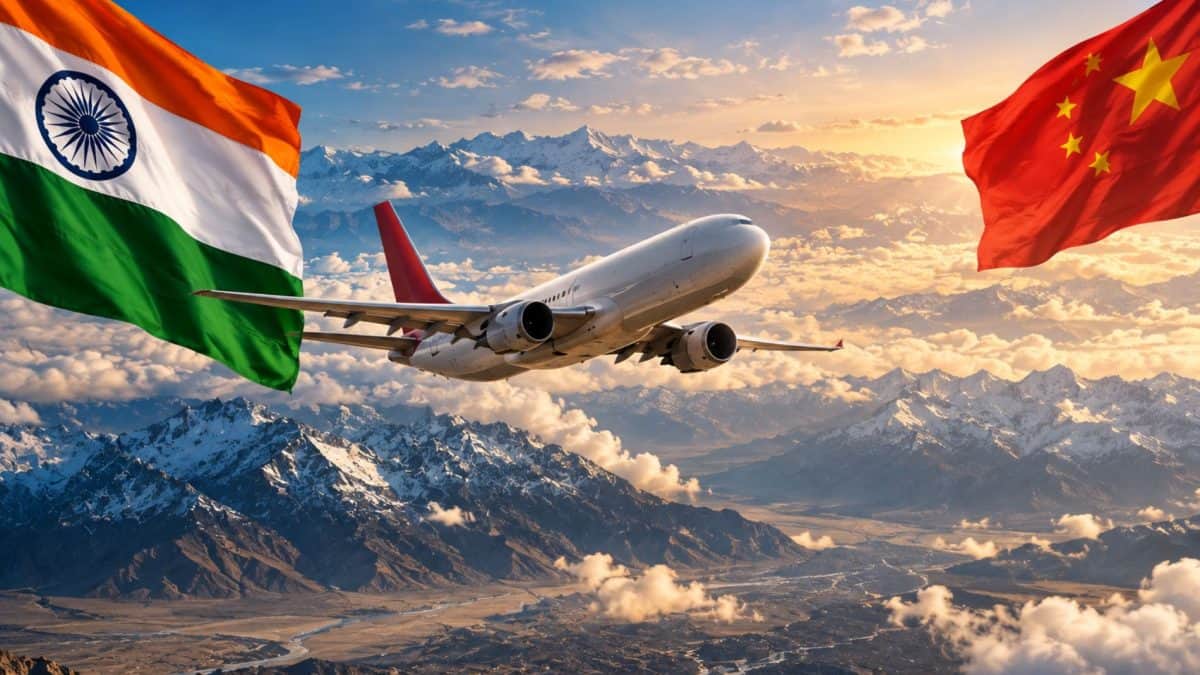
Indian airlines want to use a shorter flight path through China.
The possible path would go from Delhi over Leh and then near Hotan in China.
From there, planes could continue toward North America or Central Asia.
This matters because Pakistani airspace has been closed to Indian airlines since late April 2025.
As a result, some flights must take longer routes, using more time and fuel.
Creating the route would require safety planning and approval from several authorities.
China’s government would have to approve the flights, not just aviation officials.
India and China are discussing the idea while their relationship is gradually improving.
China may also consider how the decision would affect its relationship with Pakistan.

India is discussing with China whether Indian airlines can overfly Hotan to reach North America and Central Asia more efficiently.
The proposed route would travel north from Delhi over Leh, enter Chinese airspace near Hotan, and continue toward its destinations.
Pakistan’s closure of its airspace to Indian airlines since late April 2025 has increased flight times and fuel costs.
The route requires Chinese government approval and would involve aviation, diplomatic, security, and airspace-coordination processes.
The proposal comes as India-China relations improve, but China may weigh its ties with Pakistan before agreeing to the corridor.
- Who
- India’s Civil Aviation Ministry, Indian airlines, and Chinese authorities are involved; India’s Ministry of External Affairs is also expected to handle the diplomatic discussions.
- What
- India is seeking permission for its airlines to overfly China near Hotan on routes to North America and Central Asia.
- Where
- The proposed corridor would run from Delhi over Leh into Chinese airspace near Hotan, then toward North America or Central Asia.
- When
- The aviation minister discussed the proposal early this week; talks have reportedly continued for nearly a year, while Pakistan’s airspace closure began in late April 2025.
- Why
- The route could reduce flying time and fuel use after Indian airlines lost access to Pakistani airspace.
Operational and cooperation case
Diplomatic and security concerns
Benefits for airlines
Operational and cooperation case
Indian carriers could save valuable flying hours and fuel, while regaining more efficient access to Central Asia and North America.
Diplomatic and security concerns
The route is not guaranteed, and airlines would remain dependent on Chinese approval and cooperation.
Nature of the proposal
Operational and cooperation case
The corridor could be presented as a narrow technical arrangement between air-navigation authorities.
Diplomatic and security concerns
Because it would cross sensitive western Chinese airspace near areas affected by the 2020 India-China clashes, the decision may require political and security-level approval.
Effect on regional relations
Operational and cooperation case
Approval could demonstrate that India-China relations are recovering and create a new form of practical cooperation.
Diplomatic and security concerns
China may consider the impact on Pakistan, its regional partner, while India may weigh domestic concerns about relying on Chinese goodwill; any agreement could therefore be limited or kept quiet.
Key facts
- Proposed entry point
- Hotan, China
- Proposed Indian departure area
- Delhi, with the route passing over Leh
- Potential destinations
- North America and Central Asia
- Reason for proposal
- To bypass Pakistani airspace restrictions and shorten flight routes
- Pakistani airspace closure
- Pakistan closed its airspace to Indian airlines at the end of April 2025
- Affected airline example
- IndiGo suspended Delhi services to Tashkent and Almaty because of the restrictions
- Required approval
- Approval would have to come from the Chinese government
- Diplomatic context
- The proposal coincides with improving India-China relations after a period of tension following the 2020 border clashes
Sources
Related news

Hotan Air Route Proposal Tests India-China Territorial Claims
India Seeks Xinjiang Air Corridor Amid Pakistan Ban

China Southern Resumes Guangzhou–Delhi Flights Amid Xi India Visit
Pakistan Extends Airspace Ban on Indian Aircraft Until October 24
Delhi-Guangzhou Flights Resume, Restoring Key India-China Business Link