

2 hrs ago
Sanskrit Village Revival Faces Questions Over Its Living-Language Claims
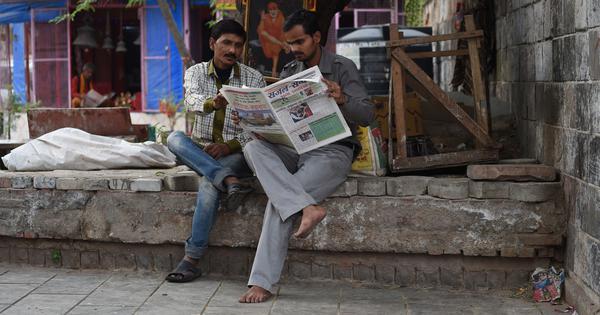
Uttarakhand has tried to encourage villages to use Sanskrit in daily life.
The plan was meant to make Sanskrit a living language instead of only a language for texts and ceremonies.
Some people in some villages do speak some Sanskrit.
However, it is difficult to prove that whole villages use it as their main language.
Census numbers show more Sanskrit mother-tongue declarations in cities and northern parts of India than in the famous villages often mentioned online.
People can list Sanskrit on census forms without having their speaking ability tested.
Some groups encourage people to make these declarations as a sign of cultural support.
Supporters see Sanskrit as a link to Indian history and values.
Critics say it must be used in ordinary daily conversations if it is to become a modern language.

Uttarakhand has promoted Sanskrit-speaking villages for more than two decades, but the original statewide vision has reportedly narrowed to 13 locations.
The article argues that claims of villages where residents speak only Sanskrit are difficult to verify and often function more as cultural narratives than measured realities.
Census data from 1872 to 2011 places Sanskrit mother-tongue declarations mainly in urban and northern areas, including Bihar, Uttar Pradesh, and Rajasthan.
Famous alleged Sanskrit-speaking villages do not appear among the 20 rural sub-districts with the highest Sanskrit mother-tongue counts.
Because census respondents can declare languages without competency checks, Sanskrit declarations may reflect cultural affiliation as much as everyday communication.
- Who
- The Uttarakhand government, Sanskrit revival advocates, census respondents, and critics of the village revival project.
- What
- A long-running effort to establish Sanskrit-speaking villages is being questioned because policy claims and census patterns do not clearly show widespread everyday Sanskrit use.
- Where
- The main policy experiment is in Uttarakhand, while the census analysis covers India, including northern states and urban districts.
- When
- The effort has unfolded for more than two decades; the article also examines census data from 1872 through 2011.
- Why
- Advocates seek cultural continuity and moral and material development through Sanskrit, while critics call for evidence that it functions as an everyday vernacular.
Sanskrit Revival Vision
Sociolinguistic Critique
Cultural and social purpose
Sanskrit Revival Vision
Sanskrit can provide civilisational continuity, ethical refinement, and development without cultural rupture.
Sociolinguistic Critique
The village ideal may be a symbolic response to modern anxieties rather than evidence of a self-contained spoken community.
Evidence of everyday use
Sanskrit Revival Vision
Revival advocates point to villages and individuals where Sanskrit is reportedly used in daily activities and argue that it can become a language of the rural masses.
Sociolinguistic Critique
The article says village-wide claims are difficult to verify, and census patterns place Sanskrit declarations mainly in urban and northern settings rather than the famous revivalist villages.
Census declarations
Sanskrit Revival Vision
Declaring Sanskrit as a mother tongue can strengthen its social and political recognition.
Sociolinguistic Critique
Because declarations are not competency-tested, campaigns encouraging them may measure cultural affiliation rather than actual communication and introduce volatility into the data.
Key facts
- Policy duration
- More than two decades
- Reported Uttarakhand locations
- The original broad plan has contracted to 13 specific geographic pockets
- 2011 state-level concentrations
- Bihar recorded 3,388 Sanskrit tokens, Uttar Pradesh 3,062, and Rajasthan 2,375
- Urban and suburban examples
- Mumbai Suburban recorded 556 tokens, Pune 1,091, and Kanpur Nagar 932
- Rural examples
- Dighalbank recorded 558 tokens, Lahul 247, and Pachpahar 531
- Census limitation
- Respondents may nominate languages without a verification of speaking competency
- International role
- Sanskrit is widely used in mantras, yoga, wellness, and cultural diplomacy as a symbol of authenticity
Quotes
Shreesh Deopujari
A commentator whose claim is cited in the article’s conclusion about Sanskrit’s possible rural revival
“Sanskrit can become the language of the rural masses.”
 scroll.in
Sources
Related news

India’s Sovereign AI Faces Test Beyond Twenty-Two Language Coverage
Sitharaman Says AI Can Reveal Sanskrit Literature’s Beauty
MNS and KRV Unite Against Hindi Imposition Nationwide

When Endangered Languages Die, Humanity Loses More Than Words
Amit Shah Calls Hindi Link Language, Denies Regional Imposition

Amit Shah Links Indian Languages With Cultural Nationalism

BJP mounts counter-offensive as Opposition attacks election chief
OP Rajbhar Calls SP-Congress Alliance ‘Thugbandhan’ Over Public Tensions
UP Chief Minister Honors Bhagat Singh and Lata Mangeshkar
Study Finds Implicit and Explicit Caste Bias Among Healthcare Providers
