

1 hr ago
Study Finds Implicit and Explicit Caste Bias Among Healthcare Providers
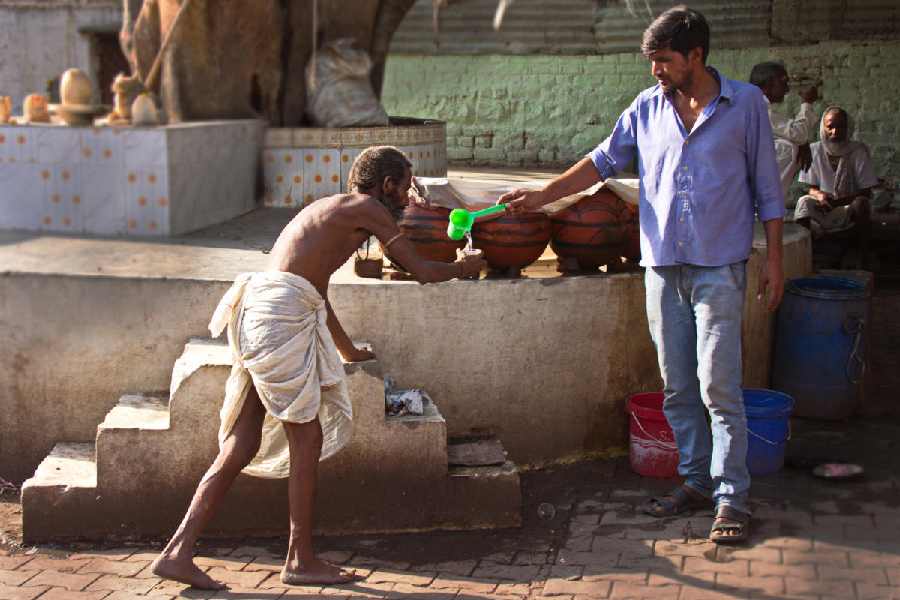
Researchers studied whether healthcare workers held caste-related beliefs.
They surveyed 106 workers in government health facilities in Etawah.
Some providers said poor health among Dalits could be inherited, although experts cautioned that caste itself does not determine genetics.
A psychology test also found that many participants subconsciously preferred forward-caste people over Scheduled Castes.
The study did not show that providers definitely treated patients unfairly in their medical work.
However, researchers said such beliefs could affect conversations and treatment.
Some participants described examples of Dalit patients being avoided or made to wait.
The researchers said more studies in other places are needed to understand how widespread these attitudes are.

Researchers surveyed 106 healthcare providers in government facilities across Etawah district, Uttar Pradesh.
Twenty-three providers, including 13 doctors, linked poor health among Scheduled Castes to inherited or genetic susceptibility.
A psychological test found implicit preferences favoring forward castes over Scheduled Castes among 36 of 48 participants.
The study identified attitudes and subconscious associations, but did not prove discrimination in actual clinical practice.
Researchers and outside experts said the findings were concerning but limited by the small, single-district sample.
- Who
- Shivani Yadav and Krishna Ram surveyed doctors, interns, nurses, ward staff, lab technicians and other healthcare providers.
- What
- The study examined explicit caste attitudes and implicit associations among healthcare providers, including beliefs about Scheduled Caste patients.
- Where
- Government health facilities in Etawah district, Uttar Pradesh, including a district hospital, a medical university and 14 primary and community health centres.
- When
- The study was published in the journal Health Care Analysis; the article does not provide a publication date.
- Why
- The researchers sought to examine how caste hierarchies and provider attitudes might influence interactions with patients.
Evidence of Caste-Linked Bias
Caution About Interpretation
Meaning of the findings
Evidence of Caste-Linked Bias
The researchers say explicit beliefs and subconscious associations could shape healthcare interactions and reveal caste-linked bias among providers.
Caution About Interpretation
The study does not establish that providers discriminated against Scheduled Caste patients in their clinical practice.
Genetics and caste
Evidence of Caste-Linked Bias
Twenty-three non-Scheduled Caste providers associated poor health among Dalits with inherited or genetic susceptibility.
Caution About Interpretation
Genome researcher Kumaraswamy Thangaraj said endogamy and social isolation may concentrate genes or inherited disorders, but caste itself does not determine genetic susceptibility.
How widely the results apply
Evidence of Caste-Linked Bias
The researchers say the findings provide signals that caste hierarchies may enter healthcare institutions.
Caution About Interpretation
Economist Ashwini Deshpande cautioned that a single-district sample limits generalisation because geography and other factors can shape caste hierarchies.
Key facts
- Study sample
- 106 healthcare providers: 34 general category, 46 Other Backward Castes and 26 Scheduled Castes.
- Study location
- Government health facilities in Etawah district, Uttar Pradesh.
- Genetic-susceptibility belief
- 23 providers, including 13 doctors, attributed poor health among Scheduled Castes to inherited or genetic susceptibility.
- Implicit-association test
- 36 of 48 tested providers showed an implicit association favoring forward castes over Scheduled Castes; 14 were doctors.
- Reservation views
- Nearly 90% of general-category providers and 52% of Other Backward Caste providers opposed reservations and affirmative-action hiring.
- Study limitation
- Researchers and outside experts cautioned that the sample was small and drawn from one district.
Quotes
A forward-caste doctor
Doctor from a forward-caste group who participated in the study
“The conventional system worked on the idea of occupational segregation based on capability — a ‘vaidya’ would heal, a rag picker would pick up rags and other junk, a kshatriya would perform in war — these occupational allocations are done based on individual capacity”
 telegraphindia.com
“Against that backdrop, we’ve tried to probe the other side in our study — the attitudes of healthcare providers”
telegraphindia.com

Kumaraswamy Thangaraj
Genome science researcher at the Centre for Cellular and Molecular Biology in Hyderabad
“Endogamy and social isolation can facilitate the concentration of genes and inherited disorders, but that does not mean caste itself determines genetic susceptibility to disease”
telegraphindia.com
Sources
Related news
Hyderabad Medical Associations Reject Generalized Private Hospital Fee Allegations
Caste Census Debate Highlights Fear of Privileged Groups' Visibility

IIT Bombay Death Raises Questions on Caste and Accountability
IIT Bombay Professor Suspended Amid Caste Discrimination Allegations
Rajasthan Dalit, Tribal Groups Push for Quota Sub-Categorisation

Arundhati Bhattacharya Challenges Bias Against Women and Gen Z
IIT Kanpur, Ambedkar University Launch Hindi Cybersecurity Course Online

Republic Day: Protecting Constitution Beyond Courts

ISRO Director Interacts with Students in UP
