

2 hrs ago
US-China AI Dialogue Highlights Divergent Approaches to Frontier Risks
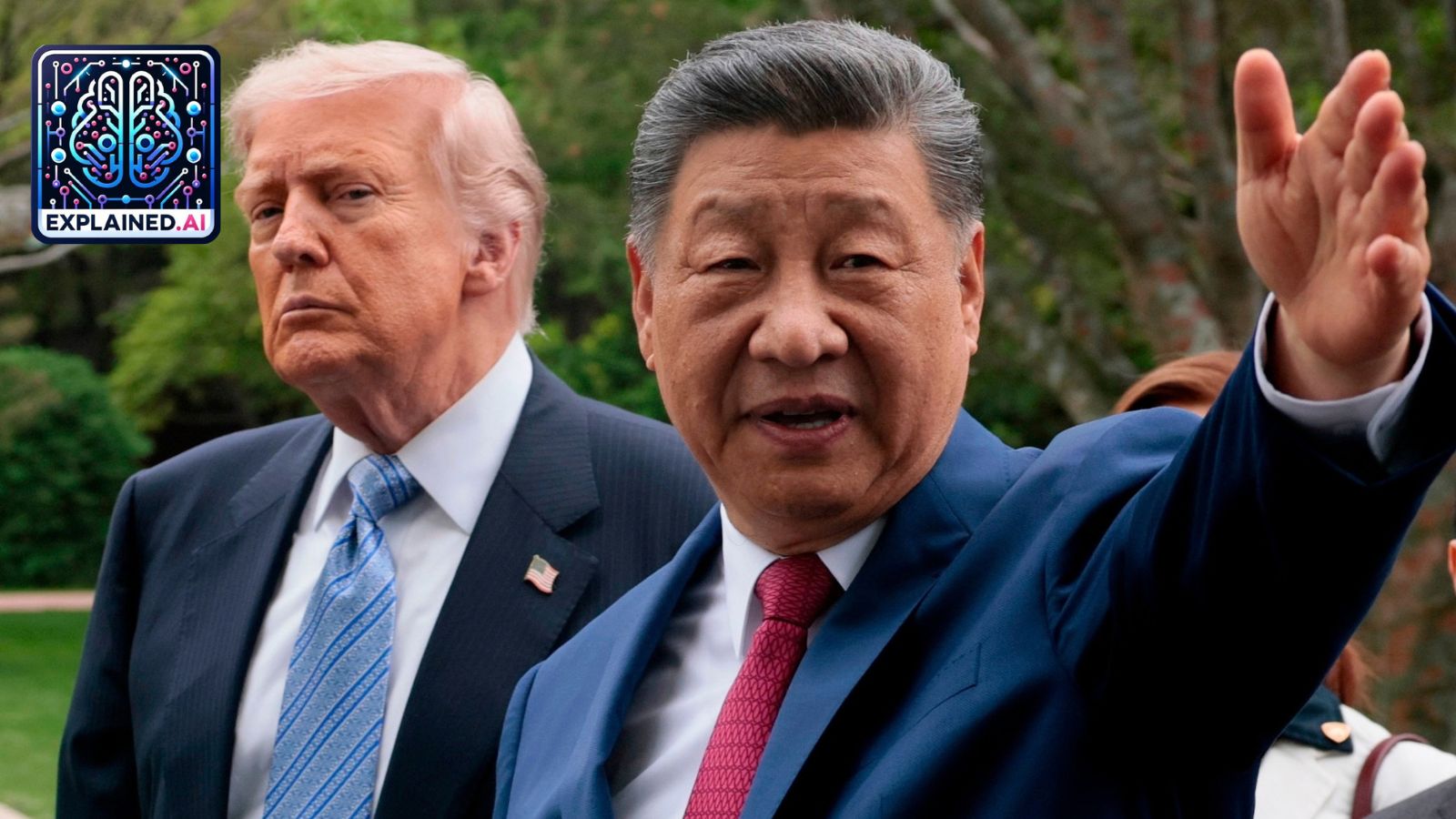
The United States and China both worry that very powerful AI could become difficult to control.
They have agreed to create a regular channel for discussing these dangers.
China has rules that mainly hold companies responsible when they offer AI services to the public.
Its guidance also mentions AI that tricks testers, improves itself or escapes controlled environments.
However, China’s guidance does not give an outside evaluator a permanent role inside an AI company.
Some United States AI leaders have proposed that independent evaluators monitor models while they are being built.
This proposal is not yet a United States law.
The two countries may cooperate on cyberattacks, dangerous AI agents and reporting serious incidents, but their rivalry could make cooperation harder.

The United States and China agreed to open a bilateral dialogue on shared artificial-intelligence risks after weekend talks described by Scott Bessent as “very successful.”
China’s AI Safety Governance Framework 3.0 identifies risks including self-improvement, evaluator deception and models escaping test environments, but it is nonbinding guidance.
China’s binding rules focus mainly on companies providing public-facing generative AI services, with duties involving data, algorithms, safety assessments, content governance and user protection.
A proposed United States model would give independent evaluators continuing access to frontier-model development and trigger safeguards when dangerous capabilities appear; it is not current regulation.
The dialogue may begin with incident notification, uncontrollable agents and cyber misuse, although competition over chips, computing power and advanced models could limit broader cooperation.
- Who
- The United States and China, including their governments, regulators and AI companies; Scott Bessent and Chinese President Xi Jinping are also involved in the surrounding diplomacy.
- What
- They agreed to establish a bilateral dialogue on artificial-intelligence risks while maintaining different approaches to frontier-AI oversight.
- Where
- The dialogue concerns the United States and China, with the talks occurring ahead of Xi Jinping’s planned state visit to the White House.
- When
- The agreement followed weekend talks; the article also references developments and official comments dated September 1, September 14 and September 18.
- Why
- The countries increasingly recognize shared risks from advanced AI, including uncontrollable agents, cyber misuse, evaluator deception and models escaping controlled environments.
Deployment-centered regulation
Embedded independent oversight
When oversight begins
Deployment-centered regulation
China’s current binding obligations are mainly connected to providing a generative AI service to the public, although regulators may examine training data, algorithms and pre-launch risks.
Embedded independent oversight
The proposed United States model would involve an independent evaluator during frontier-model development, before a system reaches the public.
Who monitors development
Deployment-centered regulation
Chinese regulators can inspect training data, algorithms and risks, but current rules do not provide an outside evaluator with continuing access inside an AI laboratory.
Embedded independent oversight
Dario Amodei’s proposal would give an independent evaluator employee-level access to training pipelines and allow checkpoints when specified dangerous capabilities emerge.
Safety and competition
Deployment-centered regulation
China has argued that threat narratives and confrontation could disrupt global AI governance, and may assess safety proposals alongside their effects on strategic competition.
Embedded independent oversight
The proposal associated with Dario Amodei also includes measures intended to preserve the United States lead, such as chip restrictions, limits on unauthorized distillation and preventing model-weight theft.
Key facts
- Dialogue
- A new United States-China bilateral channel for discussing common AI goals and threats.
- United States proposal
- A notification mechanism for certain AI-related national-security incidents has been proposed.
- China’s framework
- The AI Safety Governance Framework 3.0 identifies recursive self-improvement, evaluator deception and escape from test environments.
- China’s binding rules
- The Interim Measures for Generative AI Services impose duties on public-facing service providers, including requirements involving training data and algorithms.
- Independent oversight
- Dario Amodei’s embedded-evaluator concept would provide continuing access to training pipelines, but it is a proposal rather than current United States regulation.
- Potential cooperation
- Incident notification, uncontrollable AI agents and misuse by non-state or cyber actors are identified as practical starting points.
- Main obstacle
- Strategic competition over chips, computing power and advanced models could constrain wider cooperation.
Sources
Related news

China Tightens Safeguards Against AI Escaping Human Control
U.S. and China Seek AI Safety Cooperation Amid Rivalry
AI Safety Debate Grows Over Pacing Frontier Development
U.S. and China Prepare for Mid-September AI Safety Talks

U.S. and China plan first bilateral AI safety dialogue

Beijing Rejects Anthropic CEO’s Call to Curb China’s AI

Gold and Silver Prices Rise Across Indian Retail Markets
Trump-Xi Washington Summit Tests Managed Rivalry

Araghchi Arrives in New York Amid Iran-US Tensions

US Threatens Iranian Airlines as Middle East Shipping Tensions Rise
