

5 days ago
US body says India’s religious freedom remains on downward trajectory

A US government-related group called the USCIRF said religious freedom in India became worse in 2026.
It said several minority groups face persecution and restrictions.
The group also mentioned problems involving citizenship, voting rights and certain laws.
It said some people were arrested for expressing beliefs or supporting minority rights.
The USCIRF criticized internet shutdowns and censorship.
It also alleged that mobs attacked minorities without enough punishment.
India disagreed with the report.
An Indian government spokesperson called the USCIRF biased and said it does not understand India’s diverse society.

The USCIRF said religious freedom conditions in India continued declining in 2026.
It cited alleged persecution of Christians, Dalits, Muslims and Sikhs, including citizenship and voting restrictions.
The commission criticized anti-conversion and cow-slaughter laws, NGO restrictions, censorship and internet shutdowns.
It said authorities detained people for practicing religion or advocating minority rights, citing several arrests under anti-terrorism laws.
India rejected the findings, calling the USCIRF biased, agenda-driven and lacking credibility.
- Who
- The US Commission on International Religious Freedom made the allegations; India’s government rejected them.
- What
- The USCIRF said religious freedom conditions in India remained on a downward trajectory in 2026.
- Where
- India and, according to the USCIRF, some diaspora communities.
- When
- The update was issued during the reported week in 2026; an Indian response quoted in the article was dated August 22.
- Why
- The USCIRF attributed the decline to alleged minority persecution, arrests, restrictive laws, censorship, NGO restrictions, internet shutdowns and transnational repression.
USCIRF assessment
Indian government response
Religious freedom conditions
USCIRF assessment
The USCIRF said conditions remained on a downward trajectory and alleged systematic persecution of multiple minority groups.
Indian government response
India rejected the findings and said the USCIRF does not engage with the reality of India’s pluralistic framework and harmonious coexistence.
Arrests and state restrictions
USCIRF assessment
The USCIRF said authorities detain and imprison people for practicing religion, expressing beliefs or advocating minority rights, and cited arrests under anti-terrorism laws.
Indian government response
The Indian government’s response, as quoted, dismissed the commission’s credibility rather than accepting its allegations.
USCIRF credibility
USCIRF assessment
The commission presented its country brief update as an assessment of religious-freedom conditions in India and diaspora communities.
Indian government response
Randhir Jaiswal called the organization biased, agenda-driven and lacking credibility, saying India should keep away from such organizations.
Key facts
- Reporting body
- US Commission on International Religious Freedom (USCIRF)
- Assessment
- Religious freedom conditions in India remained on a downward trajectory in 2026, according to the USCIRF.
- Groups cited
- Christians, Dalits, Muslims and Sikhs
- Issues cited
- Citizenship and voting-rights denial, anti-conversion and cow-slaughter laws, NGO restrictions and censorship
- State actions alleged
- Detentions, imprisonments, internet shutdowns and transnational repression
- India’s response
- External affairs ministry spokesman Randhir Jaiswal called the USCIRF biased and lacking credibility.
- Arrests cited
- The USCIRF cited Umar Khalid, Sharjeel Imam, Jagar Singh Johal and Ali Khan Mahmudabad.
Quotes

US Commission on International Religious Freedom
Bipartisan US government commission monitoring religious freedom
“It is a biased organisation. I would say that we should keep away from such organisations as they have their own agenda and lack any credibility...We do not expect that the USCIRF will engage with the reality of India's pluralistic framework or acknowledge the harmonious coexistence of its diverse communities,”
 rediff.com
“In many cases, individuals face arrest, prolonged detention, imprisonment, or other forms of state persecution for peacefully practising their religion, expressing their beliefs, or advocating for the rights of others,”
rediff.com
Sources
Related news
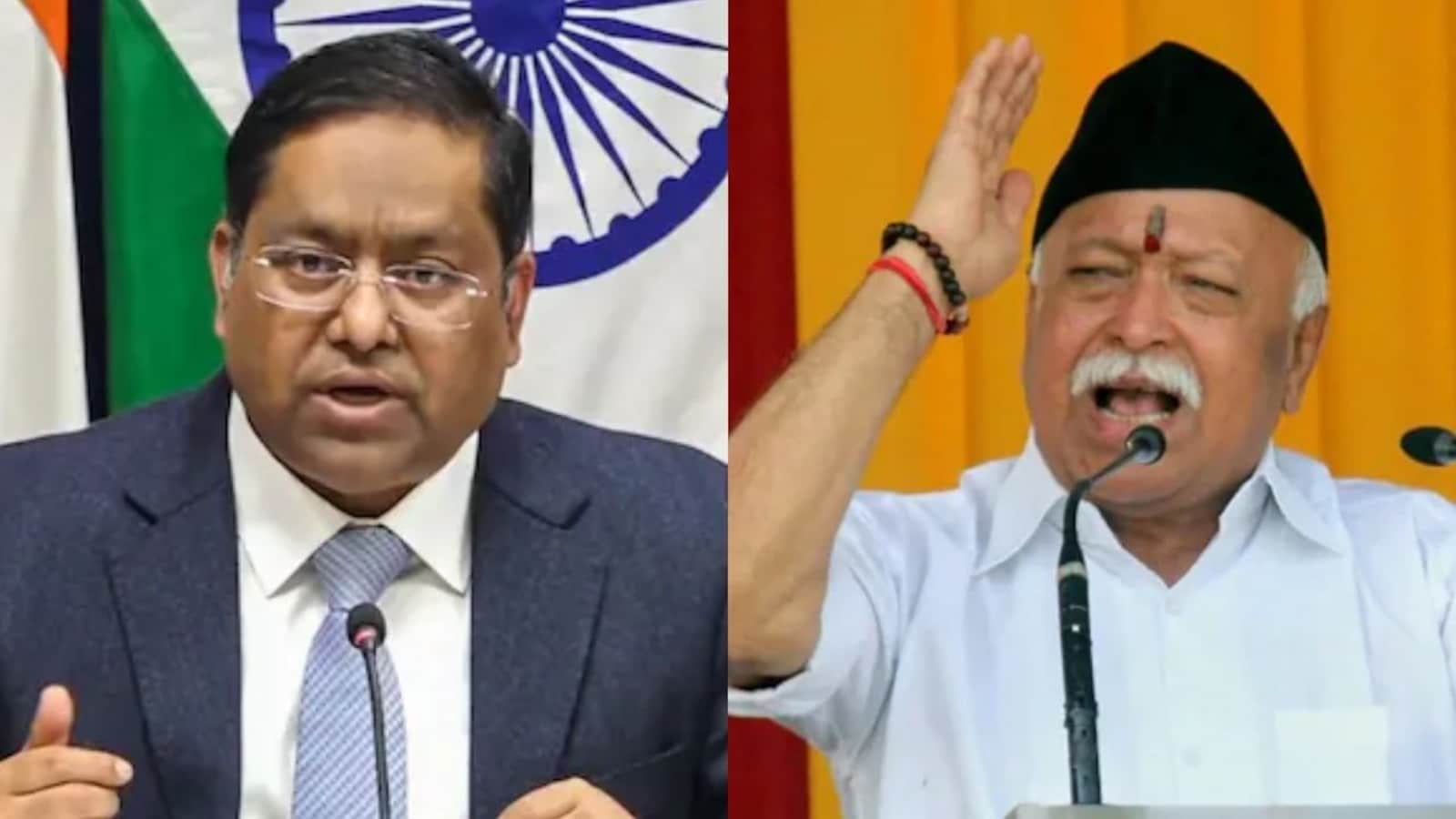
India Rejects USCIRF Sanctions Call Against RSS Leaders

US Panel Urges Visa Revocation, Sanctions During Bhagwat Visit

USCIRF Seeks RSS Sanctions Before Bhagwat’s International Tour

USCIRF Seeks Visa Ban as RSS Defends Bhagwat Event
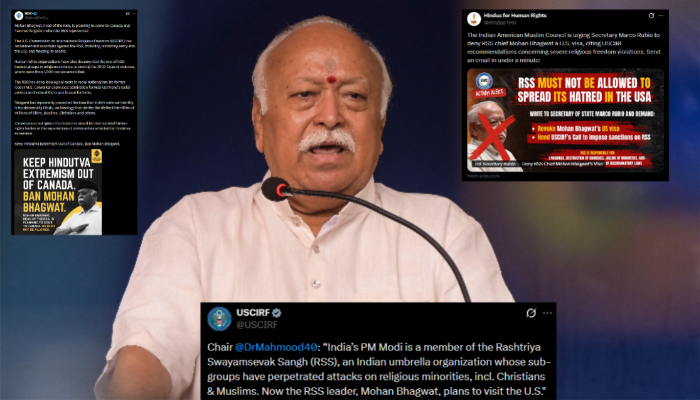
Justice For All Opposes Mohan Bhagwat’s Planned Western Tour

Readers propose stronger, wider, more resilient Indian GCC growth

India’s GDP Paradox: Strong Growth, Uneven Economic Reality
India Rejects PCA Orders in Indus Waters Treaty Dispute

BTS India Debut May Join ARIRANG Tour in March 2027

India’s Wind Pipeline Signals Sharp Capacity and Manufacturing Surge
