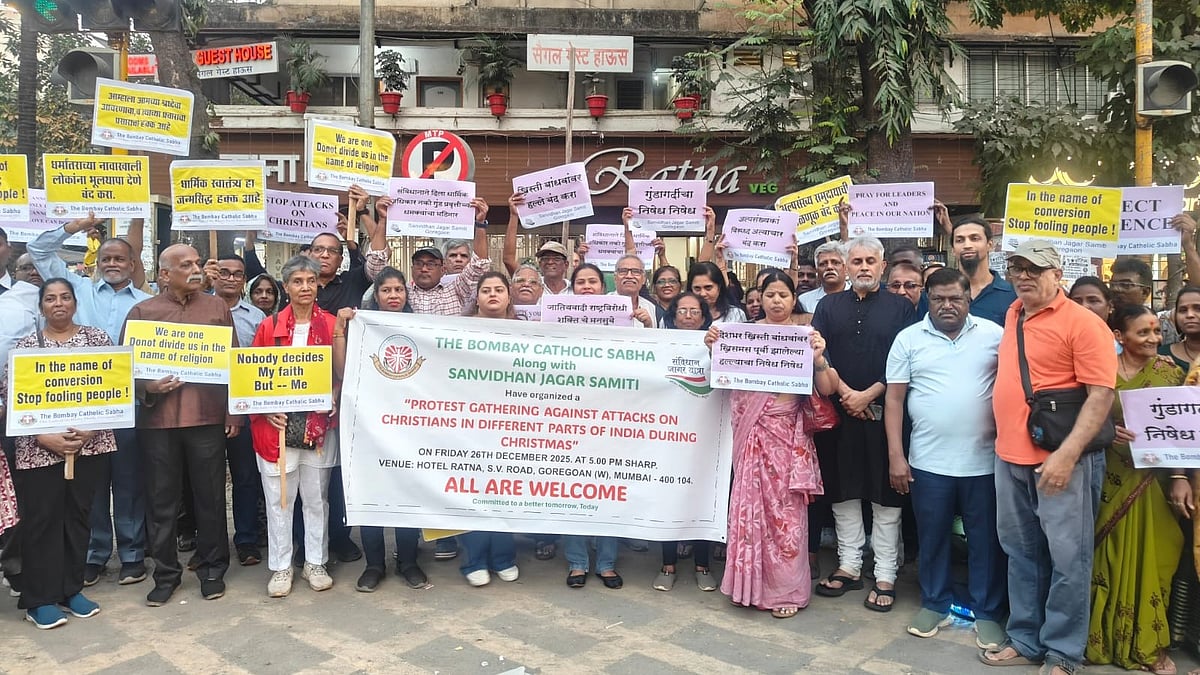
1 week ago
Mumbai Churches Deny Requiring Worshippers To Sign Anti-Conversion Declarations

Some reports said churches near Mumbai were asking people to sign papers saying they chose to worship freely.
Major church groups in Mumbai say they are not doing this.
They include the Roman Catholic Church, the Church of North India, and the Methodist Church.
A new anti-conversion law is scheduled to begin on August 28.
Church groups worry that the law could make ordinary charity, education, or religious activities subject to police checks.
The government says the law is meant only to stop forced or dishonest conversions.
A Catholic group says some smaller churches have started using consent letters.
Those churches may be doing this because they are worried about identifying people during possible violence or attacks.

Mainstream Christian denominations in Mumbai deny asking worshippers to sign voluntary-worship declarations.
The anti-conversion law is scheduled to take effect on August 28.
Church groups fear the law’s definition of “allurement” could subject charitable and educational work to police scrutiny.
The government says the law targets only forced and fraudulent religious conversions.
Some non-mainstream churches are reportedly using consent letters, particularly where security concerns have arisen.
- Who
- Mainstream Christian denominations in Mumbai, including the Roman Catholic Church and Church of North India, along with some smaller churches and government authorities.
- What
- Churches denied broadly requiring worshippers to sign declarations that they attend services voluntarily, although some non-mainstream churches reportedly use consent letters.
- Where
- Mumbai and its outskirts, with comments also referring to Thane.
- When
- The anti-conversion law is scheduled to come into force on August 28; no year is specified.
- Why
- Church groups are concerned about possible scrutiny under the law, while some churches reportedly cite identity and security concerns for using consent letters.
Church Groups’ Concerns
Government’s Position
Scope of the law
Church Groups’ Concerns
Church groups fear that the definition of “allurement” could expose charitable, educational, and religious activities to police scrutiny.
Government’s Position
The government says the legislation is aimed only at forced and fraudulent religious conversions.
Signing declarations
Church Groups’ Concerns
Mainstream denominations say requiring worshippers to sign papers would undermine their right to worship, and they deny having adopted the practice.
Government’s Position
Some smaller churches are reportedly using consent letters for unidentified visitors, which supporters describe as a protective measure rather than a policy across all churches.
Security concerns
Church Groups’ Concerns
Church representatives say churches should not need declarations when regular members are already known to them.
Government’s Position
Some churches have reportedly used consent letters or considered CCTV cameras to help identify people and preserve evidence if violence or mob attacks occur.
Key facts
- Law start date
- The anti-conversion law is scheduled to come into force on August 28.
- Mainstream denominations
- The Roman Catholic Church and Church of North India said they have not asked members to sign undertakings.
- Methodist Church position
- A Christian association secretary said the Methodist Church is not asking members to sign such documents.
- Reported use of letters
- Some churches outside mainstream denominations have reportedly begun using consent letters.
- Government position
- The government says the law targets forced and fraudulent religious conversions.
- Church groups’ concern
- They say the definition of “allurement” could bring charitable, educational, and religious activities under police scrutiny.
- Security measures
- Some churches have reportedly been advised to install CCTV cameras where violence or mob attacks are a concern.
Quotes
Dolphy D’Souza
Spokesperson for the Bombay Catholic Sabha
“Neither the CNI nor the Methodist Church is asking members to sign such documents. Our members are registered and have the freedom to worship where they want. We will oppose the law through legal means and not by signing such papers, which mock our right to worship.”
 freepressjournal.in
“For those who are regulars at the churches, there is no need for such letters because the churches know who their members are. However, churches are generally open to everyone, and people whose identities are not known may also enter.”
freepressjournal.in
Sources
Related news
Maharashtra Churches Seek Prayer Forms Before Anti-Conversion Law
New Maharashtra Anti-Conversion Law Sparks Religious Freedom Debate

Maharashtra Freedom of Religion Act Takes Effect Amid Criticism
British Indian Church Leader Faces India Anti-Conversion Law Dispute

Maharashtra books British OCI cardholder under new anti-conversion law

Pune Police Register First Cases Under Maharashtra's Anti-Conversion Law
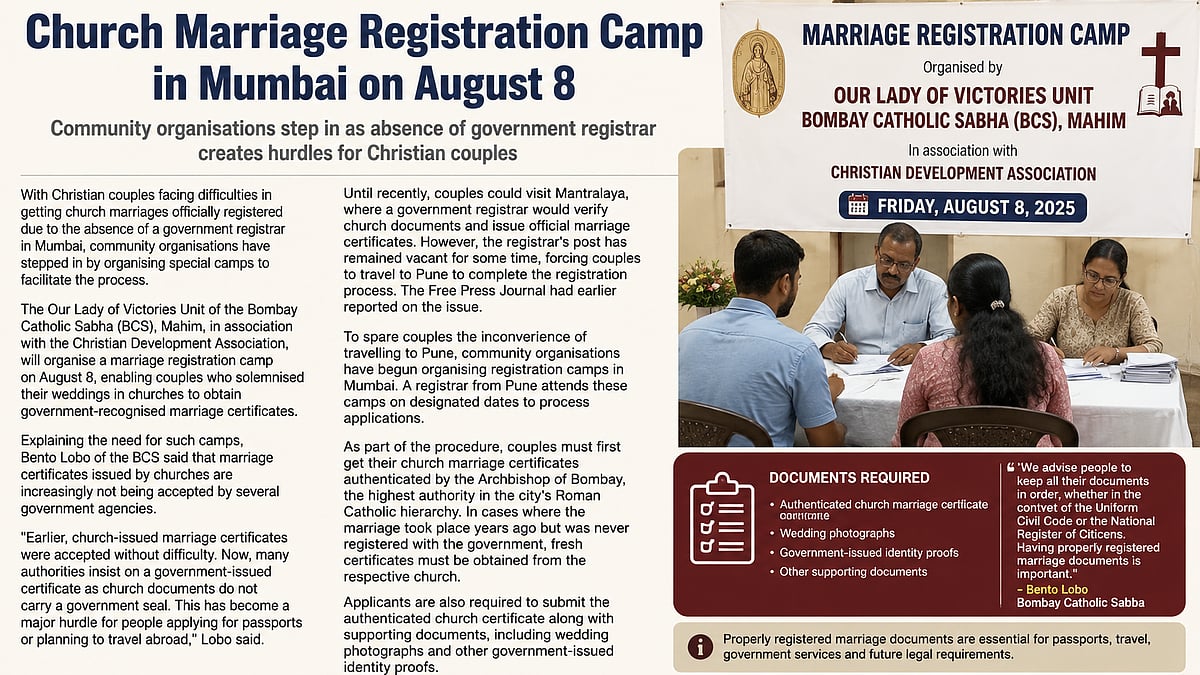
Mumbai Christian Bodies Organize Marriage Registration Camps
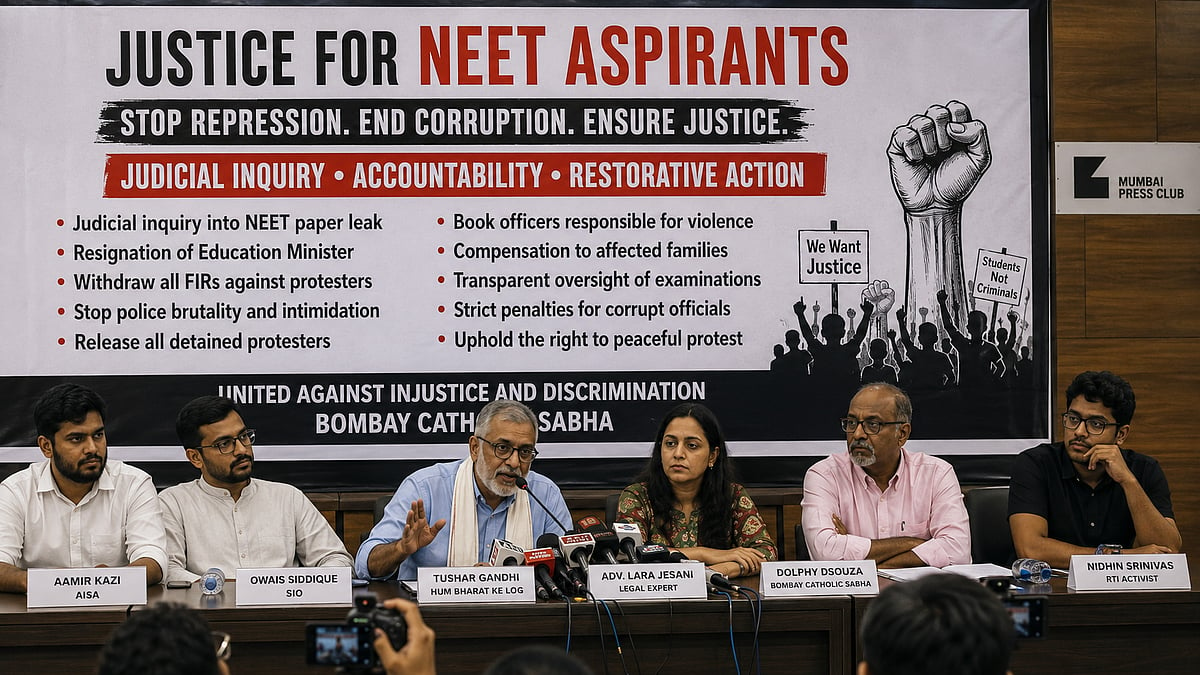
Activists Demand Inquiry into NEET Paper Leak

BMC Halts Pathway Work Near Mount Mary Steps