

3 hrs ago
Pakistan Sets YouTube View Benchmark to Tax Content Creators

Pakistan is making new rules for taxing people who earn money from social media content.
The tax office estimates that 1,000 monetised views are worth Rs 195.
It uses that estimate or the creator’s actual earnings, whichever is higher, to work out income.
Creators can subtract certain expenses, but those deductions are limited to 30% of revenue.
The rules also cover sponsorships, gifts and other benefits connected to creating content.
Some creators say the estimate is too high and does not reflect what they earn or spend.
The tax office says the figure is based on its research, and creators can show evidence if they earned less.
Critics worry that the rules could lead some creators to move their businesses or money overseas.

Pakistan’s Federal Board of Revenue set a benchmark of Rs 195 per 1,000 monetised views across YouTube, Facebook, Instagram and TikTok.
Taxable income is based on whichever is higher: a creator’s actual remuneration or income estimated using the benchmark; deductible expenses are capped at 30%.
The rules cover platform payments, sponsorships, gifts and other benefits, and require covered creators to file quarterly advance tax and report income annually.
Creators and industry figures say the benchmark may overstate earnings and that the expense cap may not reflect production costs; the FBR says its research supports the rate and creators may submit evidence of lower earnings.
Critics warn the framework could encourage creators to move businesses or financial arrangements overseas or route income outside formal channels.
- Who
- Pakistan’s Federal Board of Revenue and social media content creators affected by the rules.
- What
- A framework estimates monetised content income at Rs 195 per 1,000 views, with taxable income based on the higher of estimated or actual remuneration.
- Where
- Pakistan.
- When
- The FBR notified the rules on September 23; a separate 5% bank withholding measure was introduced in July.
- Why
- The government is seeking additional revenue and expanding its tax base to include digital earnings.
Critics and creators
Federal Board of Revenue
Whether the benchmark reflects actual earnings
Critics and creators
Creators and industry figures say Rs 195 per 1,000 views may overstate local payouts and oversimplify a complex system; creators can have substantial production costs.
Federal Board of Revenue
An FBR official said the rate followed the agency’s research and interactions with people making monetised content, and described it as below the average amount a normal Pakistani video earns per 1,000 views.
Effects on the creator economy
Critics and creators
Critics warn the benchmark and 30% expense cap could discourage hiring and business growth, or prompt creators to move operations, banking or income abroad or use informal channels.
Federal Board of Revenue
The FBR framework allows creators to submit evidence of lower actual earnings for consideration.
Key facts
- View benchmark
- Rs 195 per 1,000 monetised views
- Platforms named
- YouTube, Facebook, Instagram and TikTok
- Income calculation
- Whichever is higher: actual remuneration or income estimated using the prescribed benchmark
- Expense deduction cap
- 30% of total revenue
- Earlier bank measure
- A 5% withholding tax on social media revenue reaching creators’ accounts was introduced in July
- User thresholds reported
- More than 50,000 users in a tax year or more than 12,250 users in a quarter
- YouTube channels
- Google reportedly told local media that more than 140,000 YouTube channels are managed by Pakistanis
Quotes
Pakistani content creator (unnamed)
A creator who criticised the FBR’s estimated revenue benchmark.
“A regime that taxes gross receipts and imposes deemed-income benchmarks may discourage creators from locating and expanding their businesses [in Pakistan], particularly where other jurisdictions tax verified net profits.”
 firstpost.com
“This was used because our research and interactions with people making monetized content in Pakistan led us to this figure.”
firstpost.com
Sources
Related news

Indian Faceless YouTube Channels Face Wide Earnings Gap

Indian Creators Explore Bilibili as YouTube Monetisation Rules Tighten
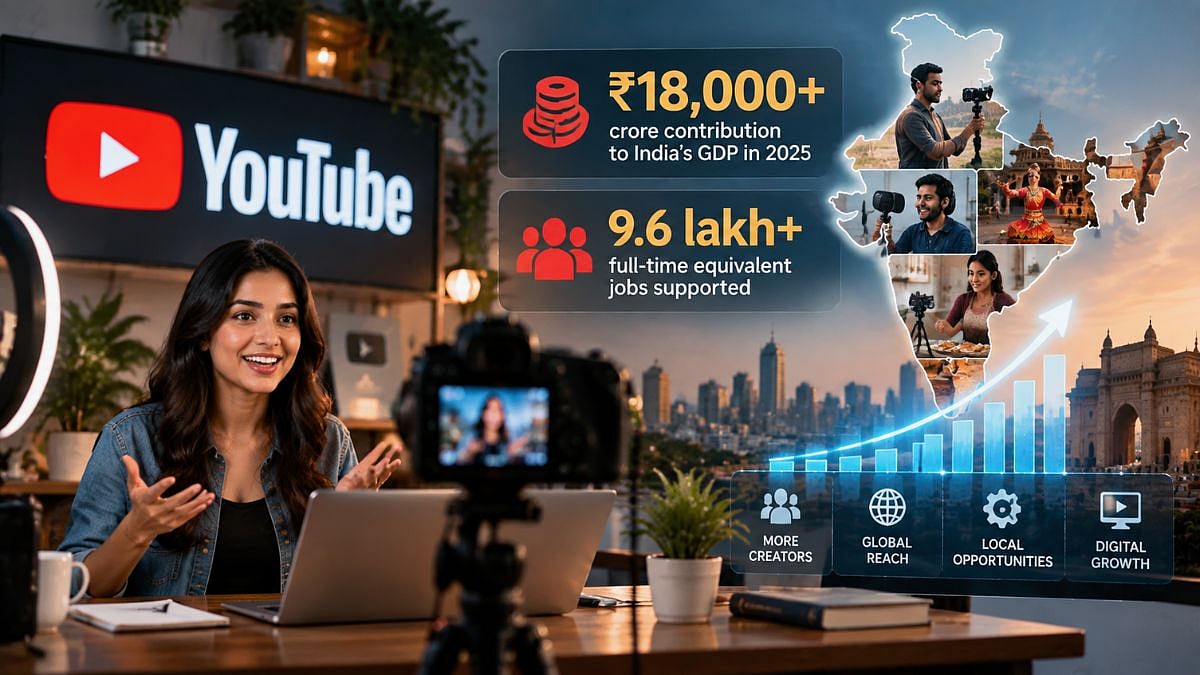
YouTube’s India Creator Economy Adds ₹18,000 Crore, Supports 9.6 Lakh Jobs

New FEMA Rules Require Service Exporters to File EDFs

Bilibili’s Global Expansion Draws Interest From Indian Creators

YouTube India Report Shows Rising Creator Economy Impact

Pakistan Imposes Fuel, Spending and Wedding Austerity Measures

Former Pakistan official blames China for economic woes over CPEC

Immigration Fraud and Corruption Nexus Exposed in Pakistan

Pakistan Senate Warns of Critical Cyber Security Gaps
