2 hrs ago
V-KYC Flags Ten Districts for Potential Mule-Account Risks

IDfy studied video-based identity checks used when people open accounts.
It found 10 districts with unusually high rejection rates.
Most of these districts were in Uttar Pradesh, with others in Haryana and Rajasthan.
Lakhimpur Kheri had the highest rejection rate.
Applications can be rejected when checks find possible impersonation, changed documents or suspicious behavior.
These patterns may help banks notice possible mule-account networks early.
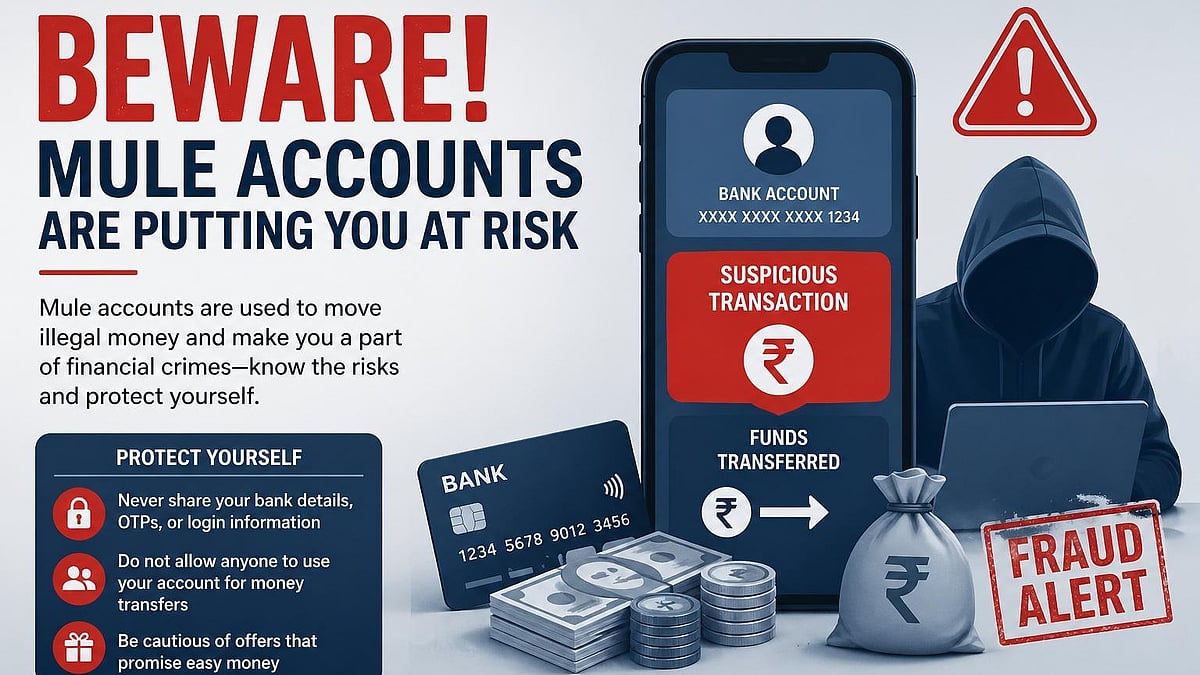
A mule account is used to receive or move illegal money.
However, a high rejection rate does not mean every person or account in a district is fraudulent.
IDfy said some warnings appeared before police action or news reports, but banks still need to investigate carefully.

IDfy’s V-KYC analysis flagged 10 districts for heightened mule-account scrutiny: eight in Uttar Pradesh, one in Haryana and one in Rajasthan.
Lakhimpur Kheri had the highest rejection rate at 14.03%, followed by Bareilly at 13.37% and Varanasi at 12.32%.
The analysis examined V-KYC onboarding data from about 130 districts between April 2025 and June 2026.
V-KYC rejections can result from suspected impersonation, altered documents, prompting by another person or other suspicious behavior.
IDfy said its signals identified district-level hotspots before later law-enforcement action or news reporting in many cases, but stressed that rejection rates do not prove individual fraud.
- Who
- IDfy, a fraud-prevention firm, analyzed V-KYC data for banks monitoring possible mule accounts.
- What
- The analysis flagged 10 districts with elevated V-KYC rejection rates and potential fraud-network risks.
- Where
- The flagged districts were in Uttar Pradesh, Haryana and Rajasthan.
- When
- The data covered April 2025 through June 2026; IDfy said some signals appeared up to two months before public reporting.
- Why
- The findings could help banks identify emerging mule-account clusters earlier by combining onboarding signals with transaction monitoring and other checks.
Early-Warning Case
Caution Against Overinterpretation
Meaning of high rejection rates
Early-Warning Case
Banks can treat elevated V-KYC rejection rates as an early warning of possible mule-account networks or developing fraud clusters.
Caution Against Overinterpretation
A high rejection rate is only a risk indicator and does not establish that every applicant or account in a district is fraudulent.
Use of V-KYC signals
Early-Warning Case
Combining onboarding patterns with transaction monitoring and other checks may help banks investigate emerging clusters sooner.
Caution Against Overinterpretation
Suspicious activity should be verified before conclusions are drawn about individuals or entire districts.
Predictive value
Early-Warning Case
IDfy said 85–90% of the district-level hotspots it identified each quarter during FY26 were later corroborated by law-enforcement action or news reports.
Caution Against Overinterpretation
The analysis describes later corroboration and advance signals, but the article does not present the findings as proof of fraud in every flagged location.
Key facts
- Flagged districts
- 10 districts: eight in Uttar Pradesh, one in Haryana and one in Rajasthan.
- Data coverage
- V-KYC onboarding data from about 130 districts.
- Highest rejection rate
- Lakhimpur Kheri, at 14.03%.
- Other high rates
- Bareilly recorded 13.37% and Varanasi 12.32%.
- Quarterly hotspot estimate
- IDfy identified about 16 district-level fraud hotspots each quarter during FY26.
- Later corroboration
- IDfy said 85–90% of those hotspots were later corroborated by law-enforcement action or news reports.
- Advance warning
- In subsequently verified cases, V-KYC signals appeared as much as two months before public reporting.
Sources
Related news

Mumbai Cyber Police Probe Suspicious Mule Account in Interstate Fraud

TGCSB Arrests Two Over Mule Accounts In Khammam Cyber Fraud

Indore Man Arrested Over Mule Account Linked to Cyber Fraud

Jalgaon Man Arrested in Alleged ₹2.14 Crore Cyber Fraud
₹9 Lakh Cyber Fraud Trail Leads To Mule Account Arrest

UK Firms Close Nearly 240,000 Suspected Mule Accounts

Hisar Love-Marriage Ban Highlights India’s Culture Policing and Violence

Maruti Suzuki Launches Green Hydrogen Pilot at Haryana Factory

Haryana Deploys Parali Protection Force, Drones Against Stubble Burning

Maruti Suzuki Commissions 300 kW Green Hydrogen Plant at Manesar