9 months ago
Indian Brands Adopt 'Apology Ads' Trend for Marketing
Imagine your favorite toy is so fun, you never want to put it down, or a candy is so tasty, you can't stop eating it!
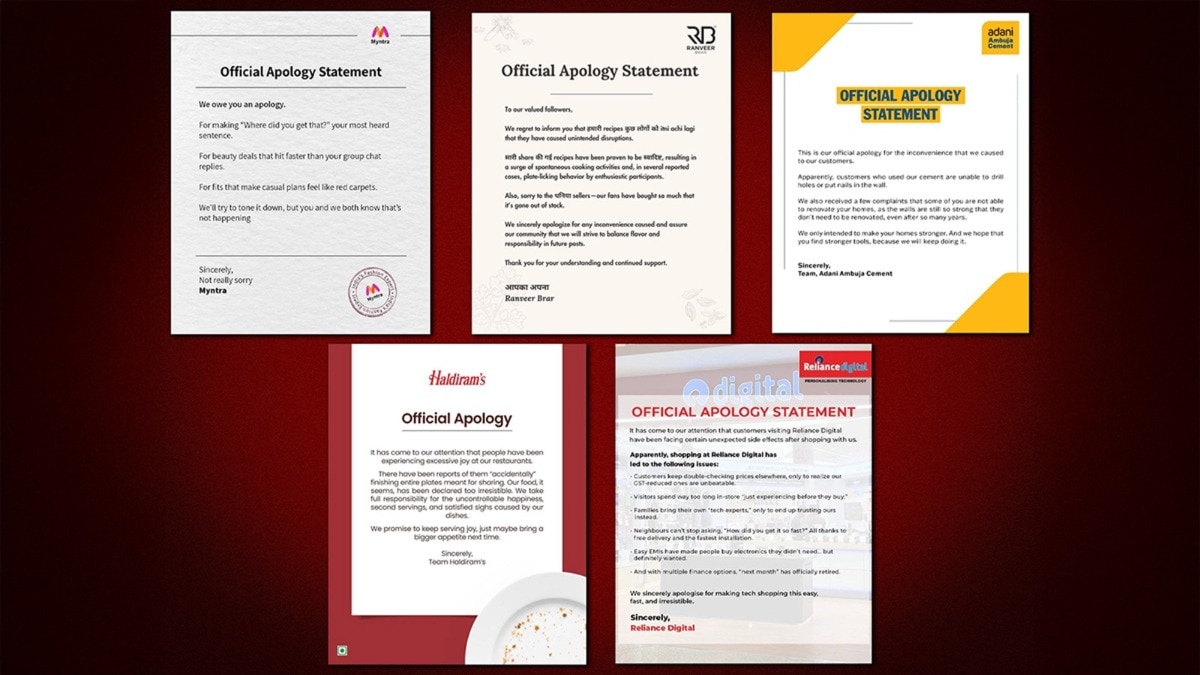
Well, some companies in India are making ads that pretend to say 'sorry' about how awesome their products are.
For example, a car company might say sorry because their cars are too hard to sell back, or a beauty brand might apologize for being too irresistible.
It's like they're playfully bragging by saying 'oops, we're too good at making you happy!'
This trend started in another country and became really popular in India.
The idea is to make people laugh, grab their attention, and make the brand memorable.
It's a funny way to advertise that's easy to share with friends.

Indian brands are adopting a trend of issuing mock 'apology advertisements'.
These ads humorously 'apologize' for product success, such as being too irresistible or reliable.
The strategy aims to generate curiosity, humor, and viral appeal through ironic messaging.
The trend originated in the Philippines and has been adopted by various Indian brands across multiple industries.
While aiming for viral appeal, brands must be cautious as such ads can sometimes highlight genuine customer grievances in comment sections.
- Who
- Various Indian brands including Lakmé, Volkswagen, Škoda, Reliance Digital, Haldiram's, Jupiter, Keventers, T-Series, Dabur Chyawanprash, Fujifilm, Ajio, Myntra, and GoMechanic.
- What
- Adopting a marketing trend of issuing mock 'apology advertisements' where brands ironically apologize for being too successful, irresistible, or for fulfilling their purpose too well.
- Where
- India
- When
- Recently gaining significant traction in India.
- Why
- To grab attention, generate curiosity, humor, and viral appeal by subverting traditional advertising and crisis communication.
Apology Ad Trend
Traditional Marketing
Brand Messaging
Apology Ad Trend
Brands use mock apologies, ironically saying sorry for being too successful or irresistible, to grab attention and generate humor.
Traditional Marketing
Focuses on directly highlighting product benefits and features without using ironic or self-deprecating humor.
Tone and Format
Apology Ad Trend
Employs a tongue-in-cheek, text-heavy format that appeals to younger consumers and allows for well-written copy.
Traditional Marketing
Generally uses direct, persuasive language and often relies on video for advertising.
Customer Engagement
Apology Ad Trend
Aims for viral appeal and curiosity, though comments sections can sometimes highlight genuine customer complaints.
Traditional Marketing
Seeks to clearly communicate value propositions and build trust through direct benefit communication.
Key facts
- Trend Name
- Apology Advertisement
- Origin
- Philippines
- Adopters
- Lakmé, Volkswagen, Škoda, Reliance Digital, Haldiram's, Jupiter, Keventers, T-Series, Dabur Chyawanprash, Fujifilm, Ajio, Myntra, GoMechanic.
- Industries Involved
- Automotive, Retail, Fashion, Beauty, Food & Beverage, Banking, Entertainment, E-commerce, Media.
- Marketing Tactic
- Mock apologies for product success, desirability, or for doing its job too well.
- Key Appeal
- Humor, irony, viral potential, and grabbing attention in a crowded media landscape.
Quotes
The article
The article discusses the trend of apology ads.
““unconditional public apology””
 livemint.com