9 months ago
Indian Brands and Production Houses Join Viral 'Official Apology' Trend
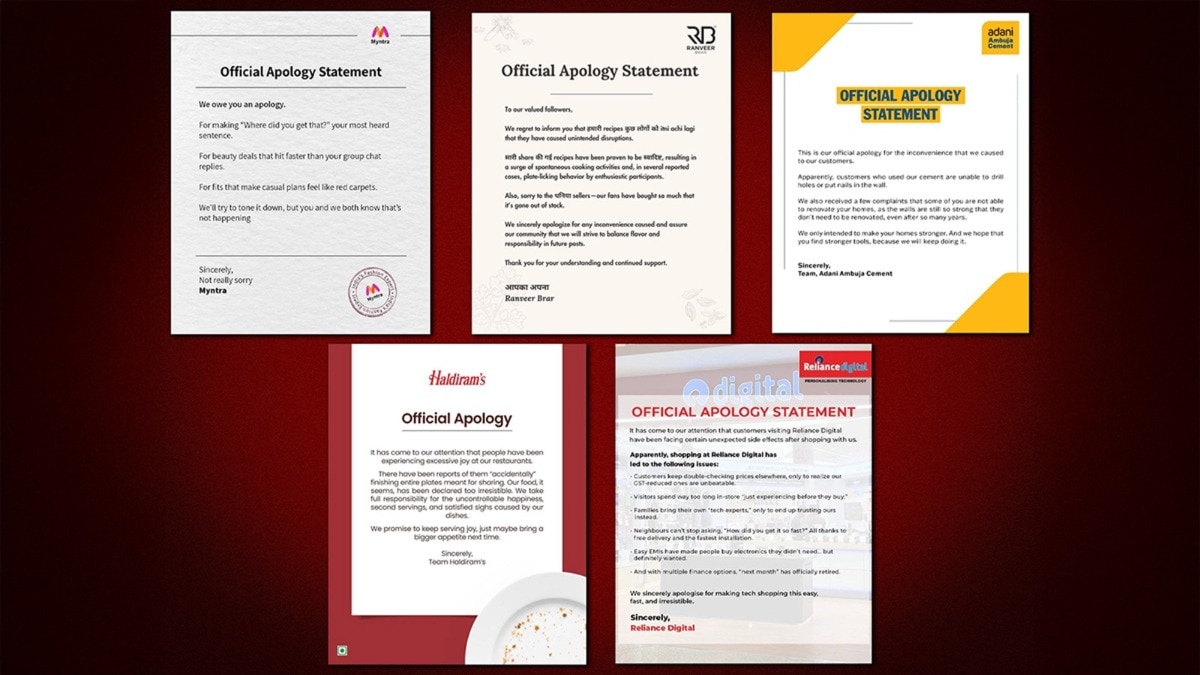
Imagine companies and movie studios in India are playing a funny game on social media.
They are posting 'official apology' letters, but they aren't sorry for doing something wrong.
Instead, they are pretending to be sorry for being too good at their jobs!
For example, a movie team might say sorry because their upcoming film looks so exciting that people can't wait for it.
A car company might apologize because their cars are so great, they make people too happy.
They use the serious look of a normal apology letter from a company that made a mistake, but fill it with funny and boastful messages.
This makes people laugh and notice them more.
It's a way to get people talking and sharing their posts because it's unexpected and amusing.
It started with brands and now movie makers are joining in the fun.

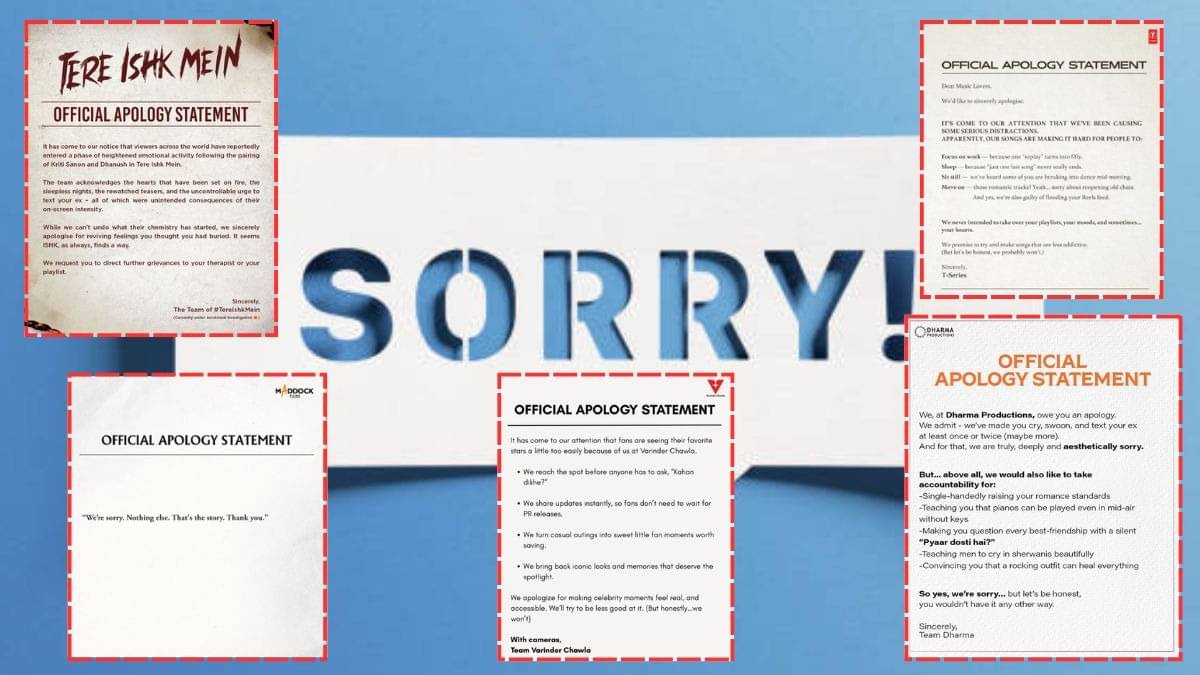
A viral social media trend involves Indian brands and production houses posting humorous 'official apology' letters.
These apologies are not for actual mistakes, but rather for being 'too good,' exceeding expectations, or causing 'unintended delight'.
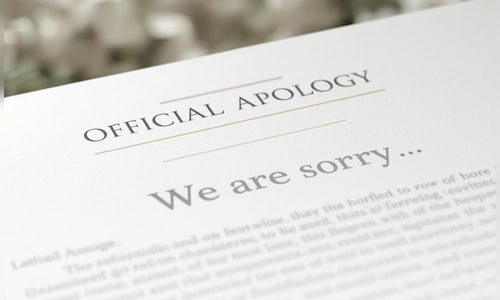
The trend mimics the format of formal brand apology statements used during PR crises, including official letterheads.
Participating entities include production houses like Dharma Productions, Maddock Films, and brands such as Skoda, Volkswagen, and Haldiram's.
The trend aims to leverage virality, increase brand visibility, and foster audience engagement through relatable and humorous content.
- Who
- Bollywood production houses (Dharma Productions, Maddock Films, T Series, Tere Ishk Mein team) and brands (Skoda, Volkswagen, Man Force, Adani Amuja Cement, Haldiram’s, Keventers, Banana Leaf, PVR-Inox, Cashify, Garnier).
- What
- Participating in a viral social media trend where they post 'official apology' letters that are humorous and boastful, rather than for actual mistakes.
- Where
- Primarily in India, with roots in a global trend originating from the Philippines.
- When
- Currently ongoing and gaining viral momentum.
- Why
- To engage audiences, humanize brands, gain visibility, and create shareable content by subverting the expectations of a typical crisis apology.
Supporters of the Trend
Critics of the Trend
Nature and Impact of the Trend
Supporters of the Trend
The trend is a playful and humorous way for brands and production houses to engage with their audience, humanize their image, and gain visibility through relatable content.
Critics of the Trend
Using the format of official apologies for humorous or boastful reasons may devalue the meaning and impact of genuine apologies during actual crises.
Key facts
- Trend Type
- Viral social media trend involving humorous 'Official Apologies'.
- Participating Entities
- Bollywood production houses (Dharma Productions, Maddock Films, T Series, Tere Ishk Mein team), and various brands (Skoda, Volkswagen, Man Force, Adani Amuja Cement, Haldiram’s, Keventers, Banana Leaf, PVR-Inox, Cashify, Garnier).
- Apology Content
- Instead of apologizing for mistakes, posts are boastful about strengths, exceeding expectations, or causing 'unintended delight'.
- Format
- Mimics actual brand apology letters released during PR crises, using official letterheads.
- Origin
- Appears to be a continuation of a trend that amplified globally from the Philippines in 2024.
- Objective
- To leverage virality, gain online visibility, and retain user interaction through a format traditionally associated with serious controversy.
Quotes
Sham Kaushal
An individual reacting to a news item.
“Sab Bahut Khush Hain”
 republicworld.com