0 months ago
Physicists find rare 'glueball' particle made of pure force
Everything in the universe is made of tiny building blocks.
Some of these blocks are called quarks, and they are held together by glue-like particles called gluons.
Scientists wondered if gluons could stick to each other without any quarks, making a ball of pure force.
They called this a 'glueball.'
For about 50 years, nobody could prove glueballs were real.
Recently, scientists in China used a big machine that smashes tiny particles together at nearly the speed of light.
They found a particle called X(2370) that seems to be a glueball.
This is exciting because it is a new kind of matter made only of force.
It helps scientists understand how the universe works and tests one of our most important theories about nature.

Physicists at the Beijing Electron Positron Collider II (BEPCII) found evidence that the particle X(2370) is dominated by a glueball state.
A glueball is an exotic particle composed entirely of gluons, the force-carrier particles of the strong force, with no quarks.
The glueball was first predicted nearly 50 years ago and is the only type of particle in nature made purely of force mediators.
The international team analyzed billions of particle decay events, including 10 billion meson decay events, to measure the particle's mass, spin-parity, and decay pathways.
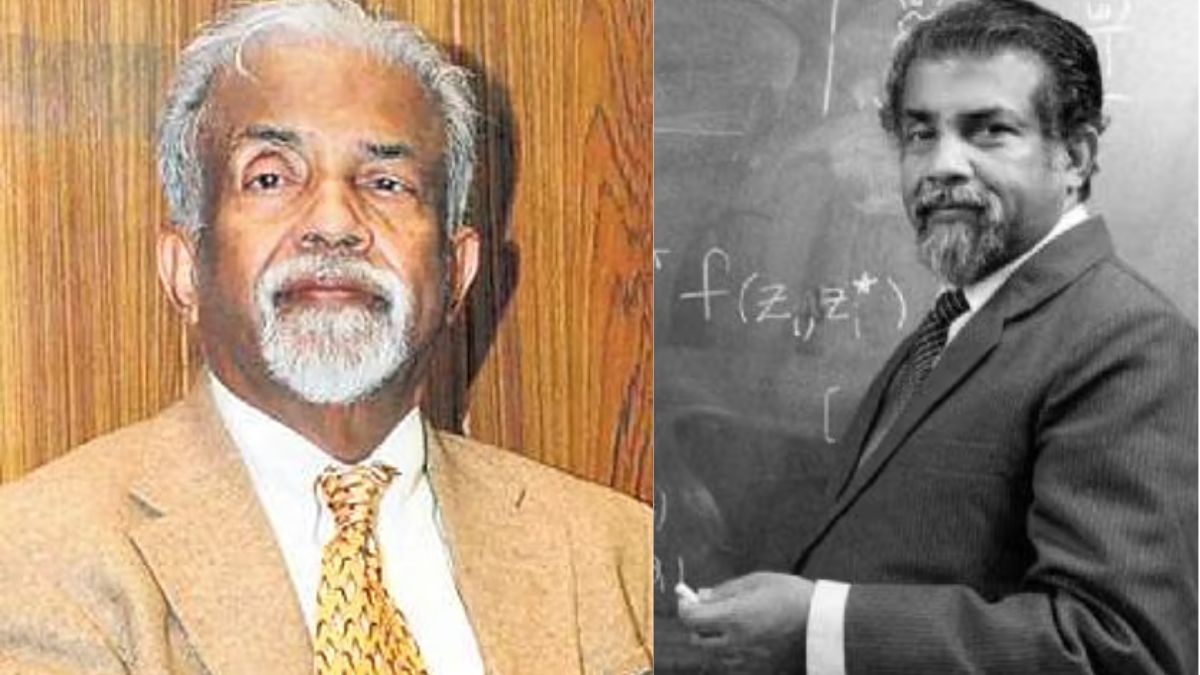
Jin Shan, a particle physicist at Nanjing University, called the discovery an 'unprecedented form of matter' that tests the theory of strong interactions.
The J/ψ (J/psi) meson, formed in high-energy collisions, decays almost instantly and provides one of the best avenues to search for glueballs.
- Who
- An international team of physicists at the Beijing Electron Positron Collider II (BEPCII), including research leader Jin Shan of Nanjing University.
- What
- Found evidence that the particle X(2370) is dominated by a glueball, an exotic state composed entirely of gluons with no quarks.
- Where
- Beijing Electron Positron Collider II (BEPCII), China.
- When
- The article does not specify the announcement date; X(2370) was first detected in 2011.
- Why
- To test quantum chromodynamics, the theory describing strong interactions, and to expand understanding of the physical world.
Key facts
- Particle
- X(2370)
- Facility
- Beijing Electron Positron Collider II (BEPCII)
- First detected
- 2011
- Prediction age
- Nearly 50 years
- Composition
- Gluons only (no quarks)
- Decay events analyzed
- 10 billion meson decay events
- Research leader
- Jin Shan, Nanjing University
- Theory tested
- Quantum chromodynamics
Quotes

Jin Shan
Particle physicist and research team leader at Nanjing University
“"not only enables the theory describing strong interactions to pass its most rigorous test, but also vastly expands the boundaries of our understanding of the physical world."”
 wionews.com
“"unprecedented form of matter."”
wionews.com