2 weeks ago
Unexpected Findings During Surgery Don't Automatically Indicate Cancer

When a person has an operation, the doctor might find something they did not expect.
That does not automatically mean the person has cancer.
The surprise finding could be a harmless condition.
It could also be swelling, old scar tissue, or just the way a person's body is built.
Sometimes a small piece of tissue is removed so it can be checked.
A special doctor called a pathologist examines the tissue in a laboratory.
The pathologist can tell what the finding really is.
Before surgery, the doctor talks with the patient about this possibility.
The doctor also explains how a surprise finding would be checked or treated.

An unexpected finding during surgery does not automatically indicate cancer.
Such findings may represent a benign condition, inflammation, endometriosis, scar tissue, or a normal anatomical variation.
When tissue is removed or sampled, a pathologist examines it in the laboratory to determine what the abnormality represents.
Patients are generally counselled before surgery about the possibility that additional findings may be encountered.
Patients are also informed about how any unexpected findings might be assessed or managed.
- Who
- Patients undergoing surgery, surgeons, and pathologists
- What
- Unexpected findings during surgery are not automatically cancer and may be benign conditions, inflammation, endometriosis, scar tissue, or normal anatomical variation, with laboratory examination used to identify the abnormality
- Where
- In the operating room and the pathology laboratory
- When
- During and after surgery, when tissue is removed or sampled for laboratory examination
- Why
- To determine accurately whether an unexpected finding is cancer or a non-cancerous condition
Key facts
- Topic
- Unexpected findings discovered during surgery
- Key message
- An unexpected finding does not automatically indicate cancer
- Possible explanations
- Benign condition, inflammation, endometriosis, scar tissue, normal anatomical variation
- Diagnostic process
- Laboratory examination of removed or sampled tissue by a pathologist
- Patient counselling
- Patients are counselled before surgery about possible additional findings
- Management
- Findings are assessed or managed after laboratory determination
Sources
Related news

Doctors Warn 'Lump Doesn't Hurt' Breast Cancer Myth

Cancer Screening Tests: Which You Need, and Which You Don't

Probe Ordered After Gloves, Paper Allegedly Left During Beed C-Section

Nail Changes That May Signal Rare Nail-Unit Melanoma
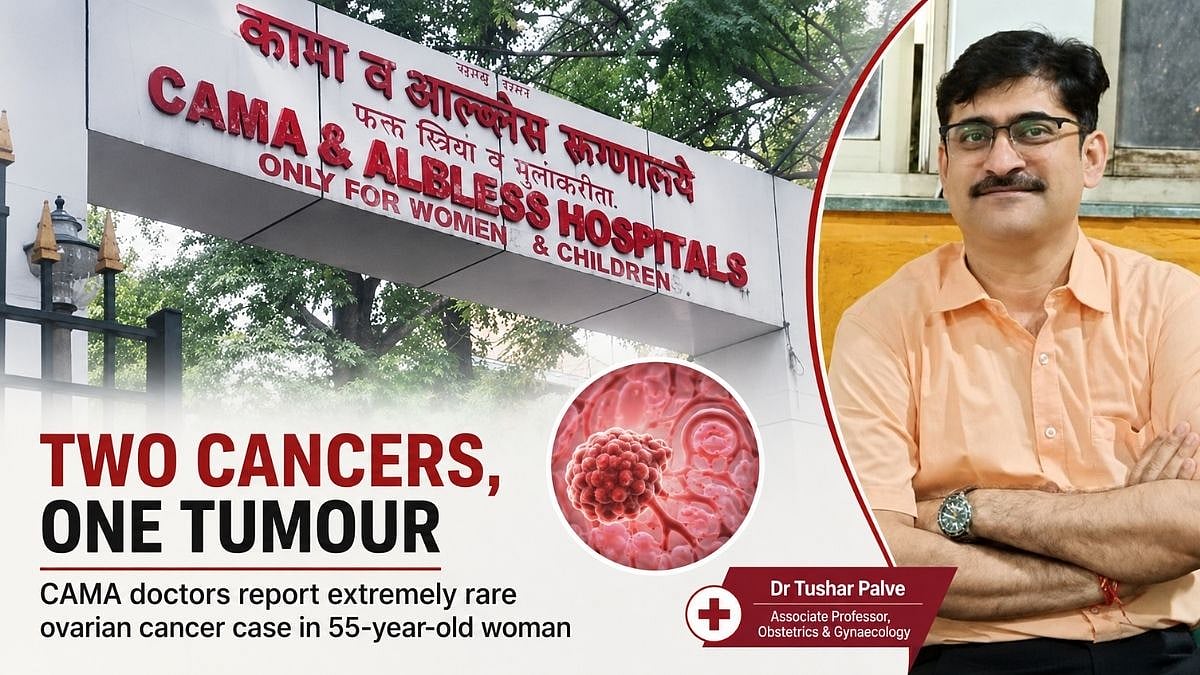
Mumbai Doctors Identify Two Rare Cancers In Ovarian Tumour