7 hrs ago
India’s Vehicle Scrappage Drive Faces Environmental and Economic Roadblocks
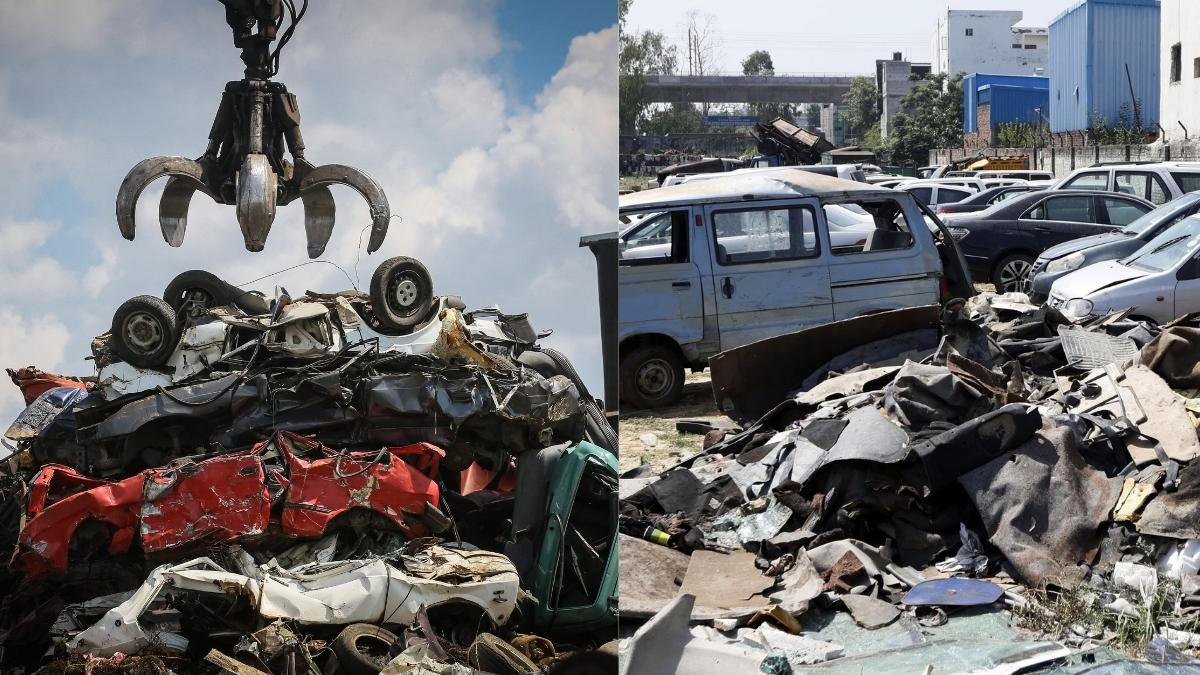
India wants to remove very old and polluting vehicles from its roads.
These vehicles can release more harmful pollution than newer ones.
Scrapping them also allows useful metals such as steel, aluminium and copper to be reused.
However, taking apart a vehicle and building a replacement also uses energy and creates emissions.
Experts say replacing a heavily used, dirty vehicle usually helps more than replacing a lightly used, well-maintained one.
The government mostly uses vehicle age to decide when testing or retirement is needed.
Many owners sell old vehicles because resale usually pays more than authorised scrapyards.
Those vehicles may then continue operating in other parts of India.
Experts are calling for stronger incentives, better enforcement and rules based more on actual pollution levels.

India could have about 22 million end-of-life vehicles and 7 million tonnes of automotive scrap annually by 2030.
Fewer than 3% of estimated end-of-life vehicles entered authorised scrapping facilities between August 2022 and July 2025.
The government says 394,000 vehicles had been scrapped by December 2025, attracting Rs 27 billion in private investment.
Experts say replacing an old vehicle can reduce pollution, but manufacturing and recycling create emissions that require lifecycle analysis.
Owners often receive more money by reselling vehicles, allowing older vehicles to move to less-regulated markets instead of being destroyed.
- Who
- The Government of India, vehicle owners, authorised scrapping facilities, manufacturers, informal recyclers and environmental researchers are involved.
- What
- India is trying to expand the formal scrapping and recycling of end-of-life vehicles while reducing pollution and recovering materials.
- Where
- India, particularly urban areas such as Delhi and the Delhi-NCR region.
- When
- The Vehicle Scrappage Policy was announced in 2021; fewer than 3% of estimated end-of-life vehicles entered authorised facilities from August 2022 to July 2025, while the government reported 394,000 vehicles scrapped by December 2025.
- Why
- The programme aims to reduce harmful vehicle emissions, improve urban air quality and build a circular economy, but its environmental value depends on how vehicles are used, replaced and recycled.
Performance-Based Replacement
Age-Based Scrappage
How vehicles should be selected
Performance-Based Replacement
Researchers argue that pollution and vehicle use should matter more than age, because some newer vehicles can be highly polluting while some older, well-maintained vehicles may emit less.
Age-Based Scrappage
Current policy relies substantially on age thresholds, including fitness tests after 20 years for private vehicles and 15 years for commercial vehicles.
Climate impact of replacement
Performance-Based Replacement
A replacement can increase total energy use and greenhouse-gas emissions when an old vehicle is lightly used, because manufacturing emissions may not be recovered during its remaining life.
Age-Based Scrappage
Replacing heavily used or highly polluting vehicles can quickly reduce operational emissions, and recovering metals can avoid emissions from producing materials from virgin ores.
Formal versus informal recycling
Performance-Based Replacement
Experts and government advisers support integrating the informal sector, which already recovers many materials, while adding safer depollution and hazardous-material controls.
Age-Based Scrappage
The formal system uses authorised facilities designed to remove fluids, refrigerants, batteries and other hazardous components before dismantling, but it struggles to attract vehicles because informal buyers often pay more.
Key facts
- Estimated end-of-life vehicles by 2030
- Around 22 million
- Expected annual automotive scrap by 2030
- Nearly 7 million tonnes
- Authorised scrapping rate
- Fewer than 3% of estimated end-of-life vehicles entered authorised facilities between August 2022 and July 2025
- Vehicles reportedly scrapped by December 2025
- 394,000, including 165,000 government-owned and 239,000 private vehicles
- Reported private investment
- Rs 27 billion
- Typical replacement break-even period
- About two to eight years, or roughly 30,000 to 100,000 kilometres, depending on vehicle and usage
- Formal facility example
- Tata Motors operates 11 facilities with annual capacity of about 190,000 vehicles
Quotes
Professor Santosh Kumar Sahu
Professor at IIT Madras studying vehicle lifecycle impacts
“The environmental impact should not be measured by comparing an old vehicle with a scrapped vehicle. The appropriate comparison is between continuing to use the existing vehicle and retiring it while manufacturing a replacement. Only a full life-cycle assessment can determine which option is environmentally preferable.”
 financialexpress.com
“Scrapping only counts if the vehicle is destroyed rather than moved across a state boundary. Otherwise, the problem is simply relocated.”
financialexpress.com
Sources
Related news

Uttar Pradesh Leads India In Vehicle Scrapping With 48.5%
India Expects BS VII Emission Norms Draft Within Two Months
India Turns To Technology And EPR Amid Plastic Waste Crisis
Bengal Bus Operators Seek Review of 15-Year Scrapping Rule

Study Boosts EV Case, But Indian Buyers Need Practical Benefits

IIT-Delhi Retrofit Device Could Cut Old Diesel Pollution 90%

India, UAE Seek Bigger Role for L’IMAD Investments

Madhya Pradesh Plans Global Green Transit Hub With Electric Vehicles

iPhone Duo or Car? Cars Available for Rs 4.5 Lakh

Tata Power Expands EV Charging Network Across Mumbai And Maharashtra