2 days ago
IISc Startup Bets on GaN to Put India Ahead
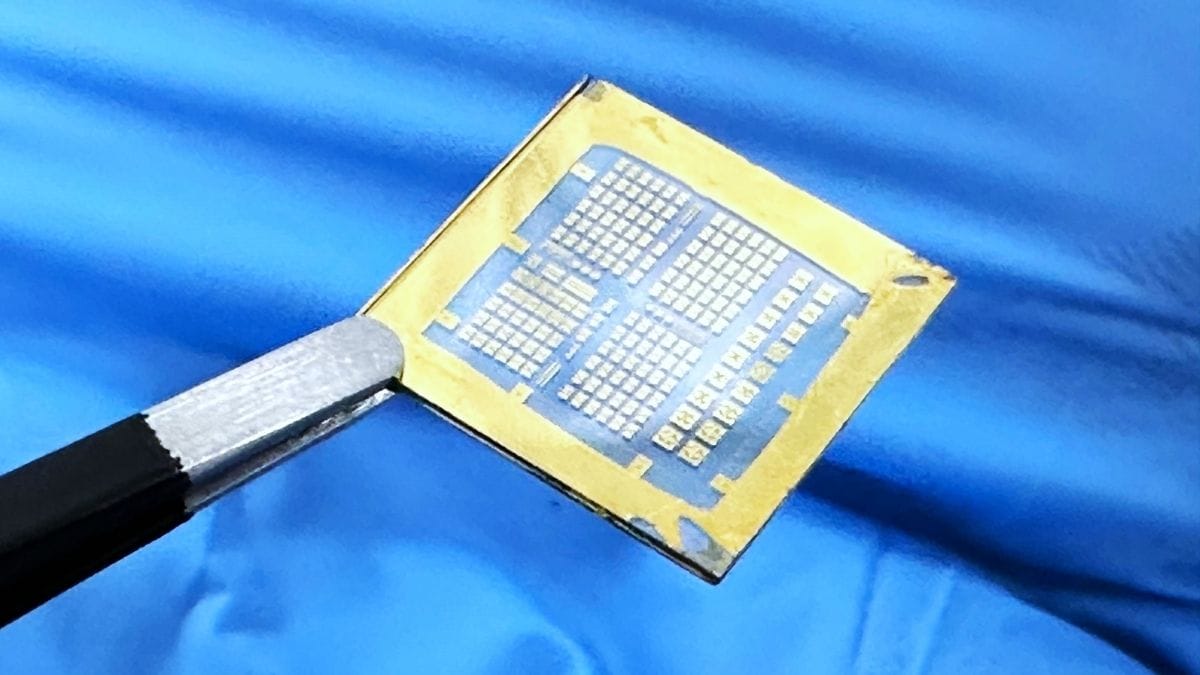
Agnit is a new company created by researchers from the Indian Institute of Science.
It is working with gallium nitride, or GaN, instead of only traditional silicon.
GaN devices can work with more electricity, heat and speed.
This could make useful products such as fast chargers, electric vehicles and radar systems better.
Agnit is especially focusing on products for strategic customers, including radar and communication equipment.
The team has already tested five possible products.
Two of those products were designed and made in India.
The founders say India needs government support but does not have to make every part of a semiconductor completely by itself.

Agnit Semiconductors, founded by IISc researchers, is described as India’s first gallium nitride-based semiconductor startup.
The team has more than 120 research papers and over 15 years of collective GaN experience.
Agnit has conducted five pilot projects, including two products designed and manufactured in India.
The company aims to develop globally relevant GaN products for strategic uses such as radars, jammers and radios within five years.
The founders say government incentives, procurement and targeted self-reliance are needed to help India compete internationally.
- Who
- Agnit Semiconductors, founded by researchers associated with the Indian Institute of Science, including CEO and co-founder Hareesh Chandrasekar.
- What
- The startup is developing and manufacturing gallium nitride-based semiconductor products.
- Where
- The work is being carried out at the Indian Institute of Science’s Innovation Centre in Bengaluru, India.
- When
- The founders first assembled for a GaN foundry proposal in 2015; the venture officially began in 2021, and it is targeting major progress over the next five years.
- Why
- To build globally relevant GaN products and reduce India’s dependence on imported semiconductor components, particularly in strategic applications.
Targeted Indian capability
Complete self-reliance and global integration
How India should build its semiconductor sector
Targeted Indian capability
Hareesh Chandrasekar argues that India should focus on strategic technologies, modules and sub-modules where it can become world-class rather than trying to make every semiconductor component domestically.
Complete self-reliance and global integration
The article notes that India remains heavily dependent on imports and says long-term competitiveness requires deeper integration into global value chains, including higher-value semiconductor design, assembly and testing.
Government’s role
Targeted Indian capability
Agnit’s founders say the government should provide stronger incentives and policies, actively support the sector and act as a customer for domestically developed products.
Complete self-reliance and global integration
The company is entering an international market where China, the United States, Germany and Taiwan are already established, making competitiveness dependent on more than government support alone.
Key facts
- Company
- Agnit Semiconductors
- Technology
- Gallium nitride, or GaN, wide-bandgap semiconductors
- Research record
- The founders are credited with more than 120 research papers and over 15 years of collective GaN experience.
- Pilot projects
- Five pilots are underway for government and private strategic customers.
- Indian manufacturing
- Two pilot products were both designed and manufactured in India, according to Hareesh Chandrasekar.
- Target applications
- Radars, jammers, radios, weather monitoring, telecommunications, fast chargers and electric vehicles.
- Government foundry proposal
- A Rs 3,000-crore GaN foundry received government approvals in 2017.
Quotes
Hareesh Chandrasekar
CEO and co-founder of Agnit Semiconductors
“The good thing is that unlike many other technologies, India is not too behind with the Gallium Nitride technology. We can catch up with the right incentives and policies from the government, and actually strive to fully design, develop and manufacture these here.”
 theprint.in
“I don’t believe that we need to be fully ‘Aatmanirbhar’. Our focus should be to recognise our strategic focus areas and work on that. We can strive to be world-class in certain technologies, modules or certain sub-modules, and then make it our strength.”
theprint.in
Sources
Related news
Aheesa’s VIHAAN-I advances India’s indigenous semiconductor design ambitions
India Builds Semiconductor Ecosystem From Chips to Fabs
Gujarat Patel Courts Semiconductor and AI Partnerships During US Visit

India Plans 7nm to 3nm Chip Technology Within Eight Years
GATE 2027 Registration Opens, Exam Dates and New Paper Announced

Shubhanshu Shukla Unveils B.H.E.E.M. Concept for Habitats Beyond Earth

China and US Race to Link Science, Industry

Researchers Identify Brain Circuit Behind Chemotherapy-Induced Cold Pain