

17 hrs ago
Morgan Stanley Uses ROIIC to Assess AI Investment Value

Companies are spending a lot of money to build AI systems and infrastructure.
This spending can make their cash flow look weak at first.
ROIIC is a measure of how much extra profit a company earns from new investments.
Morgan Stanley compares that return with the company's cost of raising money, called WACC.
If ROIIC is higher than WACC, the investment may be creating value.
Five large technology companies had very strong combined returns in early 2026.
Their returns may weaken as spending rises, but Morgan Stanley still expects them to remain above their capital costs.
Investors in India can use ROIIC, ROIC, spending levels and free cash flow to judge whether AI investments are producing worthwhile returns.

ROIIC measures the additional NOPAT generated by incremental business investment over a rolling three-year period.
Morgan Stanley says investment creates value when ROIIC exceeds a company's weighted average cost of capital.
Amazon, Alphabet, Microsoft, Meta Platforms and Oracle had combined ROIIC near 40% in Q1 2026, versus estimated WACC of about 8%.
The companies' combined ROIIC is projected to fall to about 23% in Q3 2027 before recovering to approximately 35% by 2030.
Combined free cash flow could reach negative $265 billion in Q3 2027 before recovering to nearly $505 billion by 2030.
- Who
- Morgan Stanley analyzed Amazon, Alphabet, Microsoft, Meta Platforms and Oracle; the framework is also relevant to Indian technology investors.
- What
- The report evaluates whether rising AI infrastructure investment is generating sufficient economic returns using ROIIC and related measures.
- Where
- The analysis covers five major technology companies and discusses implications for India's technology sector.
- When
- Combined ROIIC peaked in the first quarter of 2026, is projected to decline in the third quarter of 2027, and is expected to recover by 2030.
- Why
- AI spending can depress free cash flow before new capacity is fully monetized, so investors need to compare investment returns with the cost of capital.
Key facts
- ROIIC definition
- The change in net operating profit after tax generated by additional investment.
- Morgan Stanley calculation
- A rolling three-year period with a one-year lag between investment and resulting NOPAT.
- Value-creation test
- ROIIC above a company's weighted average cost of capital indicates that incremental investment is creating value.
- Combined ROIIC peak
- Nearly 40% for the five companies in Q1 2026.
- Estimated WACC
- About 8% for the five-company group.
- Projected ROIIC
- Around 23% in Q3 2027, recovering to approximately 35% by 2030.
- Projected free cash flow
- A possible low of about -$265 billion in Q3 2027, followed by nearly $505 billion by 2030.
Sources
Related news

Indian IT Eyes AI Deployment Spending For Next Growth Cycle
Anthropic Expects Second Straight Profitable Quarter Amid AI Scrutiny

Oil Shock and Slowing AI Capex Threaten India’s Recovery

AI Volumes Could Outweigh Revenue Pressure for India’s IT Sector
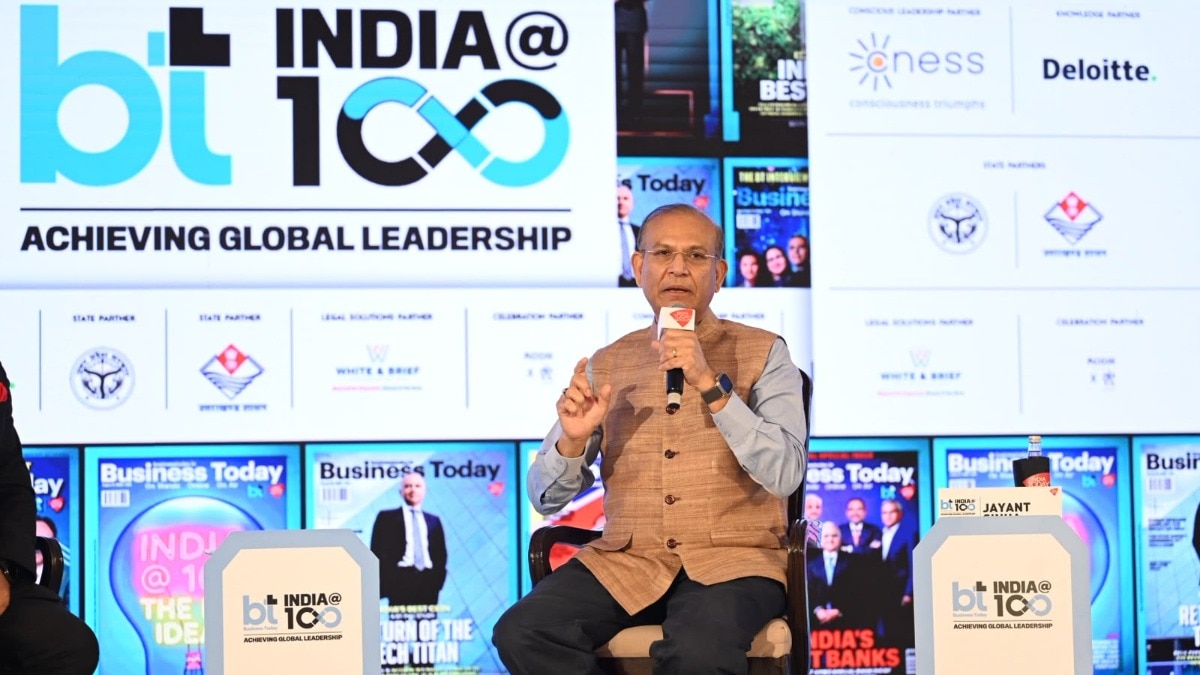
Jayant Sinha Warns India Must Scale AI Investment

Narayanan Favors Value Stocks as AI Reshapes Markets

Hariprasad Pandian Builds Performance Into Enterprise Software Design
Karnataka High Court Upholds ED Probe Into Genpact Fund Trail

Europe Faces Renewed Winter Gas Price Shock Risk

Elevate Campuses IPO Opens September 23 Amid Growth And Risks
