

3 weeks ago
AI, LNG Demand May End Cheap US Gas Era
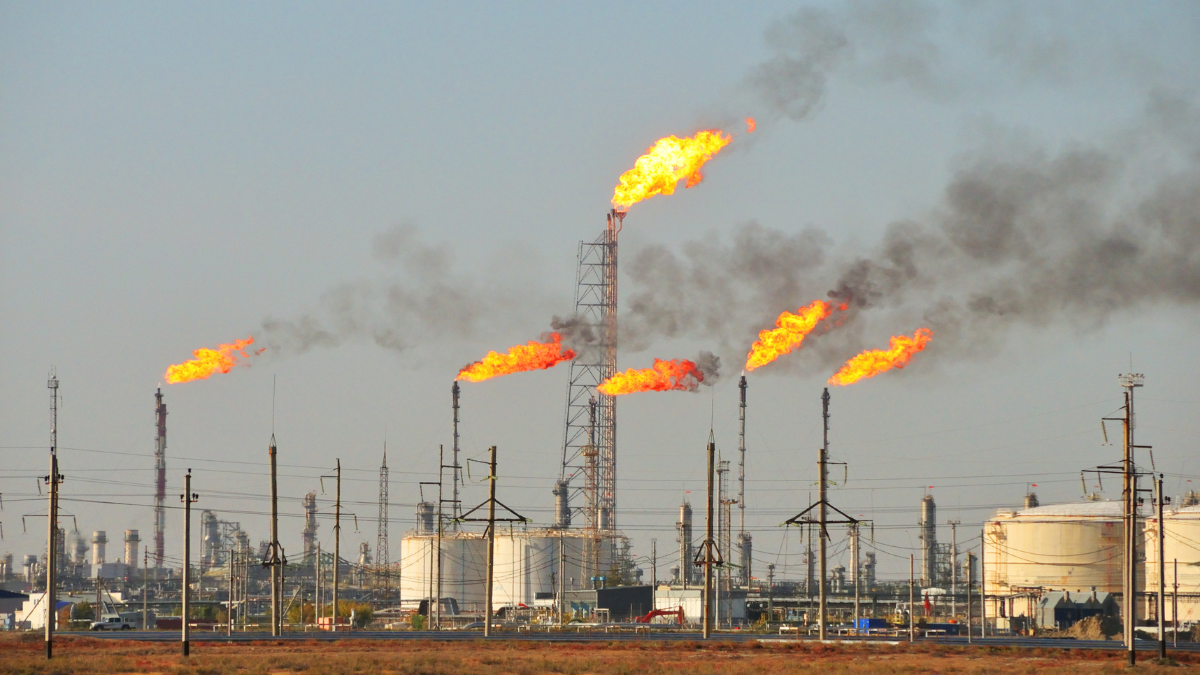
Natural gas is a fuel used to make electricity and heat homes.
For about ten years, gas in America was very cheap.
That happened because companies found faster ways to pull more gas out of the ground.
A company called Wood Mackenzie now thinks those cheap days may be ending.
It says computers that run artificial intelligence need a lot of electricity.
Making that electricity could use much more gas.
America also plans to send more gas to other countries as liquefied natural gas, or LNG.
With so much demand, the price might rise to about $5 by 2035.
But not everyone agrees.
The head of an Indian gas exchange thinks more gas production could keep prices lower, around $3 to $5.

Wood Mackenzie forecasts Henry Hub natural gas prices will approach $5 per mmbtu in real terms by 2035.
AI data centre growth, gas-fired power demand and LNG exports are tightening the US gas market.
Data centres and AI investment could add 17 billion cubic feet per day of gas demand by the mid-2030s, nearly 50% above 2025 levels.
US LNG export capacity is on track to more than double, giving the country over one-third of global LNG supply in the early 2030s.
Indian Gas Exchange's Rajesh Kumar Mediratta argues higher gas production and LNG liquefaction capacity could still cap prices in the $3-5 range.
- Who
- Energy research firm Wood Mackenzie issued the forecast, with Kristy Kramer of Wood Mackenzie and Rajesh Kumar Mediratta of the Indian Gas Exchange offering contrasting views.
- What
- A forecast that Henry Hub natural gas prices will approach $5 per mmbtu in real terms by 2035 as AI data centre demand, gas-fired power load and LNG exports tighten the market.
- Where
- United States, centred on the Henry Hub benchmark and the Marcellus, Permian and Haynesville producing regions.
- When
- Forecast period out to 2035, with demand projections for the mid-2030s and LNG investment decisions referenced for 2025 and 2026.
- Why
- Demand from AI data centres, power generation and LNG exports is rising while supply tailwinds such as cheap associated gas and productivity gains have largely run their course.
Higher Prices Ahead (Wood Mackenzie)
Prices Stay Contained (Indian Gas Exchange)
Outlook for US natural gas prices
Higher Prices Ahead (Wood Mackenzie)
Wood Mackenzie sees the era of cheap gas ending: demand from AI data centres, power and LNG exports is rising while supply tailwinds such as rapid play development, near-zero-cost associated gas and productivity gains have largely run their course, pushing Henry Hub toward $5 per mmbtu in real terms by 2035.
Prices Stay Contained (Indian Gas Exchange)
Rajesh Kumar Mediratta of the Indian Gas Exchange argues higher gas production and LNG liquefaction capacity can still cap prices despite data centre demand, keeping Henry Hub in the $3-5 per mmbtu range, noting that during the West Asia crisis Henry Hub was the cheapest benchmark even when Brent-linked LNG was costlier.
Key facts
- Forecaster
- Wood Mackenzie
- Henry Hub price forecast (2035)
- Approaching $5 per mmbtu in real terms
- Historic price range
- $2-4 per mmbtu nominal over the past decade
- Projected data centre/AI gas demand
- +17 billion cubic feet per day by the mid-2030s
- Demand growth vs 2025
- Nearly 50% increase
- US share of global LNG supply (early 2030s)
- Over one-third
- Associated gas share of US supply growth (next decade)
- Less than 20%
- Alternative price view
- $3-5 per mmbtu (Indian Gas Exchange)
Quotes
Kristy Kramer
Head of LNG strategy and market development at Wood Mackenzie.
“The conditions that kept Henry Hub between $2 to $4/mmbtu for the best part of a decade are no longer all operating at full force.”
 financialexpress.com
Rajesh Kumar Mediratta
MD & CEO of Indian Gas Exchange.
“I still feel despite high data centre demand, higher production of gas and liquefaction capacity of LNG will keep it depressed, maybe in the $3-5 range.”
financialexpress.com
Wood Mackenzie
Energy analytics firm Wood Mackenzie.
“Wood Mackenzie forecasting Henry Hub prices to approach $5 per mmbtu in real terms by 2035, as AI‑led data centre growth, gas‑fired power demand and LNG exports tighten the market.”
financialexpress.com
Sources
Related news
Copper's Rally Fueled by EVs and Grids, Not AI

Amazon's Texas Gas Plant Could Become Most Polluting in US

Beyond Nvidia, power and cooling firms benefit from data-centre boom
Indian Pipe Stocks Ride America’s AI Infrastructure Buildout

India’s Data Centre Capacity Could Triple by 2030

India’s Gas Plants Stabilize Grid Amid Heat-Driven Power Demand
India's Solar Open Access Additions Hit Record 3GW in Q2

Nuvama names ACME Solar, NTPC, Power Grid top picks

Rajeev Thakkar: Market cap alone shouldn't decide stock investments
