

2 hrs ago
Courts Examine Alleged Misuse of SC/ST Act Compensation
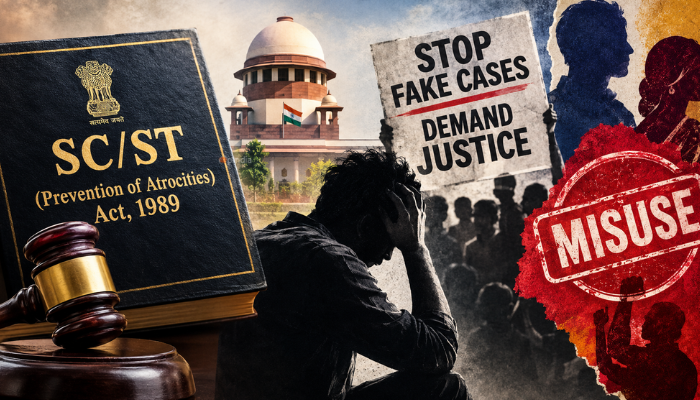
The Scheduled Castes and Scheduled Tribes (Prevention of Atrocities) Act, 1989, was created to protect people from serious caste-based abuse.
The article says some people may misuse the law for revenge, personal disputes, or money.
Government rules allow some financial help to be paid after a complaint is registered and more after police file charges.
Critics say this could encourage false complaints because the money may arrive before a court checks the facts.
Supporters say strong protections and quick assistance are important because real caste crimes can be serious and difficult to pursue.
Police and courts do not treat every registered case as proven wrongdoing.
Several courts cited in the article have cancelled cases or ordered investigations into alleged misuse.
The Supreme Court has debated how to protect innocent people without weakening the law.
The article concludes that both genuine victims and falsely accused people need protection from abuse of the legal system.

The article argues that some complaints under the Scheduled Castes and Scheduled Tribes (Prevention of Atrocities) Act, 1989, are allegedly filed over personal disputes, vengeance, or financial gain.
Under the 1995 Rules, amended in 2016, part of the financial relief can be released after an FIR and additional amounts after charge-sheeting, before a conviction.
National Crime Records Bureau figures record registered cases but do not determine at registration whether an allegation was genuinely caste-motivated.
The article cites court rulings that quashed or criticized cases involving alleged false accusations, workplace disputes, repeated complaints, or compensation claims.
The Supreme Court has both recognized concerns about false implication and later restored the Act’s original provisions after Parliament reversed earlier arrest safeguards.
- Who
- Complainants, accused individuals, police, courts, government authorities, and beneficiaries of the Scheduled Castes and Scheduled Tribes (Prevention of Atrocities) Act, 1989, are involved.
- What
- Courts and commentators are examining alleged misuse of the Act, including claims that some cases are filed for retaliation, coercion, or compensation.
- Where
- The cases and rulings cited come from several Indian states, including Uttar Pradesh, Maharashtra, Madhya Pradesh, Karnataka, Rajasthan, and West Bengal.
- When
- The issue has been debated for several years, with examples and court actions cited from 2018 through 2026.
- Why
- The concern is that compensation linked to FIR registration and charge-sheeting may create incentives for false claims, while weak enforcement could also leave genuine caste-based crimes unaddressed.
Strong Protections and Immediate Relief
Safeguards Against False Complaints
Immediate compensation
Strong Protections and Immediate Relief
Supporters argue that prompt financial assistance is necessary for victims of serious caste-based atrocities and should not depend entirely on the lengthy trial process.
Safeguards Against False Complaints
Critics argue that releasing money after an FIR or charge-sheet, before judicial findings, can incentivize fabricated complaints and make recovery difficult after acquittal.
Police and arrest safeguards
Strong Protections and Immediate Relief
Those opposing additional hurdles say preliminary scrutiny or approval requirements could delay action and weaken protection for vulnerable communities.
Safeguards Against False Complaints
Those seeking safeguards say preliminary verification and careful application of arrest provisions are needed to prevent innocent people from being falsely implicated.
Interpretation of case statistics
Strong Protections and Immediate Relief
High registration numbers may indicate continuing caste-based violence and the need for stronger enforcement and victim support.
Safeguards Against False Complaints
Low conviction rates, acquittals, and closure reports may indicate false complaints or misuse, although they can also result from poor investigations, hostile witnesses, or other weaknesses in prosecution.
Key facts
- Relevant law
- Scheduled Castes and Scheduled Tribes (Prevention of Atrocities) Act, 1989
- Compensation schedule
- The article says relief can range from ₹1 lakh for some offences to ₹8.25 lakh for murder or gang rape under the cited schedule.
- Payment stages
- The article says roughly 25% to 50% may be released after FIR registration, another 25% after charge-sheeting, and the balance on conviction.
- Registered cases in 2020
- The article cites 45,995 cases registered under the Act, along with 2,613 convictions.
- Registered cases in 2023
- The article cites 53,372 registered cases, described as a five-year high, with 45,439 charge-sheeted.
- Data limitation
- National Crime Records Bureau figures count cases registered by police and do not independently establish whether each case involved a proven caste-based motive.
- Government proposal
- The article reports a proposed 40% increase in compensation, potentially raising the minimum to ₹1 lakh and the maximum to about ₹12 lakh, subject to approval.
Quotes
Justice Vivek Agarwal
Madhya Pradesh High Court judge discussing investigation standards and alleged misuse of compensation provisions
“Can the liberty of an innocent be taken away without application of mind? We only said protect an innocent from being falsely implicated under the Act, which has stringent provisions. People agitating may not have read the judgment. They may have been misled.”
 opindia.com
“If we have the right, we also have the duty to ensure that an innocent person is not wrongfully punished. It is imperative to filter out inconsistencies and bring out the truth.”
opindia.com
Sources
Related news

Allahabad High Court Revives Student Leader’s Caste Abuse FIR Plea

Lucknow Rapido driver suspended 100 years over caste slur row

Allahabad High Court Limits Caste-Name Use Under SC/ST Act

Swatantra Bhardwaj Sent to Police Custody in Protest Assault Case

NCSC Seeks Warring Arrest in Buta Singh Remarks Case

FIR Against Ajeet Bharti Sparks Dispute Over Caste Remarks
Bihar testimonies challenge India’s claim of zero manual scavengers

Khadse Calls for Cordial Maharashtra Politics and Social Harmony

BJP Walks Caste Tightrope Between Reservation Protesters and Allies

Editorial Urges Political Opposition to Defend Reform and Humanity
