1 week ago
Treasury Buybacks Leave Investors Uncertain Over Bond Yields

US government bonds had a very unsettled week.
Bond yields went up on Friday after new data showed businesses were growing strongly.
Strong growth can make investors think interest rates may need to rise.
Treasury Secretary Scott Bessent is considering buying back some older government bonds.
This could help trading in those bonds and might push borrowing costs lower.
However, investors are unsure whether the Treasury has enough money and flexibility to keep supporting the market.
Some analysts think the Federal Reserve might eventually have to buy bonds if yields rise too much.
Other analysts say controlling inflation and possibly raising interest rates would be a better way to reduce bond yields.

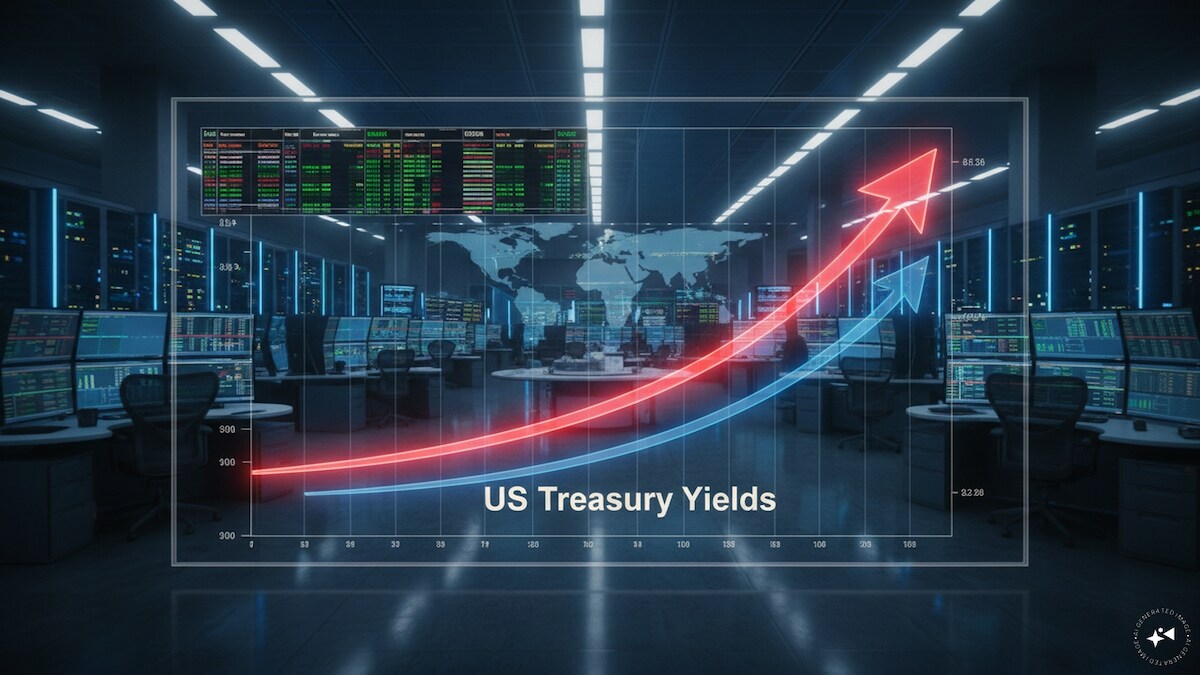
US Treasury yields rose Friday after strong business-activity data increased expectations for interest-rate hikes.
The two-year yield climbed nearly five basis points to 4.23%, while the 10-year yield rose three basis points to 4.73%.
Treasury Secretary Scott Bessent promoted potential debt buybacks but offered few details about the broader strategy.
Long-term yields initially fell after the buyback plan, then rebounded as investors questioned whether Treasury action could lower borrowing costs.
Analysts said the Federal Reserve could face pressure to intervene if Treasury tools are exhausted and yields rise sharply.
- Who
- Treasury Secretary Scott Bessent, bond traders, the Federal Reserve, and market strategists.
- What
- Investors are reassessing Treasury buybacks and other possible measures to contain rising US borrowing costs.
- Where
- The US Treasury market; Warsh’s speech will be at the Kansas City Fed’s Jackson Hole Economic Policy Symposium.
- When
- The developments occurred during a turbulent week, with yields moving on Friday after Thursday’s buyback discussion; Kevin Warsh is scheduled to speak next week.
- Why
- Strong business activity raised rate-hike expectations, while concerns about federal debt and the limits of Treasury intervention kept investors uncertain.
Case for Treasury and policy intervention
Case for limits and inflation control
Effect of buybacks
Case for Treasury and policy intervention
Buybacks could improve liquidity in older Treasury securities and help reduce borrowing costs, while further purchases or changes to long-term issuance could show policymakers are responding to high yields.
Case for limits and inflation control
The initial drop in long-term yields was reversed as investors became skeptical, and buybacks alone may not change the overall direction of yields.
Treasury capacity versus Federal Reserve involvement
Case for Treasury and policy intervention
If yields rise again, additional buybacks or a shift toward cheaper short- and intermediate-term borrowing could provide further support.
Case for limits and inflation control
Treasury intervention costs money and may eventually run out of capacity under the debt ceiling, potentially forcing the Federal Reserve to buy bonds and become more involved in fiscal policy.
Best way to lower yields
Case for Treasury and policy intervention
Managing debt issuance and buying securities could directly address market conditions and borrowing costs.
Case for limits and inflation control
Analysts at Amundi and Goldman Sachs argued that cooling inflation is the most effective way to lower bond yields; one analyst also said the Federal Reserve may need to raise rates to protect its inflation-fighting credibility.
Key facts
- Two-year Treasury yield
- About 4.23% on Friday, nearly five basis points higher.
- 10-year Treasury yield
- About 4.73% on Friday, three basis points higher.
- Treasury proposal
- Potentially larger buybacks of older debt, presented as a way to improve liquidity but widely viewed as an effort to lower yields.
- Market reaction
- Long-dated yields plunged Wednesday after the buyback news and rebounded Thursday as skepticism grew.
- Rate-hike expectations
- Swaps implied about a 40% chance of a September rate hike, with a move fully priced around year-end.
- Possible next step
- Officials could consider reducing long-maturity debt auctions and emphasizing short- and intermediate-term issuance.
Quotes
Philip Marey
Senior US strategist at Rabobank
“If the Treasury runs out of firepower and yields spike again, the Fed may feel compelled to step in and buy these bonds. This scenario could render Kevin Warsh’s internal debate about balance sheet reduction entirely academic. Instead of exiting the fiscal space, the central bank would be pulled even deeper into it.”
 livemint.com
“The ultimate problem with the Treasury’s intervention is that it costs money. For now, the Treasury is funding this by shifting from longer-term debt to shorter-term debt. But with the total federal debt constrained by the debt ceiling, the Treasury will eventually run out of ammunition.”
livemint.com
Sources
Related news
US Treasury yields rise again after Bessent’s debt-buyback intervention

Treasury Doubles Long-Dated Debt Buybacks as Yields Surge
Bessent Bond Buyback Plan Sparks Short Squeeze in US Markets

Kevin Warsh’s Jackson Hole Test: Taming Inflation Without Bond Shock
US $40 Trillion Debt Raises Global Bond Market Fears

Dollar Rebounds as Markets Challenge Treasury Bond Buyback Plan

RBI Governor Meets US Fed Chief Kevin Warsh at G20

Indian Firms Invest $40 Billion in U.S., Supporting Jobs
Trump Aides Seek Quiet Iran War Before Midterm Elections

Global Bond Sell-Off Pushes Japan Yields To 30-Year High

US and China Hold Quiet Talks Over Iran Conflict