2 hrs ago
Heatwave Relief Recognition Raises Questions About Counting Deaths

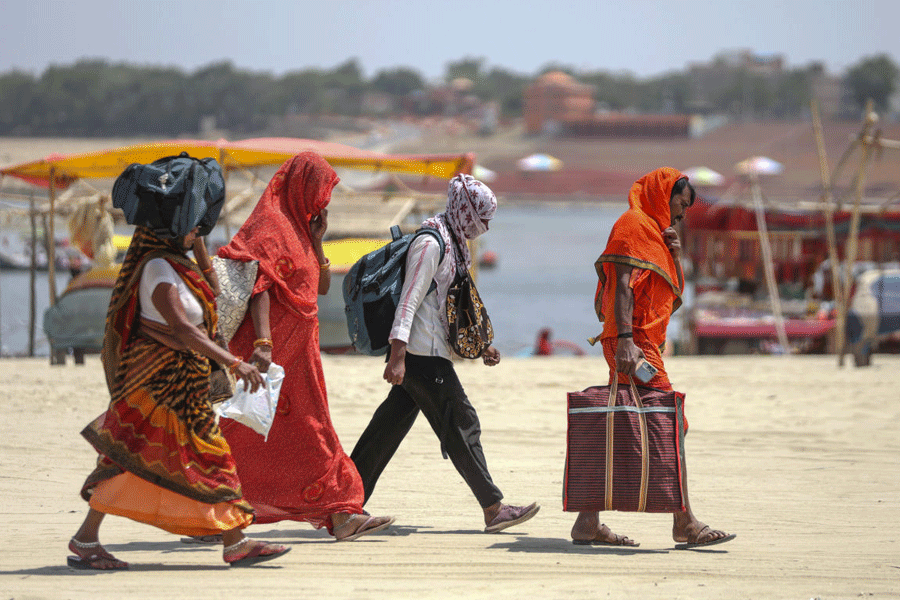
The government will now allow some disaster-relief money to be used for heatwaves and lightning.
This can help families and communities affected by extreme heat.
Officials count people who have confirmed heatstroke, but heat can also worsen heart, kidney, and other health problems.
Those deaths may not be recorded as heat-related.
Heat can continue harming people for days or months after a heatwave.
Different agencies currently use different methods for counting heat deaths.
A health surveillance system is being developed to make the numbers more consistent.
Experts believe the real number of heat-related deaths is much higher than official counts.
They want planners to use excess deaths, which compare deaths during hot periods with the number normally expected.

The government has added heatwaves and lightning to disasters eligible for relief from State and National Disaster Response Funds.
India reported 4,853 heatstroke cases and 20 deaths during the current season, with nearly 60% of cases from four States.
The National Heat-Related Illness and Death Surveillance system recorded 48,000 cases and 159 deaths in 2024, and 7,192 cases and 14 deaths from March to June 2025.
Experts say heat-related mortality is significantly undercounted because official systems focus mainly on confirmed heatstroke deaths rather than excess deaths.
The article calls for standardized reporting and a broader, slower-disaster framework that captures delayed and indirect health effects of heat.
- Who
- The Government of India, State governments, health surveillance authorities, and researchers examining heat-related illness and deaths.
- What
- Heatwaves and lightning have been included among disasters eligible for relief funding, while experts are urging improved measurement of heat-related deaths.
- Where
- India, including reported cases in Telangana, West Bengal, Chhattisgarh, Andhra Pradesh, and Maharashtra.
- When
- The policy announcement was reported in an article published September 8, 2026; the article cites data from 2024, 2025, and the current season.
- Why
- To provide disaster relief for heat impacts and improve planning by capturing deaths and health effects that current heatstroke-focused systems may miss.
Key facts
- Newly eligible disasters
- Heatwaves and lightning were included among disasters eligible for relief from State and National Disaster Response Funds.
- Current-season data
- 4,853 heatstroke cases and 20 deaths were reported; nearly 60% of cases came from Telangana, West Bengal, Chhattisgarh, and Andhra Pradesh.
- 2024 surveillance data
- The National Heat-Related Illness and Death Surveillance system recorded 48,000 cases and 159 deaths in 2024.
- 2025 surveillance data
- From March to June 2025, it recorded 7,192 cases and 14 deaths.
- Work and economic impact
- A cited study found outdoor workers in Agra, Ajmer, and Delhi lost an average of 24 workdays in a year; the Reserve Bank of India reported potential risks of up to 34 million job losses by 2030 and 4.5% of GDP.
- Heatstroke death definition
- A confirmed heatstroke death is a suspected death confirmed by a district-level death investigation or three-person committee.
- Estimated excess mortality
- The Global Heat Health Information Network estimates that one five-day heatwave could produce approximately 30,000 excess deaths across Indian rural and urban districts.
Quotes
National Heat-Related Illness and Death Surveillance system
A national surveillance system defining a confirmed heatstroke death for reporting and compensation purposes.
“suspected heatstroke death confirmed by the death committee (heat death investigation committee/three-person committee) at the district level.”
 thehindubusinessline.com

World Health Organization
International public health organization cited for its warning about heatwave mortality.
“High intensity heatwave events can bring high acute mortality”
thehindubusinessline.com
Sources
Related news
India notifies heatwaves as natural calamity to aid vulnerable

France Reports Nearly 7,000 Heatwave Deaths Through July
Germany Reports Record 15,800 Heat-Related Deaths During Summer Heatwaves

Rising Humid Heat Could Bring 4,000 Annual Deaths to Lucknow

Germany Reports Record Heat-Related Deaths This Year