1 day ago
Punjab Free Power Strains Finances and Raises Blackout Fears
Punjab gives many household consumers up to 300 units of electricity for free each month.
The policy has made electricity more expensive for the state government to provide.
Power use has also increased sharply since the scheme began.
At the same time, some power plants have little coal and some have faced technical problems.
This has created a gap between how much electricity people need and how much is available.
The government says coal supply problems, plant faults and a delayed monsoon helped cause the shortage.
Opposition parties say the free-power promise placed too much pressure on Punjab’s finances.
Factories say the power cuts are hurting their production and workers.
Officials warn that more coal is needed quickly to avoid longer outages.

Punjab’s 300-unit free electricity scheme costs the state an estimated Rs 5,500 crore to Rs 7,800 crore annually.
Domestic electricity consumption rose from 14,538 MU in 2020-21 to 20,348 MU in 2024-25, a reported overall increase of 40%.
Punjab’s 2022-23 power subsidy bill was Rs 20,000 crore, including Rs 8,225 crore for the free domestic electricity scheme.
Coal shortages, plant faults and a peak-hour supply gap of 1,500-2,000 MW have led to longer power cuts and blackout concerns.
The government blames coal-supply constraints, central power shortages and unusually high demand, while opposition parties blame the free-power policy.
- Who
- The Punjab government, the Punjab State Power Corporation Limited, opposition parties, power producers, households and industrial consumers are involved.
- What
- Punjab is facing financial pressure and possible prolonged power outages amid rising electricity consumption, coal shortages and the cost of free domestic power.
- Where
- Punjab, including industrial areas such as Mohali.
- When
- The free-power scheme was fulfilled after the Aam Aadmi Party came to power in 2022; the reported consumption figures cover 2020-21 through 2024-25, while the immediate coal shortage threatens outages in the current period.
- Why
- The articles attribute the strain to the free-power subsidy, higher demand, coal-supply constraints, technical faults at thermal plants and reduced availability from the central power pool.
Opposition and Industry Critics
Punjab Government and AAP
Cause of the power crisis
Opposition and Industry Critics
Opposition parties say the 300-unit free-power scheme has overloaded Punjab’s finances and the electricity system, while industrialists say unscheduled cuts are damaging production.
Punjab Government and AAP
The government says the shortage is linked to coal-supply cuts, a shortfall from the central power pool, technical faults at thermal plants, limited open-market availability and unusually high demand.
Value of the free-power scheme
Opposition and Industry Critics
Shiromani Akali Dal President Sukhbir Singh Badal called the promise ineffective if consumers using more than 300 units lose all relief, while Congress leader Amarinder Singh Raja Warring said free power should be limited to those in need.
Punjab Government and AAP
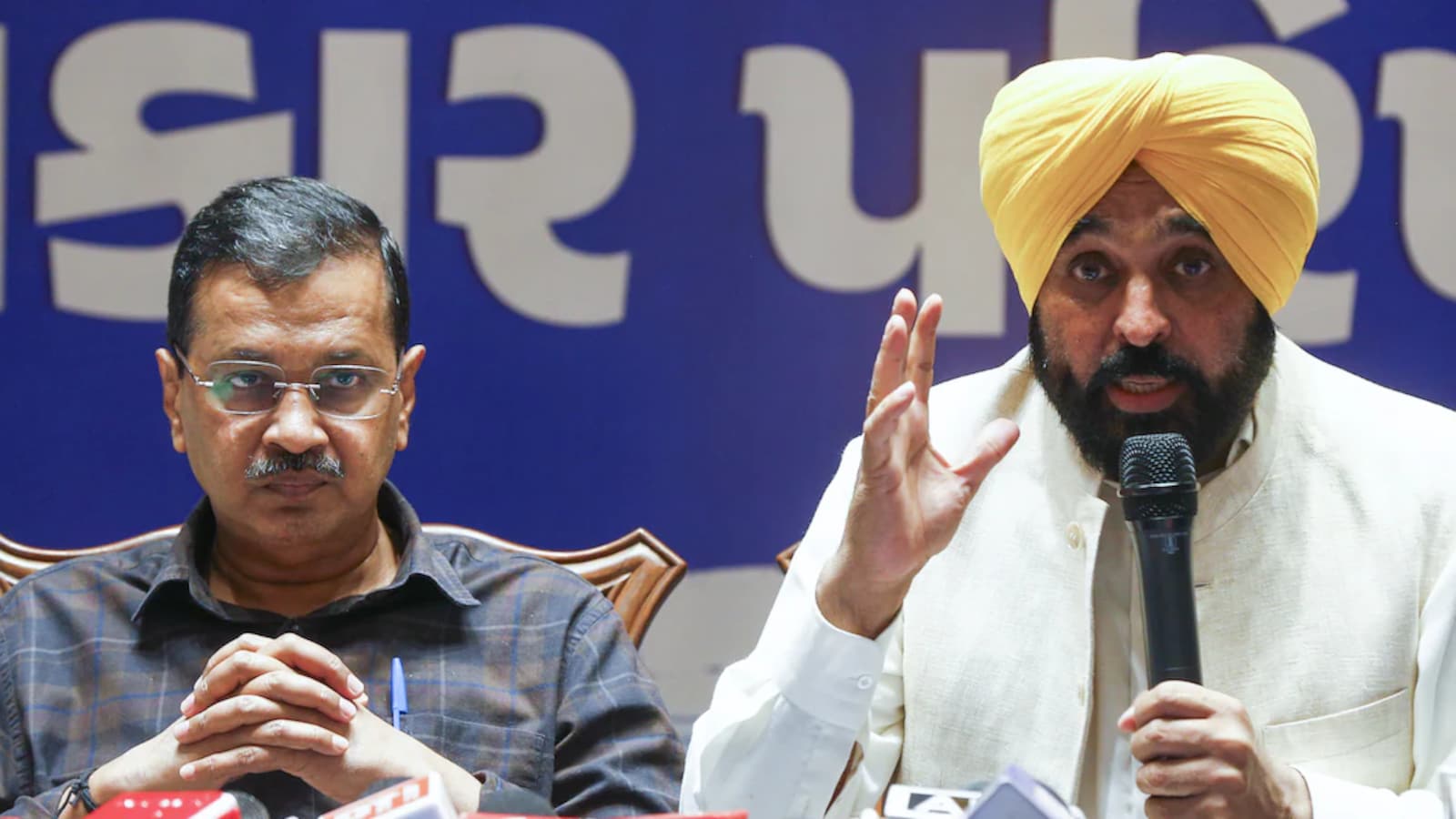
Chief Minister Bhagwant Mann and Aam Aadmi Party leader Arvind Kejriwal defend the scheme, saying around 90% of households receive zero electricity bills and that the benefit is provided without discrimination.
Responsibility for supply problems
Opposition and Industry Critics
Critics argue that the government should have added generation capacity and installed new power projects to ensure uninterrupted supply.
Punjab Government and AAP
Power Minister Tarunpreet Singh Sondh says the state had reserved Rs 2,000 crore to buy electricity, stocked coal from its Pachhwara mines and faced problems beyond the state’s control.
Key facts
- Annual free-power burden
- Estimated at Rs 5,500 crore to Rs 7,800 crore for the state exchequer.
- 2022-23 power subsidy
- Rs 20,000 crore, including Rs 9,063.79 crore for farm electricity and Rs 8,225 crore for the 300-unit scheme.
- Domestic consumption
- Rose from 14,538 MU in 2020-21 to 17,510 MU in 2022-23 and 20,348 MU in 2024-25.
- Current demand and supply
- Demand is about 15,900-16,000 MW; Punjab generates 4,200-4,900 MW and draws about 10,800-11,500 MW from the northern grid.
- Peak-hour shortfall
- A gap of roughly 1,500-2,000 MW is being managed through power cuts.
- Thermal-plant coal
- Private thermal plants reportedly have about two days of coal remaining.
- Projected debt
- Punjab’s debt is projected to reach Rs 4.47 lakh crore, or about 45% of GSDP, by March 2027.
Quotes

Sukhbir Singh Badal
Shiromani Akali Dal president and critic of the Punjab government’s electricity scheme
“The 300-unit free electricity scheme has completely crumbled because the Punjab government is in no position to pay PSPCL the subsidy against this facility. The promise itself is fake. If any consumer uses even one unit above the fixed 300 units a month, they have to pay the entire electricity bill with no relief.”
 NDTV
NDTV
“300 units of free electricity per month are being provided to domestic consumers, and around 90% of households are receiving zero electricity bills. The scheme is given without bias, without discrimination. As long as AAP is in power, people will keep getting free power and 24x7 supply.”
NDTV
Sources
Related news
Punjab Power Crisis Sparks Government-Opposition Showdown
Deficient Monsoon Drives Punjab’s Costly Power Purchases
Punjab Power Crisis Prompts AAP Government Bureaucratic Reshuffle
Punjab Power Crisis Deepens as Coal Supplies and Generation Falter

Punjab Power Shortage Triggers Long Industrial Electricity Cuts

Punjab BJP attacks AAP over rising debt and mismanagement

Mamata Factions Seek New Names, Symbols After EC Freeze
Rahul Gandhi Accuses BJP, Election Commission Of Freezing TMC Identity

Kejriwal Says Congress Has Conceded Defeat in Punjab Polls
BJP MP Demands CBI Probe Into Sangrur Suicide Case