8 months ago
Digitizing India's Bazaar Art: Priya Paul's Collection
A long time ago, a woman named Priya Paul started collecting old pictures and posters from India.
She found these in small shops and markets, especially in Delhi and Rajasthan.
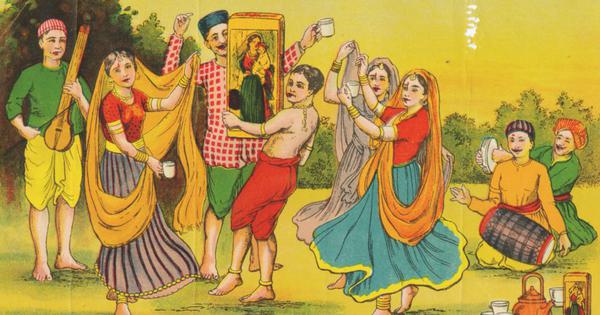
These pictures showed many things like gods, movie stars, and advertisements for soap and tea.
She wanted to save these pictures because they were old and could get damaged.
So, she worked with a group of scholars to put all these pictures online so everyone can see them.
Now, you can look at these pictures on a website and learn about how people in India lived a long time ago.
The pictures show a mix of Indian and Western styles, and they tell stories about the culture and history of that time.
Priya Paul thinks it's important to save these pictures because they are part of India's history and culture.

Priya Paul collected over 4,200 images of Indian popular culture from the late 19th and early 20th century, including posters, calendars, postcards, advertisements, textile labels, and cinema posters.
The collection was digitized in 2008 by Tasveer Ghar and is hosted on the Heidelberg University’s heidICON image database, making it freely accessible to the public.
The artifacts reflect a blend of Eastern and Western styles, showcasing the cultural and social history of India during the late 19th and early 20th century.
The digitization process involved careful handling, scanning, and digital restoration of the images, with metadata created to describe and categorize them.
The collection is valued for its historical significance and provides insights into the everyday life, art, and communication methods of that era.
- Who
- Priya Paul, a Delhi-based collector and chairperson of Apeejay Surrendra Park Hotels, along with Tasveer Ghar, a network of collectors and scholars.
- What
- A digitized collection of over 4,200 images of Indian popular culture from the late 19th and early 20th century, including posters, calendars, postcards, advertisements, textile labels, and cinema posters.
- Where
- The artifacts were initially found in Delhi and Rajasthan, and the digitized collection is hosted on the Heidelberg University’s heidICON image database.
- When
- The collection was digitized in 2008 and made freely accessible to the public.
- Why
- To preserve and make accessible a significant collection of popular visual artifacts that reflect the cultural, social, and historical aspects of India during the late 19th and early 20th century.
Key facts
- Collection Name
- Priya Paul Collection of Popular Art
- Number of Images
- Over 4,200
- Time Period Covered
- Late 19th and early 20th century
- Types of Artifacts
- Posters, calendars, postcards, advertisements, textile labels, cinema posters
- Digitization Platform
- Heidelberg University’s heidICON image database
- Digitization Year
- 2008
- Collection Owner
- Priya Paul
- Database Languages
- German and English
Quotes
Priya Paul
Chairperson of Apeejay Surrendra Park Hotels and collector of popular visual artifacts.
“I remember saying 'this is a very beautiful image'. I’d never seen anything like it... I felt like looking out for more.”
 scroll.in
“Delhi at that time was full...of little dealers and musty little antique shops. I’d see these pieces and think, oh my God, are they all on paper? I could see that they were deteriorating. So I really looked at it from that point of view, that is it going to last?”
scroll.in
Yousuf Saeed
Filmmaker-researcher and member of Tasveer Ghar.
“When I entered, it was not in very good shape; the material was lying around, there was a lot of dust and it was not classified. She hadn’t really found anybody to look after it.”
scroll.in
“Each image needed careful handling, cleaning, assessment, scanning, digital photography, classification, and detailed annotation. It took more than 3 months to physically handle and scan the images into raw digital data...Each day, as we opened new drawers and shelves, or uncovered piles of framed posters and calendars, we found new surprises.”
scroll.in
Sumathi Ramaswamy
Cultural historian and member of Tasveer Ghar.
“Rather than 'science' triumphing over 'religion,' there is an easy co-existence as divine body and geo-body rest side by side.”
scroll.in
Tarini Bedi
Researcher focusing on gender and visual culture.
“They mark men’s relations with themselves, with their public aspirations and their more intimate sensory lives, with women, and with other men and other species.”
scroll.in
Sabeena Gadihoke
Researcher and author of 'Selling Soap and Stardom: The Story of Lux'.
“We see a tension: the woman’s figure is not complete and she seems superimposed against another, perhaps even alien space.”
scroll.in

Rosie Thomas
Researcher and author of 'Still Magic: An Aladdin’s Cave of 1950s B-Movie Fantasy'.
“Came in a double register...apparent cultural authenticity as a refusal of all things western, but...carrying the prestige and branding of the genre’s Hollywood successes and a fashionable Europeanism. The Orient it peddled was a hybrid of east and west...”
scroll.in
Sandria Freitag
Art historian and author of 'Consumption and Identity: Imagining ‘Everyday Life’ Through Popular Visual Culture'.
“Not until the advent of the large and diverse Priya Paul collection of popular visual-culture artifacts, however, have those who study the Indian subcontinent gained a real sense of the full range of formats, themes, and changes over time afforded by this kind of evidence from the past....A measure of the value of the Priya Paul collection comes from our ability, now, to think in new ways about the everyday.”
scroll.in