1 hr ago
Why Television Watching Can Lead to More Snacking
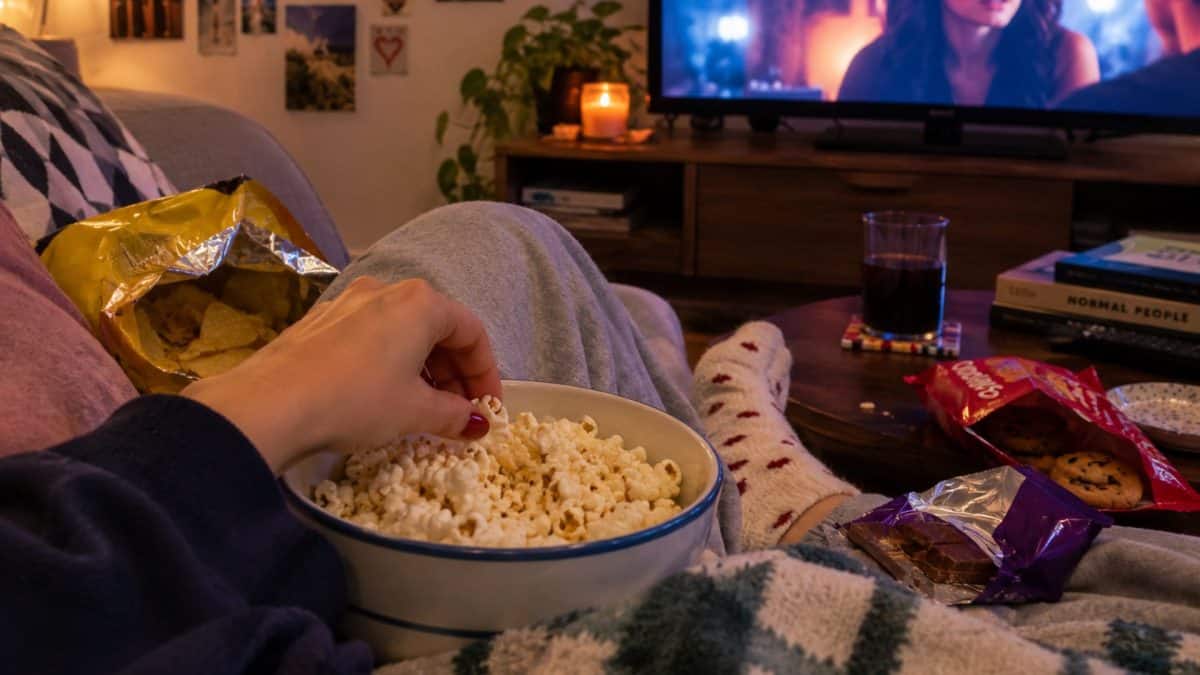
Watching TV can make it harder to notice how much food you are eating.
Your attention is focused on the programme instead of your snack.
This means you may keep reaching for more without thinking about it.
Foods like crisps and popcorn are especially easy to eat quickly.
Seeing food adverts can also make you want to eat.
Over time, eating while watching TV can become a routine.
You can still have a snack if you are hungry.
Putting a small portion in a bowl can help you keep track of it.

Watching TV can distract people from noticing how much they eat.
Crisps, biscuits, chocolate and popcorn are easy to eat quickly without a clear stopping point.
Keeping snacks within reach can encourage people to continue eating automatically.
Regular snacking while watching TV can become a habit, even without hunger.
Portioning snacks into a bowl can make eating more deliberate and manageable.
- Who
- People who eat while watching television, particularly those with established snacking routines.
- What
- Television viewing can encourage distracted eating and make people consume more snacks than intended.
- Where
- In front of the television.
- When
- While watching television, including during an evening of viewing.
- Why
- Attention is focused on the programme, snacks are often easy to reach and eat, food advertising can trigger cravings, and repeated snacking can become a habit.
Key facts
- Main effect
- Watching TV can make it easier to lose track of how much you eat.
- Contributing foods
- Crisps, biscuits, chocolate and popcorn are easy to eat quickly.
- Key behavior
- People may continue reaching for snacks while following a programme.
- Habit factor
- Snacking can become associated with watching TV, even when someone is not hungry.
- Advertising effect
- Food adverts can prompt people to eat when they were not thinking about food.
- Practical tip
- Portion snacks into a bowl instead of taking the entire packet.
Sources
Related news

Viral Food Trends Are Outpacing Production and Harvests

Suriya Shares Mammootty’s Advice on Portions, Sleep and Fitness

Restrictive Diets May Trigger Binge Eating, Expert Warns

Eight Everyday Habits That May Affect Gut Health

Sonam Bajwa Explains Delayed Breakfast After Nighttime Carbs