1 day ago
Why Syed Ahmad Khan Chose Aligarh for His University
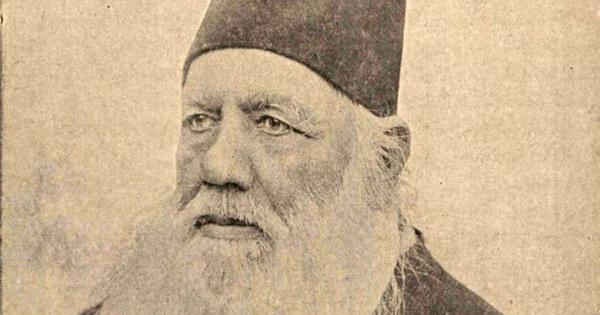
Syed Ahmad Khan wanted to create a school that combined traditional Muslim learning with modern education.
After visiting Britain in 1869, he studied how its best schools worked.
He chose Aligarh because it was easy to reach but quieter than large cities.
He believed students would study better without many distractions.
The school opened in 1875, and the foundation stone for the college was laid in 1877.
The college was supported by both Hindus and Muslims and welcomed students from both communities.
Building the campus took a long time because money was often unavailable.
Its buildings combined European designs with Islamic features.
Later, Principal Theodore Beck supported the British government’s interests, which influenced the college’s relationship with Indian nationalism.

Syed Ahmad Khan’s 1869 visit to Britain inspired him to establish an institution combining traditional and modern education.
He chose Aligarh for its central location, relative quiet, railway access, available land, and limited educational competition.
The school opened in 1875, and Lord Lytton laid the foundation stone for Muhammadan Anglo-Oriental College in 1877.
Construction proceeded slowly because of inconsistent funding, although the campus blended European and Islamic architectural styles.
The college welcomed Hindu students and support, but Principal Theodore Beck later encouraged a direction aligned with British interests and opposed nationalist influence.
- Who
- Syed Ahmad Khan founded the educational movement that established the Muhammadan Anglo-Oriental College, with support from figures including Maulvi Samiullah Khan and local donors.
- What
- An educational institution combining traditional learning with modern education was established at Aligarh and developed into the Muhammadan Anglo-Oriental College.
- Where
- Aligarh, in western India, served as the institution’s location.
- When
- Syed Ahmad Khan visited Britain in 1869; the school opened on May 24, 1875, and the college foundation stone was laid on January 7, 1877.
- Why
- Syed Ahmad Khan sought a centrally accessible but relatively quiet place with little educational competition, available land, railway access, and potential financial support.
Inclusive Educational Mission
Colonial-Aligned Direction
Community role
Inclusive Educational Mission
The college received donations from Hindu and Muslim supporters and maintained harmony and religious diversity among students.
Colonial-Aligned Direction
Principal Theodore Beck viewed the institution partly as a means for Britain to influence Indian Muslims and prioritized loyalty to the British Crown.
Nationalist politics
Inclusive Educational Mission
Syed Ahmad Khan had earlier promoted Hindu-Muslim unity, and Surendranath Bannerji’s 1884 speech about holding Indian Civil Service examinations in India energized students.
Colonial-Aligned Direction
Beck feared nationalist and Bengali influence, while Syed Ahmad Khan opposed the Indian National Congress and supported Muslim loyalty to the British government.
Institutional authority
Inclusive Educational Mission
Students protested after Sayyid Hussain was expelled and demanded his reinstatement, while Maulvi Samiullah attempted mediation.
Colonial-Aligned Direction
Syed Ahmad Khan refused to compromise over college rules, and Beck worked to reduce Samiullah’s influence because he viewed it as potentially threatening to British interests.
Key facts
- Initial committee
- The Committee for the Better Diffusion of Education among Muslims was established on December 26, 1870.
- Precursor institution
- Maulvi Samiullah Khan began a madrasa in his bungalow in 1873.
- School inauguration
- The school formally opened on May 24, 1875.
- College foundation
- Lord Lytton laid the foundation stone for Muhammadan Anglo-Oriental College on January 7, 1877.
- Railway access
- A branch line connecting Aligarh to the main railway was built in 1872.
- Student inclusion
- The college focused on Muslim education but was also open to Hindus and others where consistent with its mission.
- Fundraising
- Donors could have their names inscribed on features ranging from wall railings costing Rs 25 to marble plaques costing Rs 500.
Quotes

Syed Ahmad Khan
Muslim educationist and founder of the institution that became Aligarh Muslim University
“The students should have as few temptations as possible, … their thoughts and notions, instead of wandering astray, should take a turn to calmness and serenity.”
 scroll.in
Sources
Related news

Tazeen Fatma Defends Mohammad Ali Jauhar Amid University Row

British Empire Used Princes’ Schools to Rule India
Aliah University Shifted From Madrasa Affairs To Higher Education
Dhaka University Probes Jinnah Photo Display After Student Backlash
West Bengal Schools to Add Mookerjee Lessons From 2027

Maxvolt Energy Begins ₹700-Crore Battery Facility In Aligarh

Indian Railways Announces Daily Overnight Kanpur–Anand Vihar Train

Delhi Police Bust Axis Bank Impersonation Cyber Fraud Racket

New Moradabad-Aligarh Expressway Promises Faster Travel, Spurs Land Acquisition