

1 hr ago
Google Earth AI Experiment Exposes Need for Stronger Guardrails
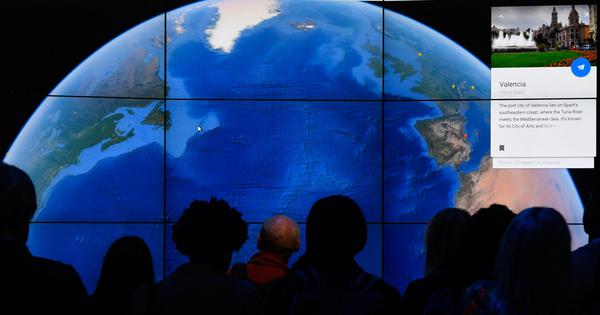
Google Earth briefly allowed people to add computer-made pictures to real satellite views.
Some users made fake images of places connected to the conflict involving Israel, Iran and the United States.
This was concerning because people use satellite images to check what is really happening.
Google removed the feature after many people complained.
The company said it would bring it back with stronger safety rules.
The article says fake images can spread before experts have time to identify them.
This can also make people doubt real pictures.
Experts want images to carry proof of where they came from and how they were made.
They also want companies to test safety protections before releasing powerful tools.

Google added an image-generation feature to Google Earth on July 30, allowing users to blend AI scenes into real satellite imagery.
Users quickly created fabricated scenes involving an Iranian nuclear plant, a Gaza hospital and the US Capitol.
Google removed the feature within a day after criticism from investigative experts and media outlets.
The article argues that AI-generated fakes can spread faster than forensic experts can verify them, damaging trust in authentic evidence.
Experts call for mandatory image provenance, stronger detection systems and pre-release safety testing for high-risk uses.
- Who
- Google, investigative experts, journalists, authorities and analysts were involved in the episode and its scrutiny.
- What
- Google launched and then withdrew an AI image-generation feature integrated into Google Earth.
- Where
- The feature operated within Google Earth and was used to create scenes involving Iran, Gaza and the United States.
- When
- The feature launched on July 30 and was removed within a day; the article also discusses events following strikes launched by Israel and the United States in February.
- Why
- Google said it would strengthen the feature’s guardrails after criticism that it could make convincing fake satellite imagery easier to produce.
Critics and Transparency Experts
Google’s Position
Whether the feature belongs in Google Earth
Critics and Transparency Experts
Critics argue that generative image creation has no legitimate place inside verification infrastructure associated with trusted satellite imagery.
Google’s Position
Google has not said the feature will be permanently abandoned; it said it would return after stronger guardrails are developed.
How to address fabricated imagery
Critics and Transparency Experts
Experts call for mandatory provenance, robust detection, clear explanations of uncertainty and a burden of proof placed on companies deploying AI systems.
Google’s Position
Google’s response has been to withdraw the feature temporarily and promise stronger safeguards before relaunching it.
Key facts
- Feature
- An AI image generator built into Google Earth that blended generated scenes with real satellite and aerial imagery.
- Launch date
- July 30
- Withdrawal
- Google removed the feature within a day of its launch.
- Examples of fabricated scenes
- A nuclear plant in Iran, a bomb crater beside a Gaza hospital and floods near the US Capitol.
- Google’s stated plan
- The company said the feature would return with “stronger guardrails.”
- Regulatory timing
- The article says some EU AI Act transparency obligations began on August 2, 2026, while California’s AI transparency law took effect in August but would not reach platforms until at least 2027.
- Detection limitations
- Testing across 13 AI providers found that seven had no public detection tool, while all but one of the available tools could be fooled.
Quotes
Hany Farid
Deepfake expert cited by the article commenting on hardware-based image provenance and the broader loss of trust in visual records.
“When one of the largest companies in the world decides this problem is worth solving at the hardware level, it is an acknowledgment that our collective loss of trust in the visual record is no longer a niche concern for forensic researchers. It is a mainstream problem, and it demands mainstream solutions.”
 scroll.in
Sources
Related news
Nepal Cracks Down on Fake Flood Content Online

AI Nostalgia Revives the 1980s While Hiding Its Costs

AI Animal Content Floods Social Media, Challenging Wildlife Trust
Two Arrested in Hisar Over Fake AI Image of Cop

Faulty AI Intelligence Report Nearly Triggered US-China Confrontation
Simple Ways to Check Whether Viral Videos Are AI-Generated
Thirty Days With Pixel 11 Pro Test Ambient AI
Google Pixel 11 Review Highlights AI, Cameras, Battery, Longevity

2026 Flagship Phones Span Value Hardware and Ultra-Premium Foldables

Top Flagship Smartphones Under Rs 1.5 Lakh This Festive Season
