6 days ago
India’s ‘Maitri’ Strategy Recasts Its Regional Neighbourhood Diplomacy
The article says India is trying to be a helpful and patient neighbor.
It calls this approach “maitri,” which means friendship.
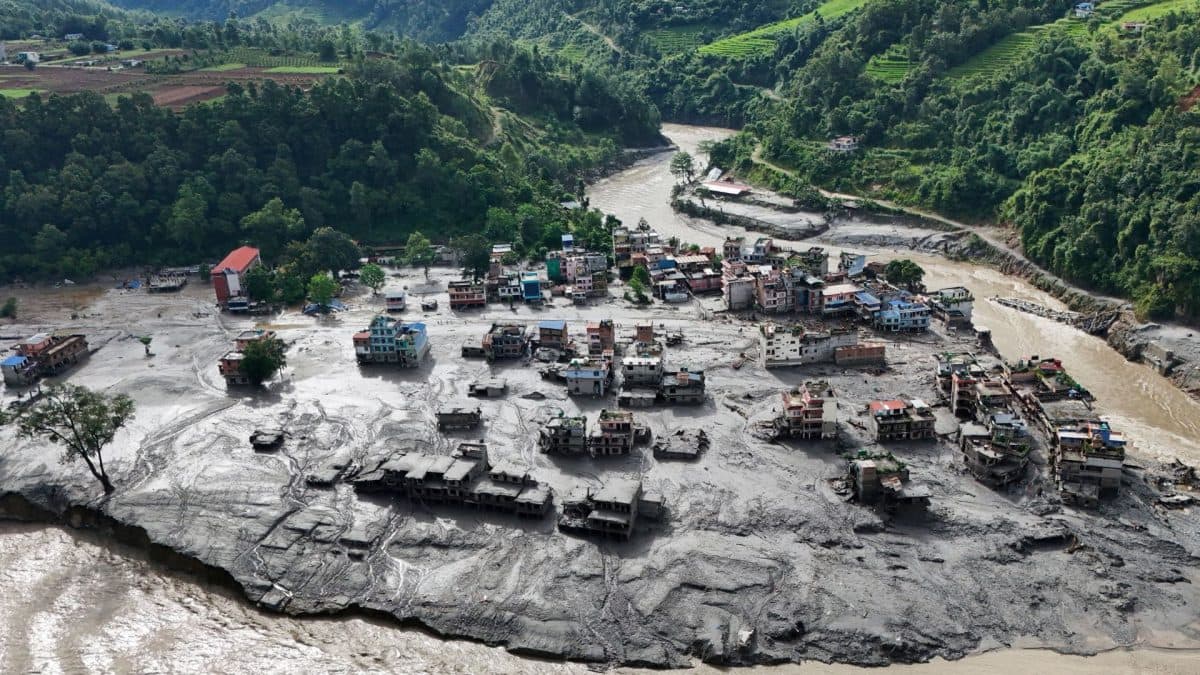
After floods near Nepal’s border, India quickly offered support.
The author says India learned from mistakes made during the 2015 Nepal earthquake response.
India now focuses more on practical projects such as electricity, roads and trade.
The article contrasts this with what it describes as China’s use of debt and control over major projects.
It also points to India’s help for Sri Lanka, the Maldives and Bangladesh during difficult periods.
India has helped people outside its neighborhood too, including through an evacuation from Yemen.
The author believes this approach could make India a steadier source of support in the region.

India responded to devastating floods near Nepal’s Tibet border, with Prime Minister Narendra Modi assuring Prime Minister Balendra Shah of full support.
The article presents the response as a lesson learned from India’s 2015 Nepal earthquake operation, which was damaged by perceived patronage and insensitive media coverage.
India’s approach emphasizes transparent aid, cross-border connectivity, power trade and economic integration rather than politically conditional assistance.
The article cites more than $4 billion in Indian support for Sri Lanka during its 2022 economic crisis, along with continued financial engagement with the Maldives and Bangladesh.
Through Operation Raahat, India evacuated more than 4,600 Indians and 960 foreign citizens from Yemen, illustrating its wider humanitarian diplomacy.
- Who
- India, including Prime Minister Narendra Modi, and neighboring countries such as Nepal, Sri Lanka, the Maldives and Bangladesh.
- What
- India is presenting a friendship-based regional policy centered on humanitarian aid, economic support and practical cooperation.
- Where
- Across South Asia, particularly Nepal, Sri Lanka, the Maldives and Bangladesh, as well as Yemen during Operation Raahat.
- When
- The latest example followed floods in Nepal this week; the article also refers to India’s responses since the 2015 Nepal earthquake and during Sri Lanka’s 2022 crisis.
- Why
- According to the article, India seeks to support regional stability, strengthen mutual economic interdependence and avoid the resentment caused by perceived paternalism.
India’s Maitri Approach
Concerns and Contrasting Views
Regional assistance
India’s Maitri Approach
The article argues that India offers transparent, largely unconditional assistance that prioritizes the recipient country’s recovery and stability.
Concerns and Contrasting Views
The article describes China’s regional model as relying on sovereign-backed loans and debt leverage, while also acknowledging that India’s own assistance has previously been perceived as paternalistic.
Political engagement
India’s Maitri Approach
India should maintain support and economic ties even when neighboring governments change or criticize New Delhi, as seen in Bangladesh and the Maldives.
Concerns and Contrasting Views
Political transitions, border disputes with China and local pushback can complicate India’s efforts to act as a regional leader.
Key facts
- Policy label
- Maitri, meaning friendship
- Nepal floods
- Nearly 100 people were reported dead and hundreds more missing
- Sri Lanka assistance
- India provided more than $4 billion during the 2022 economic crisis
- Operation Raahat
- Evacuated more than 4,600 Indian citizens and 960 foreign citizens from Yemen
- Nepal priorities
- Cross-border connectivity and power-trade agreements
- 2015 lesson
- India’s Nepal earthquake response faced resentment over perceived patronizing conduct and insensitive media coverage
Sources
Related news
Floods Highlight India-Nepal Ties and Need for Cooperation
Tharoor Urges Restraint as India Sends Flood Relief to Nepal

Nepal Thanks India as Flood Relief Reaches Amid Rising Toll
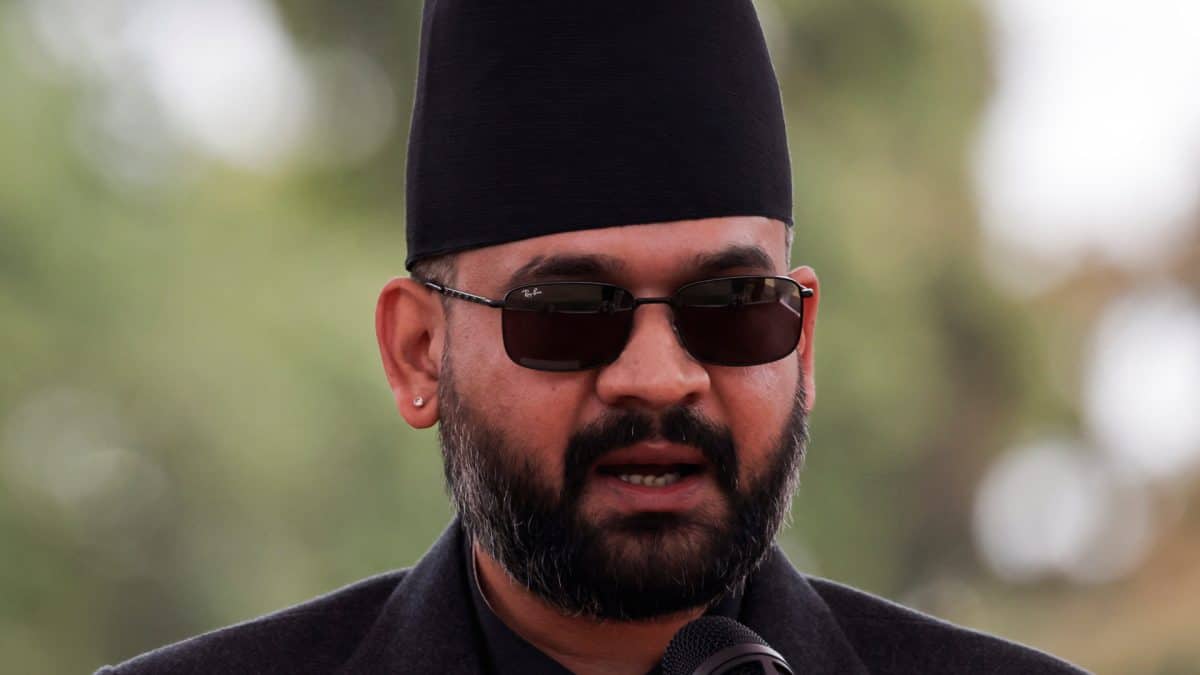
Nepal PM Thanks India, China Amid Climate Compensation Demand
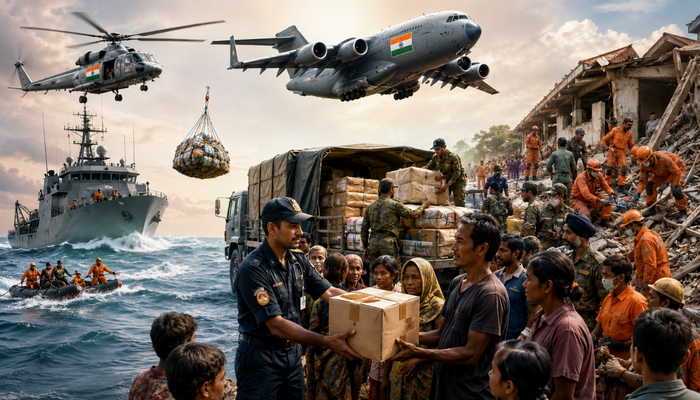
India Sends Emergency Aid as Nepal Battles Flash Floods

Sharma and Malik share halfway lead at Telangana Golconda Masters

India Replaces Sri Lanka as 2027 Women’s Champions Trophy Host
Centre Assures JDU Bihar’s Interests In Farakka Treaty Decision
India’s Record Wheat Harvest Opens $1.5 Billion Export Window
West Bengal CM Crushes Nearly 2 Lakh Seized Syrup Bottles