27 mins ago
Hyundai Delays In-House Driver Assistance System to 2029
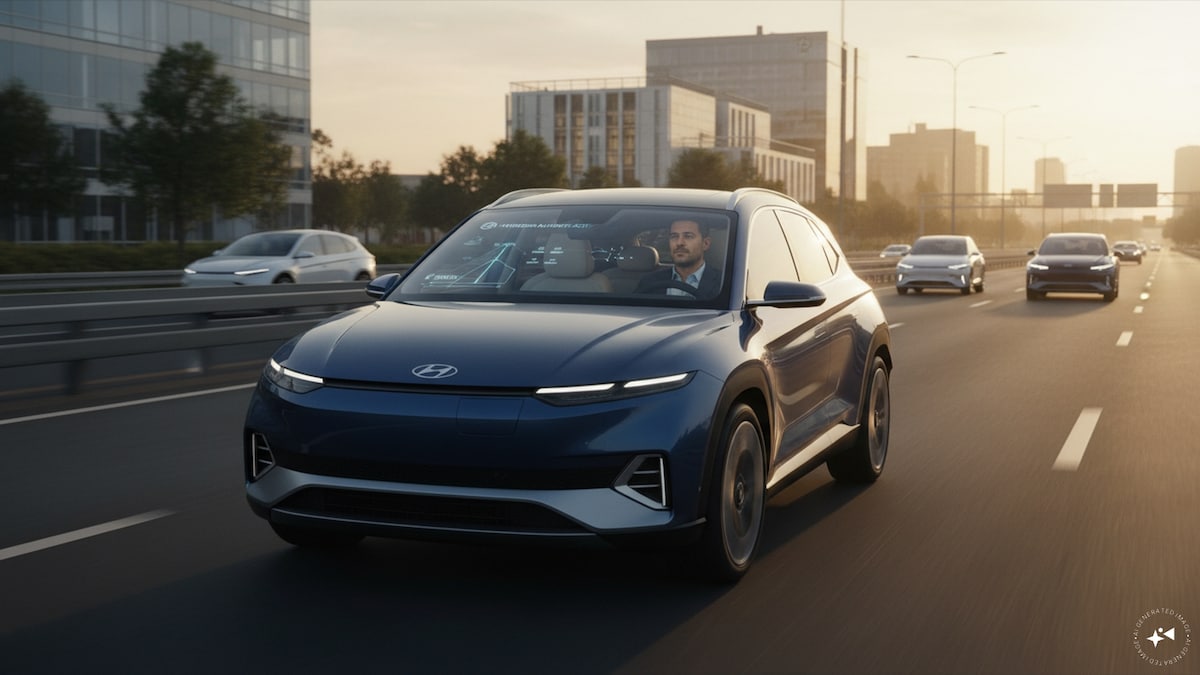
Hyundai wants to build its own computer system to help cars drive more safely.
It originally planned to launch this system in 2027, but now expects it in late 2029.
Until then, Hyundai will work with Nvidia, a technology company, on driver-assistance systems planned for 2028.
These systems can help with highway and some city driving, but drivers must still pay attention.
Hyundai calls its future in-house software Atria.
The first Nvidia-based cars will mainly use cameras, radar and ultrasonic sensors instead of lidar.
Hyundai may use lidar later for systems that let drivers take their hands off the wheel in certain situations.
The company says it will use driving data from its large fleet to improve its own technology.
Some people worry the delay and Nvidia partnership could leave Hyundai behind Tesla and Chinese competitors.

Hyundai Motor Group plans to launch its own driver-assistance software in late 2029, two years later than initially planned.
The automaker will work with Nvidia to introduce Level 2+ and Level 2++ systems in 2028.
Hyundai executive Park Min-woo said the Nvidia partnership will help develop Hyundai’s Atria software platform rather than replace it.
Initial Nvidia-powered vehicles will use cameras, ultrasonic sensors and radar instead of lidar, while lidar remains under consideration for Level 3 systems.
The delay has raised concerns that Hyundai could fall further behind Tesla and Chinese automakers in commercializing autonomous-driving technology.
- Who
- Hyundai Motor Group, including Hyundai Motor and Kia Corp, is partnering with Nvidia; Park Min-woo is leading the strategy described.
- What
- Hyundai delayed its proprietary driver-assistance software to late 2029 and plans an Nvidia-assisted rollout of Level 2+ and Level 2++ systems in 2028.
- Where
- The systems are being developed for Hyundai Motor Group’s global vehicle fleet; the articles do not specify a launch market.
- When
- The Nvidia-powered systems are planned for 2028, while Hyundai’s in-house system is planned for late 2029; the original target was late 2027.
- Why
- Hyundai is using Nvidia’s technology to accelerate deployment while collecting driving data to train and refine its own Atria software platform.
Hyundai’s Partnership Strategy
Concerns About the Delay
Role of Nvidia
Hyundai’s Partnership Strategy
Hyundai says the partnership will involve co-designing technology and using system data to train and improve its own Atria platform.
Concerns About the Delay
The shift has raised concerns about Hyundai’s deeper reliance on Nvidia and whether the automaker is giving up control of its software future.
Development timetable
Hyundai’s Partnership Strategy
Using Nvidia systems in 2028 allows Hyundai to deploy more advanced driver assistance before its proprietary platform is ready in late 2029.
Concerns About the Delay
The two-year delay from the original late-2027 target highlights difficulties in developing automated-driving software in-house.
Competitive position
Hyundai’s Partnership Strategy
Hyundai says its global fleet will provide data for autonomous-driving development and expects to surpass competitors in accumulated driving data by 2033.
Concerns About the Delay
Critics worry the delay could leave Hyundai further behind Tesla and Chinese rivals in commercializing vehicle autonomy.
Key facts
- In-house launch
- Late 2029
- Earlier target
- Late 2027
- Interim partner
- Nvidia
- Nvidia-powered rollout
- Level 2+ and Level 2++ systems planned for 2028
- Initial sensors
- Cameras, ultrasonic sensors and radar
- Potential Level 3 sensor
- Lidar is being considered
- Expected data milestone
- Hyundai expects to surpass competitors in accumulated driving data by 2033
Quotes

Park Min-woo
President at Hyundai Motor Group and former Nvidia executive
“To truly ensure safety, we believe sensor redundancy is critical: if one sensor fails, others must be able to maintain safe operation.”
 CNBC TV 18
“Our partnership with Nvidia is not about leaving our destiny entirely in their hands.”
CNBC TV 18
Sources
Related news

Gabriel India Forms ₹935 Crore Autonomous Driving Joint Venture
Hyundai’s 2030 Roadmap Tests Its Strength In India

2027 Hyundai Tucson Revealed With Boxy Design And AI Features

Software-Defined Vehicles Reshape Auto Industry Amid Surging Cyber Risks

HackersEra Supports Sierra.ev AIS-189 Cybersecurity Type Approval Readiness

Altman and Musk Back Amodei’s Call to Slow AI

AI Experts Warn Advanced Systems Could Threaten Humanity

Amazon Plane Crash Raises Questions About Tesla Cybercab Launch

OpenAI Develops Humanoid Robots for Future Personal Use